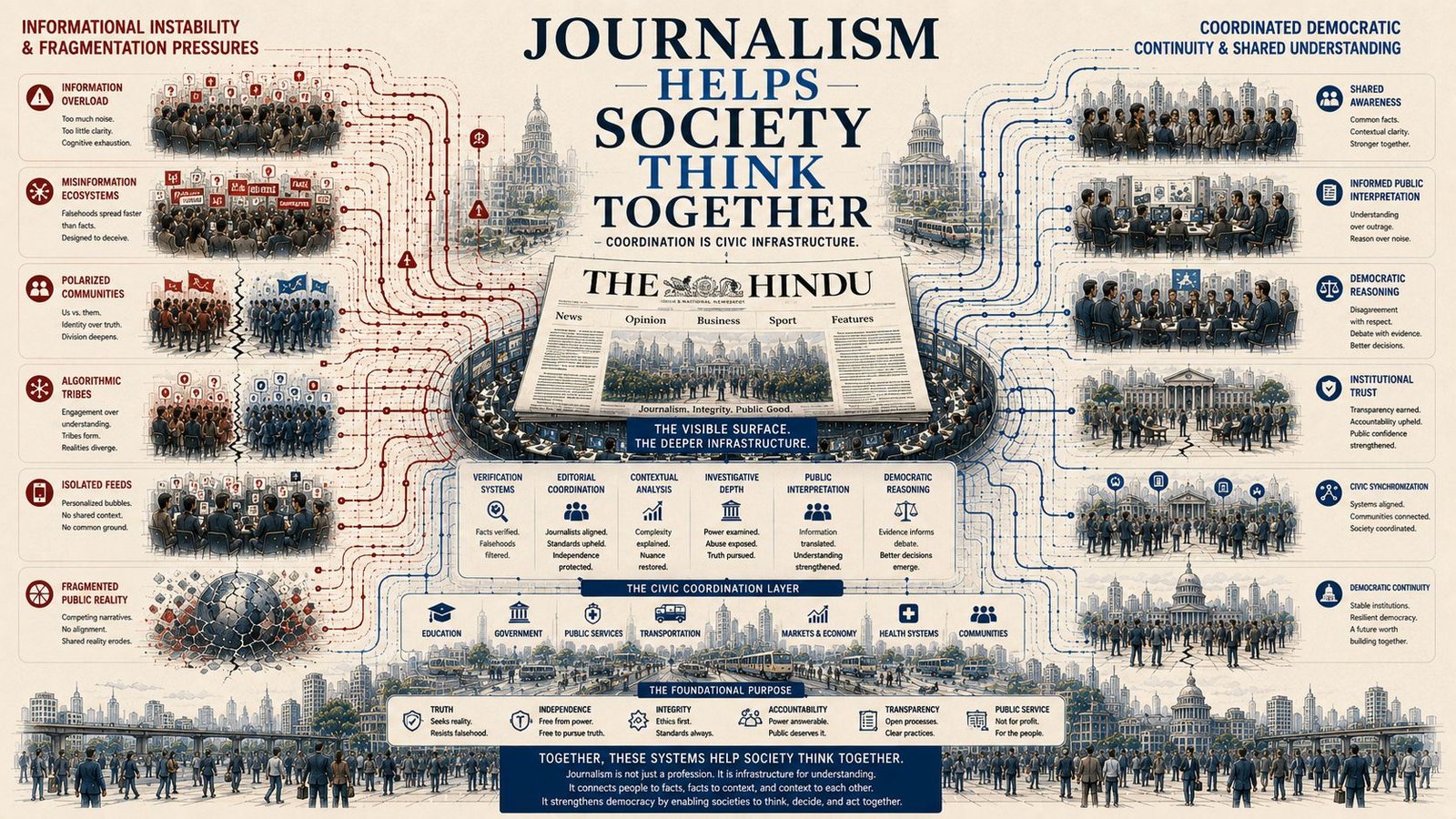
JOURNALISM
IS A
COORDINATION
SYSTEM
Modern societies generate enormous informational pressure every day. Journalism historically helped societies coordinate interpretation before fragmentation overwhelmed collective understanding.
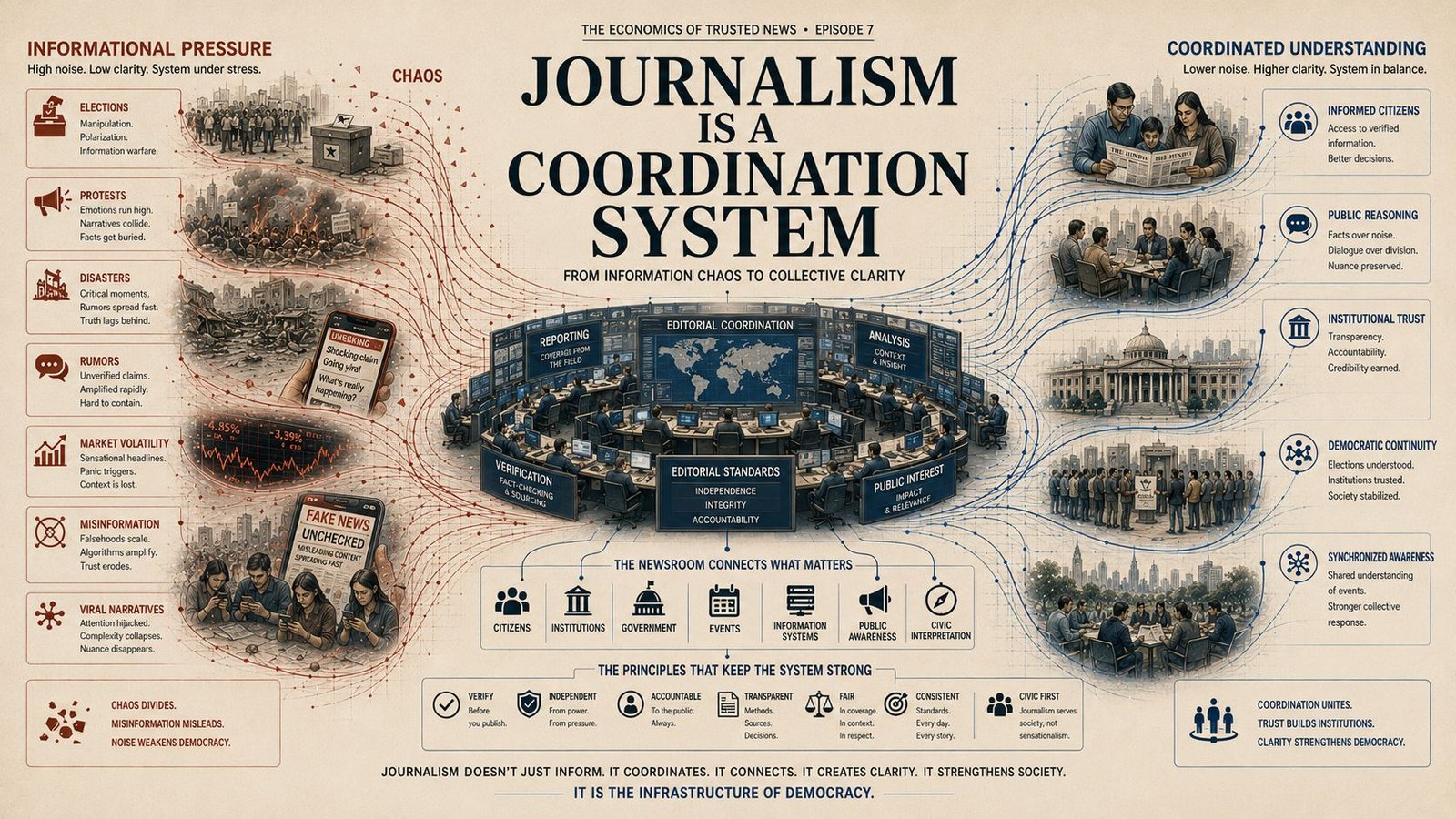
Modern civilization continuously produces informational instability.
Every day, societies generate: elections, disasters, market shocks, policy changes, rumors, conflicts, viral narratives, and public uncertainty.
Without coordination systems, public interpretation rapidly fragments into competing realities and unstable informational environments.
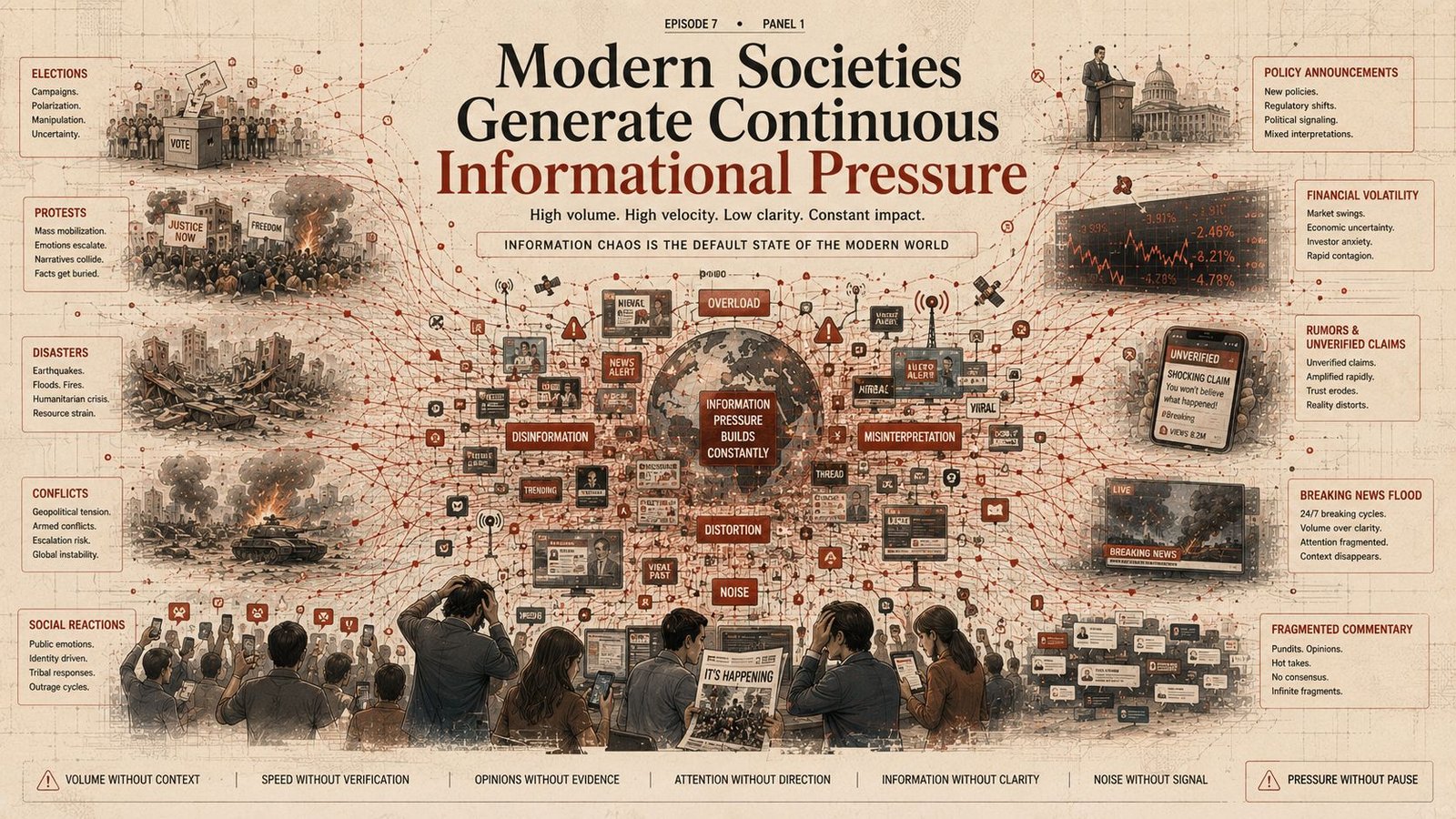
Information alone does not automatically produce coordinated understanding.
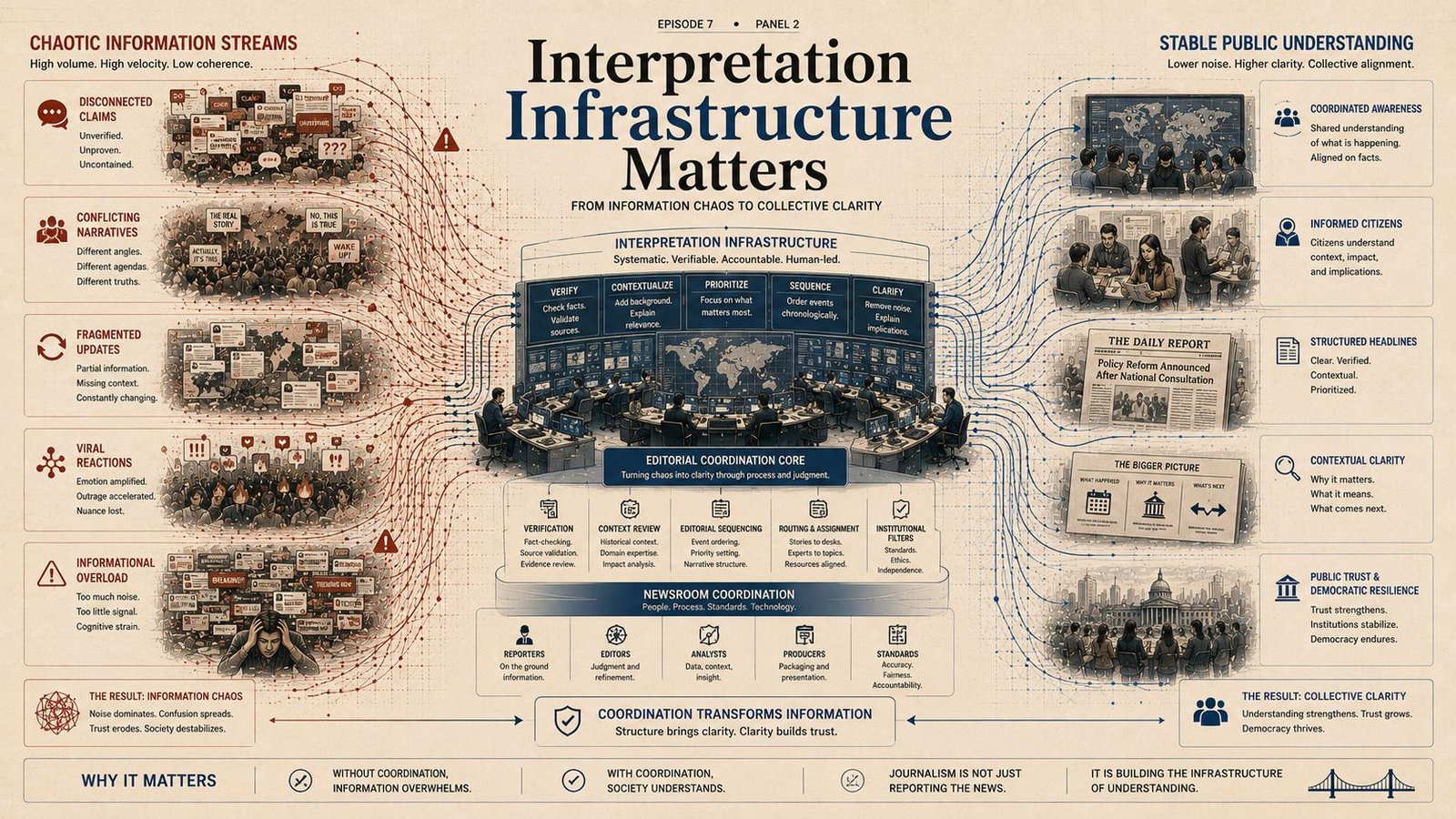
Healthy societies require interpretation infrastructure.
Societies require systems that: verify, sequence, contextualize, prioritize, and stabilize information under pressure.
Facts alone are not enough. Interpretation infrastructure matters.
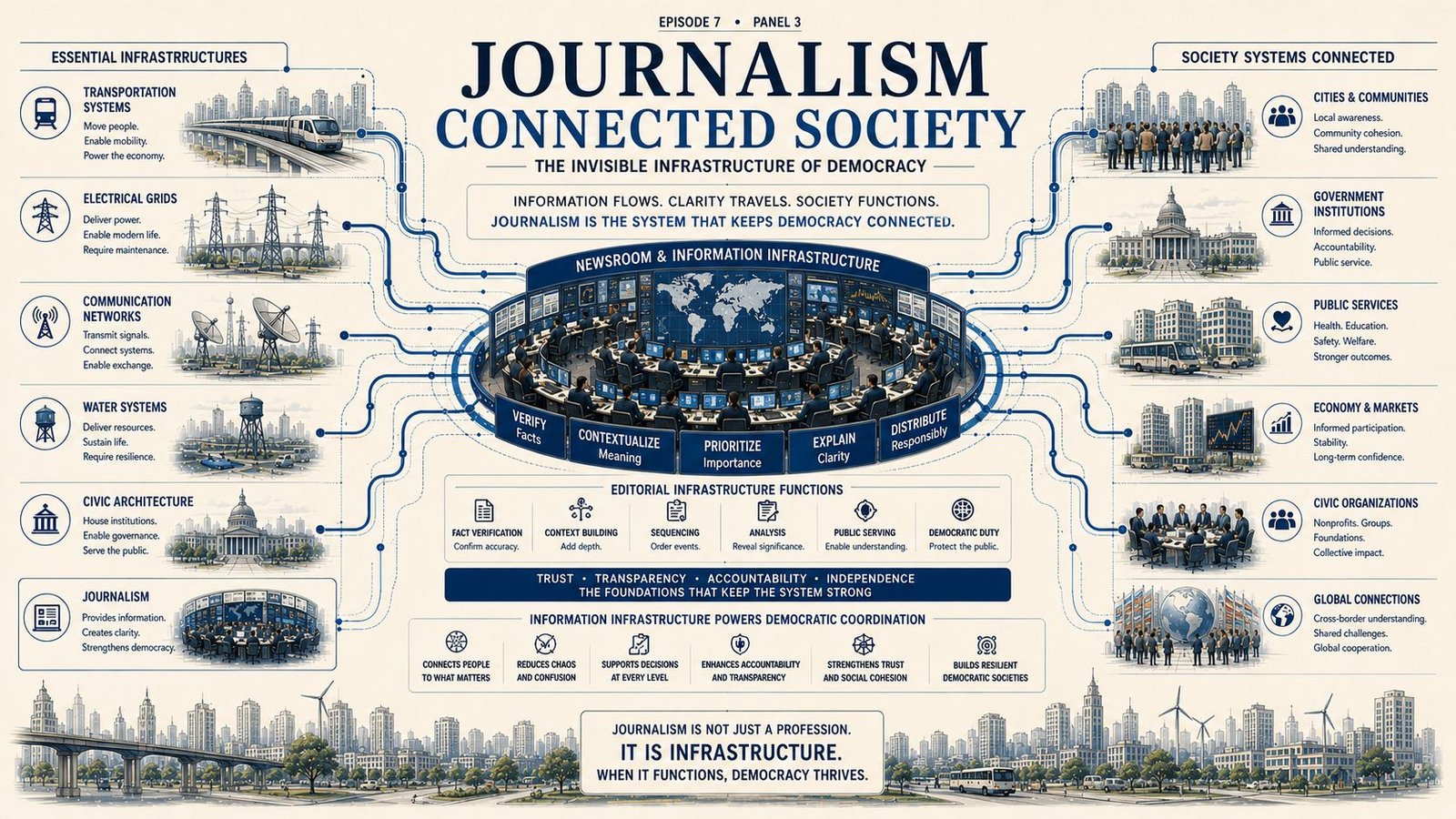
Journalism historically functioned as a coordination layer across society.
Like transportation systems, power grids, and communication infrastructure, journalism connected: citizens, institutions, events, public reasoning, and collective awareness.
The visible newspaper was only the surface layer of a much larger civic-routing architecture.
Verification is a societal stabilization process operating under informational pressure.
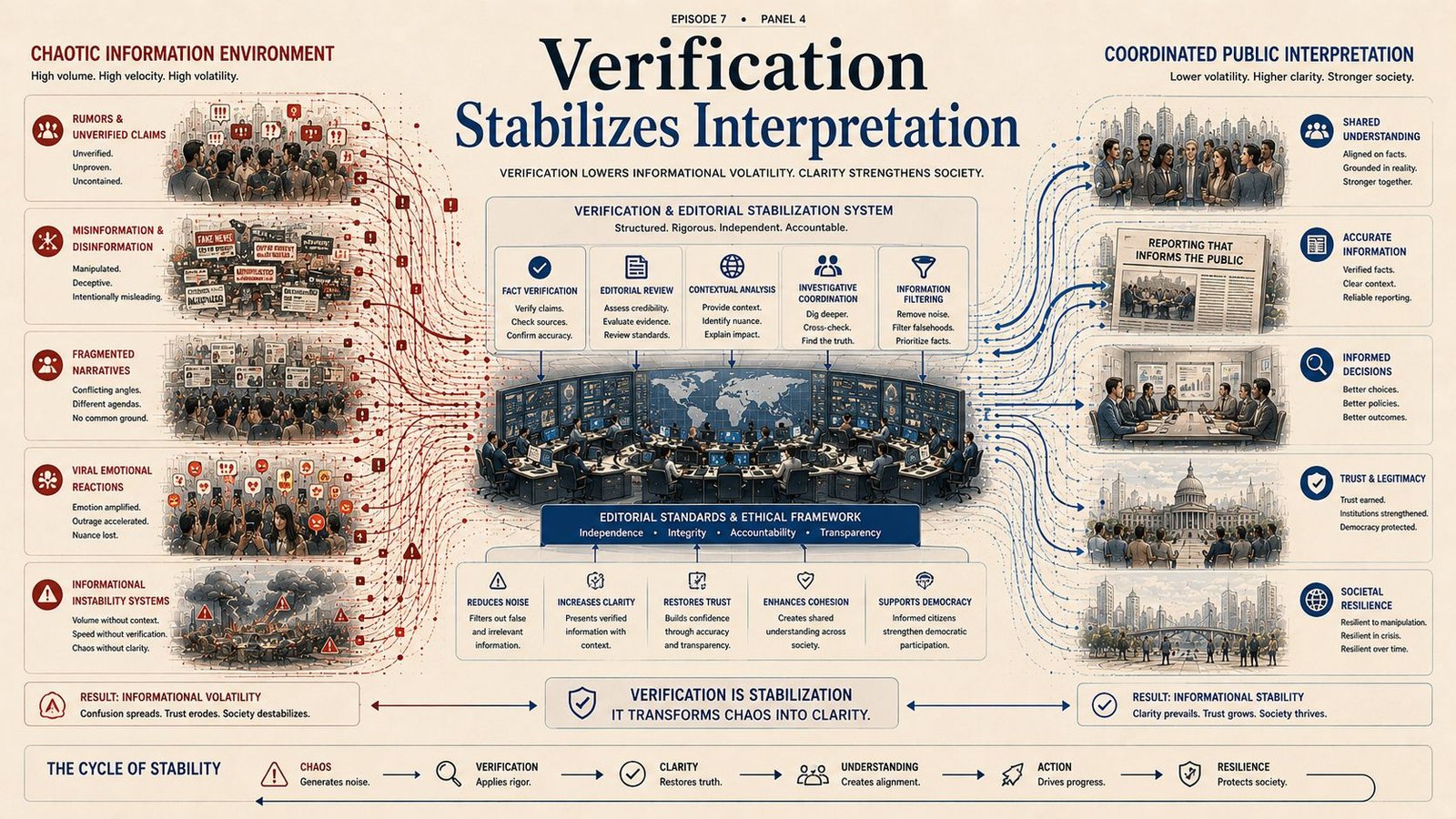
Journalism helped reduce interpretive instability.
Verification is not merely fact-checking.
It functions as: - informational filtering - contextual stabilization - public clarification - institutional review - societal synchronization
The process itself reduces volatility across public interpretation systems.
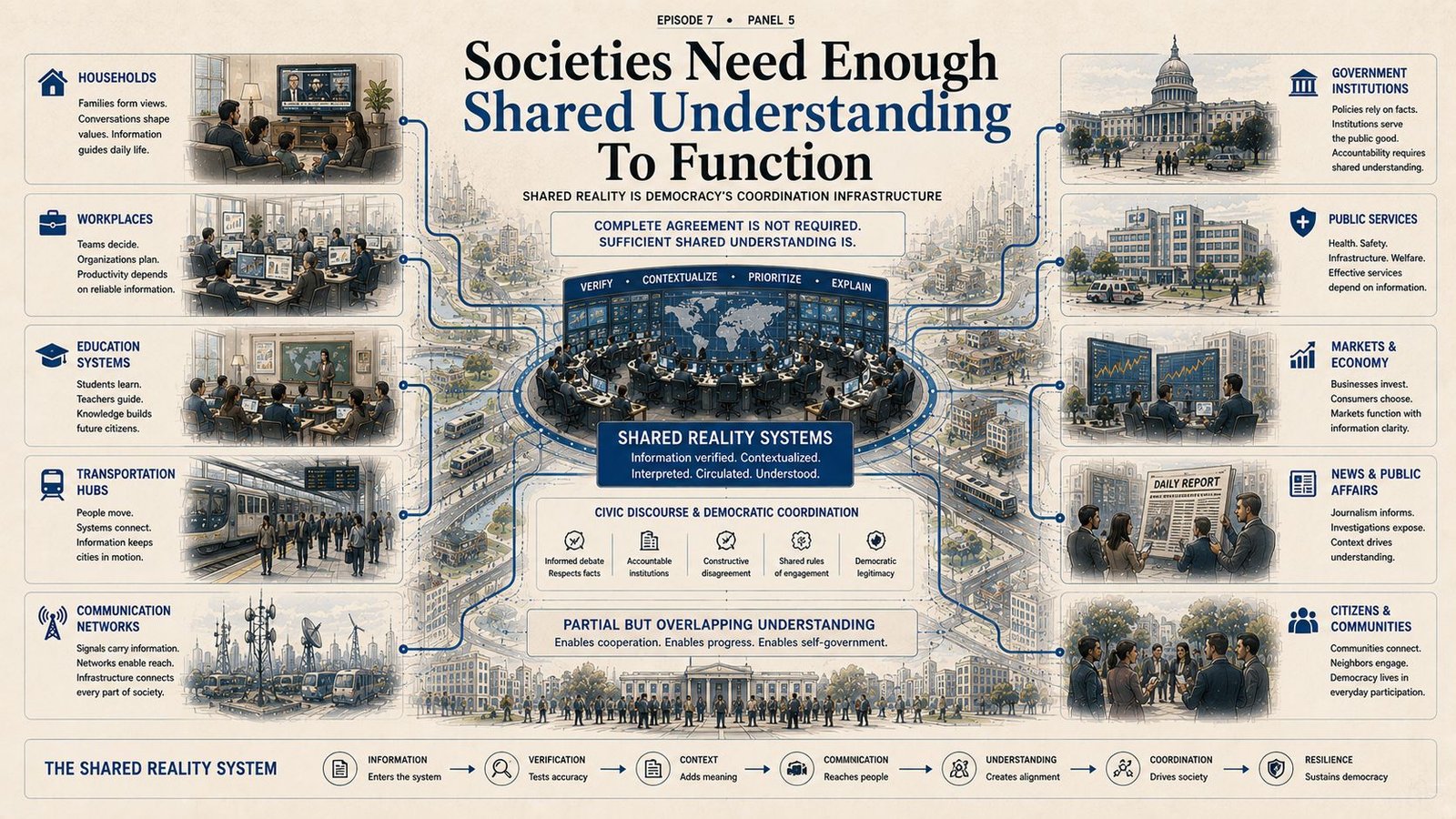
Democracies require enough shared understanding to function collectively.
Democratic societies depend on coordinated public awareness to sustain: - elections - policy debate - institutional trust - civic reasoning - social continuity
Shared reality does not require universal agreement. But it does require enough informational overlap for society to think together.
When coordination systems weaken, fragmentation accelerates.
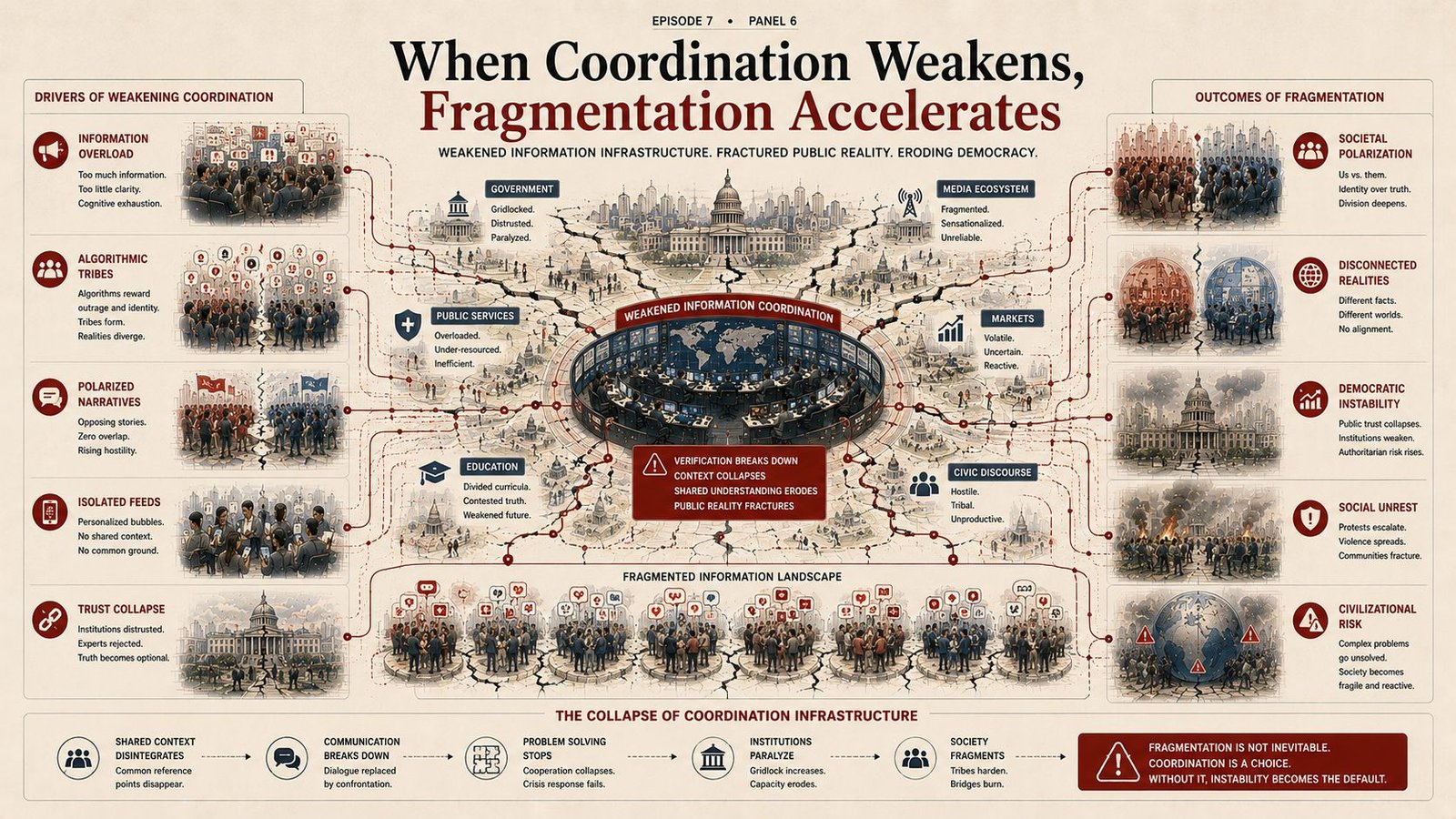
Fragmented interpretation destabilizes public systems.
When trusted coordination systems weaken, societies increasingly fragment into: - isolated narratives - algorithmic tribes - reaction loops - informational bubbles - competing realities
Public reasoning becomes more unstable when collective interpretation infrastructure deteriorates.
Journalism helps society think together.
Journalism was never only about delivering information.
Its deeper role was helping societies coordinate understanding under pressure.
The visible newspaper was only the surface layer of a much larger civic stabilization system.