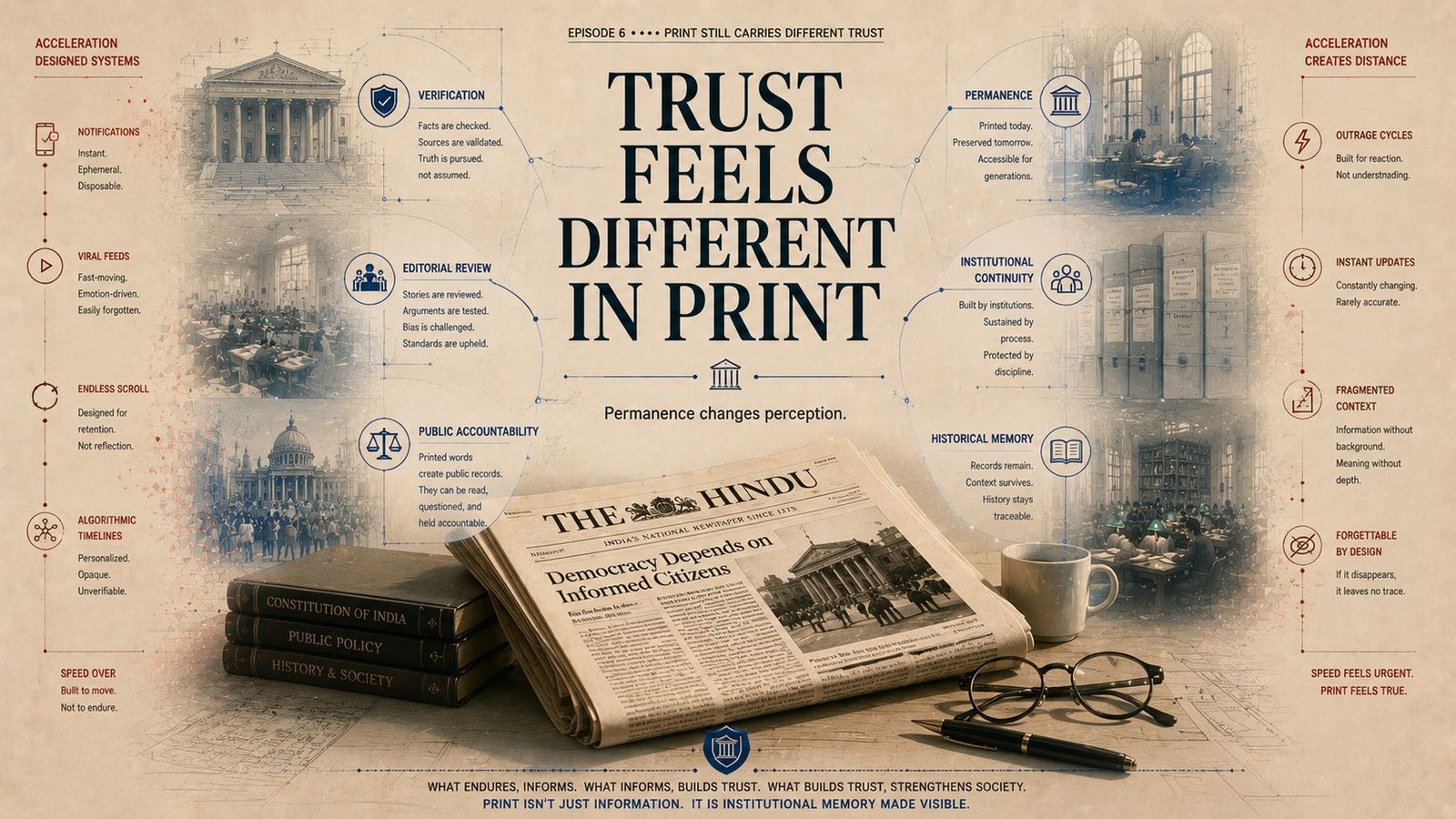
PRINT
STILL
CARRIES
DIFFERENT TRUST
Not all information feels psychologically equal. Physical media changes how humans perceive seriousness, permanence, and institutional credibility.
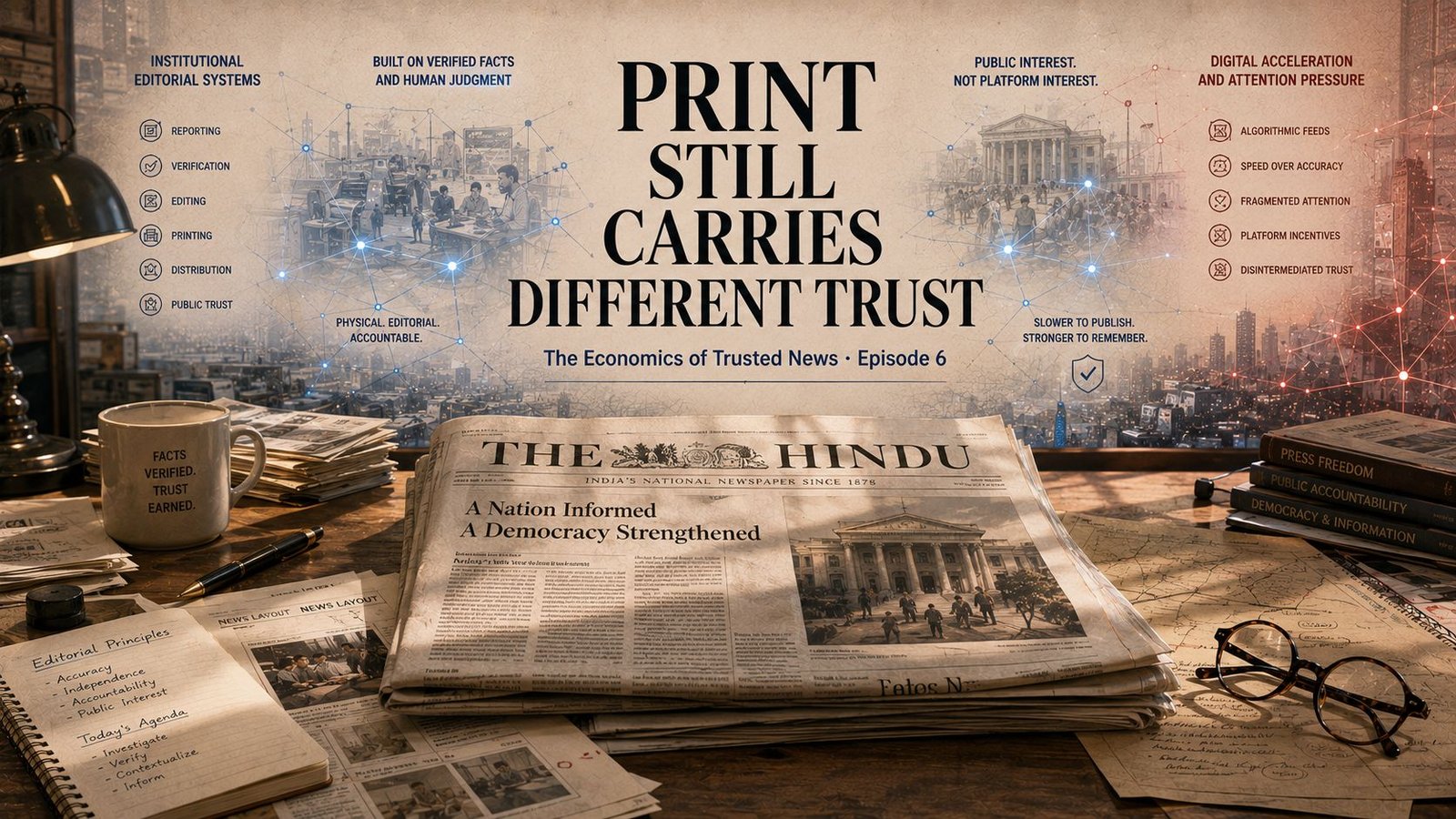
Physical newspapers feel institutionally heavier than feeds.
A printed newspaper creates physical presence.
It occupies space. It feels deliberate. It appears institutionally committed.
The physicality itself changes how readers psychologically interpret seriousness and credibility.
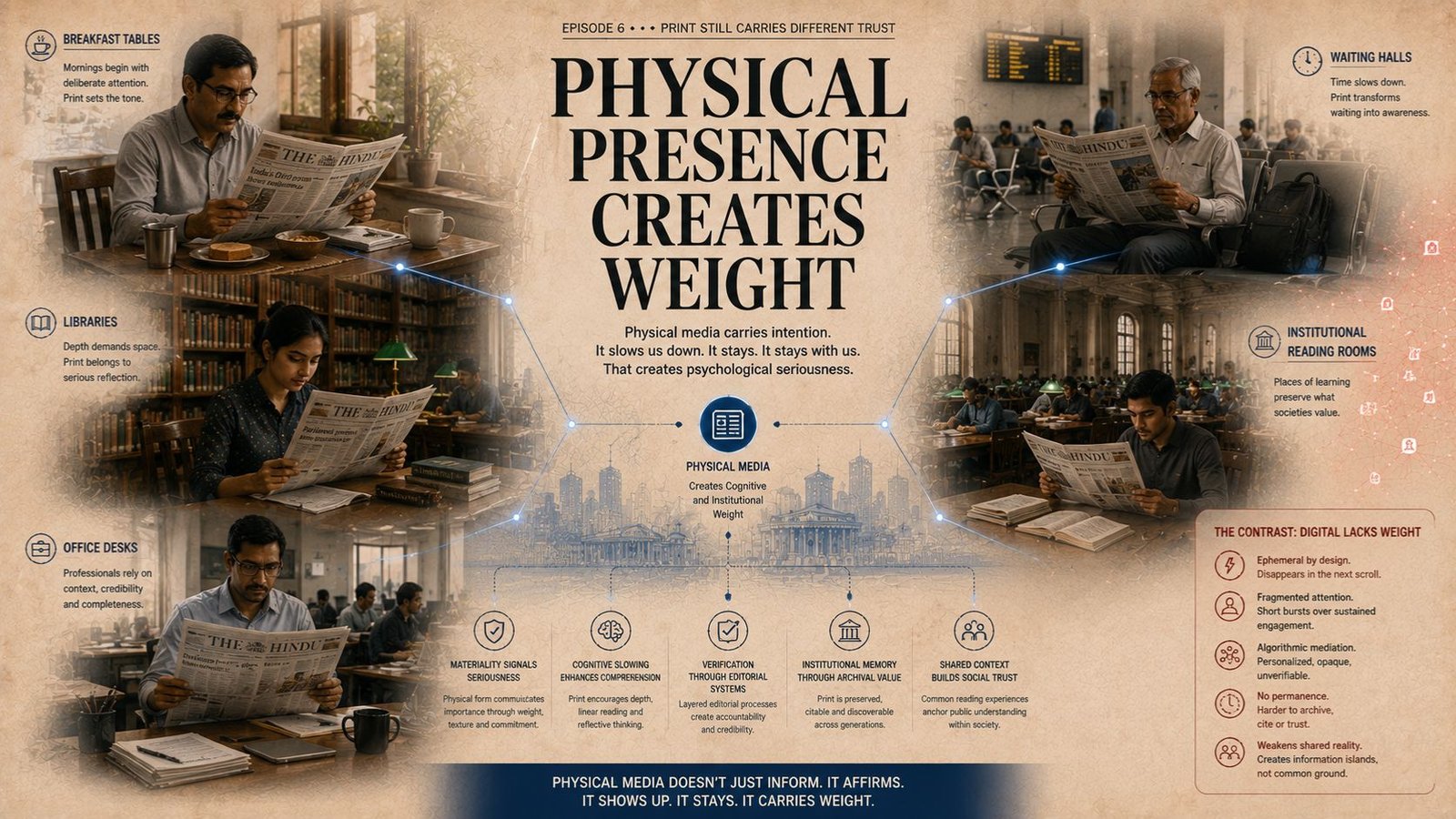
Physical publication still psychologically signals institutional commitment.
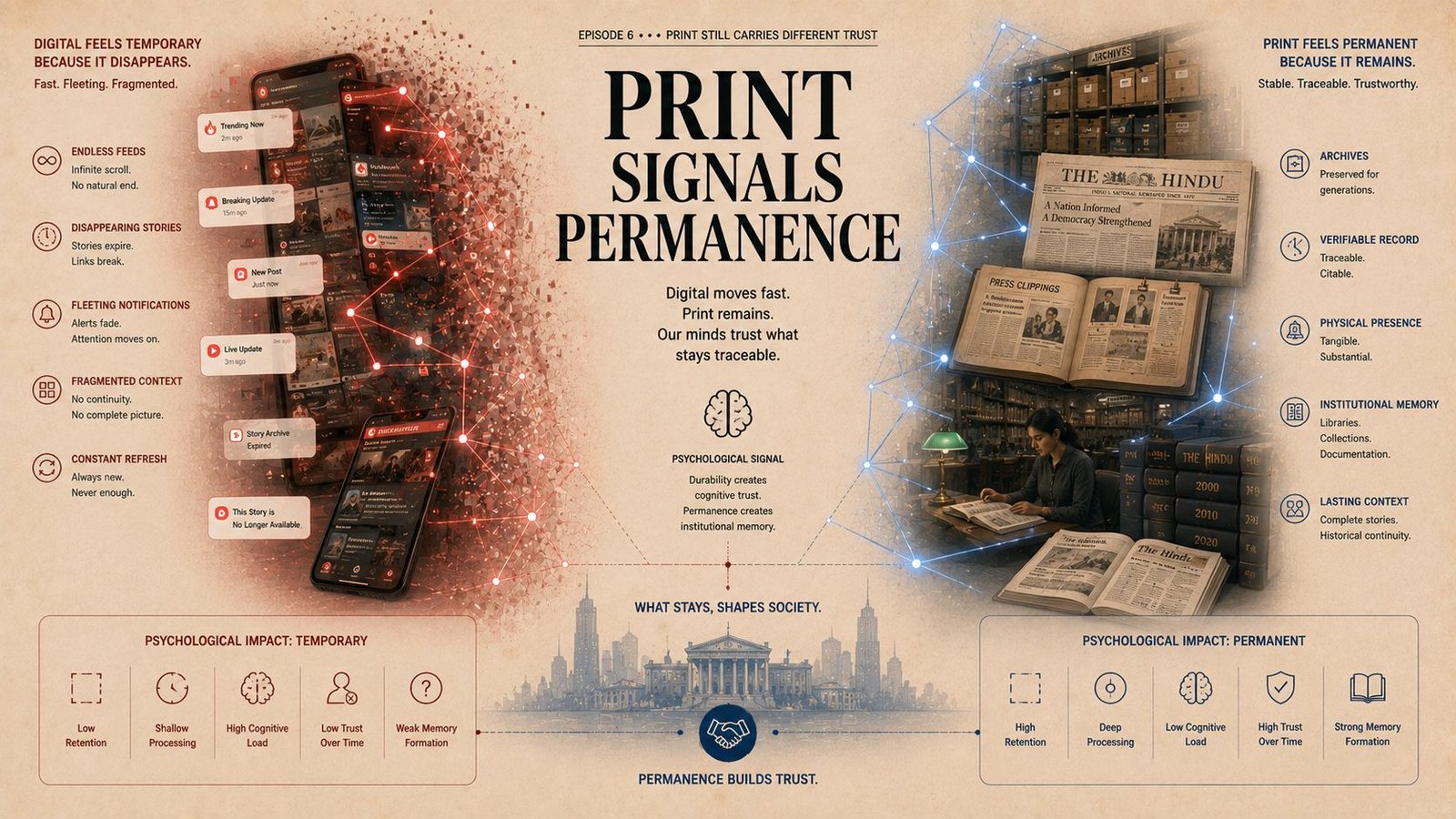
Print feels durable in ways digital feeds often do not.
Digital information increasingly feels: - temporary - replaceable - accelerated - endlessly editable
Print signals permanence. Readers subconsciously associate physical publication with editorial confidence and institutional continuity.
Editorial friction changes how legitimacy is perceived.
Print still signals slower institutional review.
Printed journalism passes through multiple layers of: - editing - fact-checking - layout review - verification - legal accountability
That friction creates psychological weight. Readers perceive printed publication as more deliberate and institutionally stabilized.
The slower process itself becomes part of credibility.

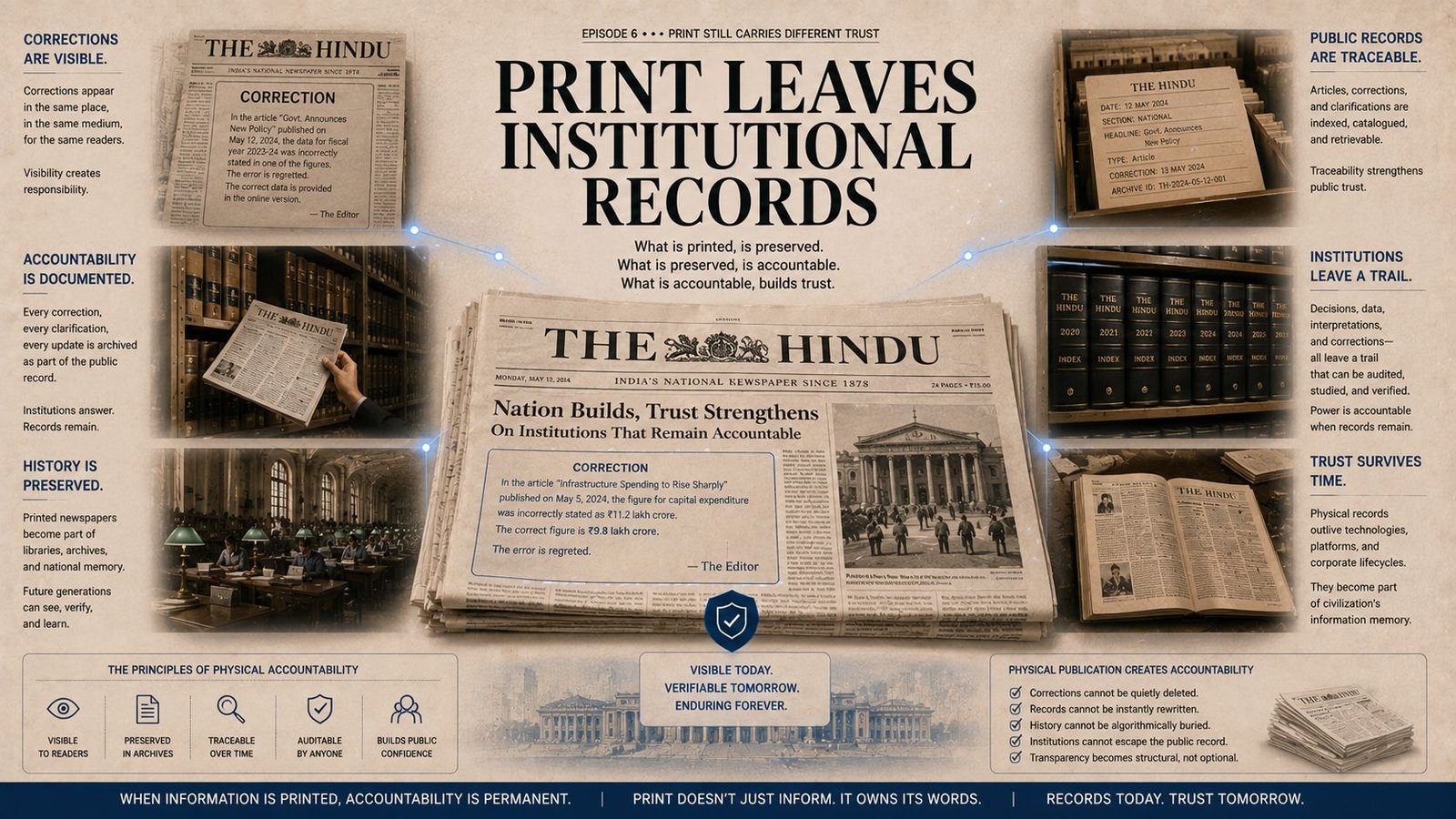
Printed mistakes become institutionally visible.
A printed error cannot disappear through silent editing or algorithmic refresh.
Physical publication creates: - exposure - accountability - permanence - public visibility
The printed archive itself becomes a historical record of institutional responsibility.
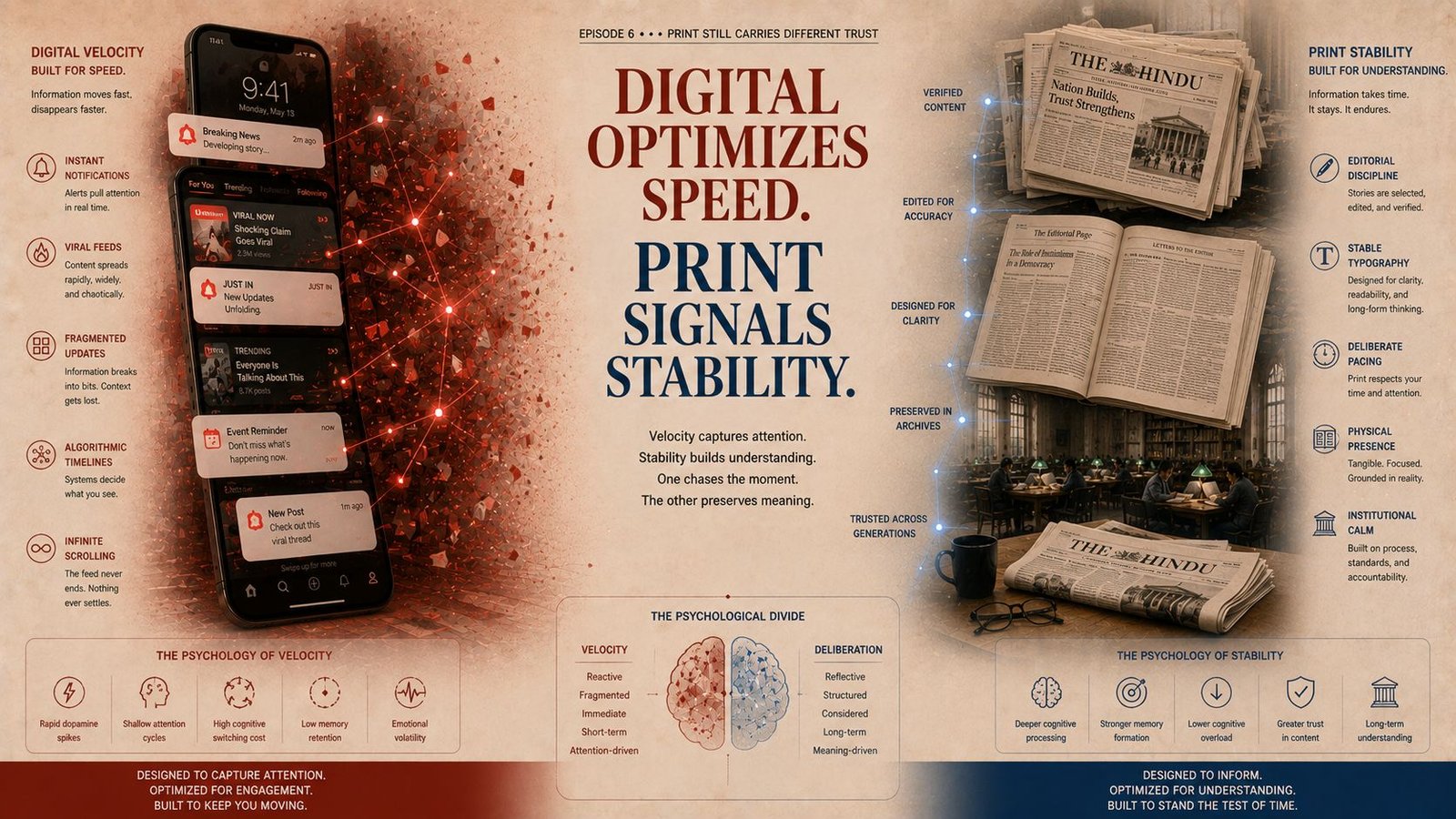
Digital systems optimize speed. Print still signals deliberation.
Different information systems optimize for different psychological experiences.
Modern digital platforms increasingly reward: - speed - reaction - engagement - acceleration - continuous updates
Print still psychologically signals: - review - stability - permanence - institutional patience - editorial discipline
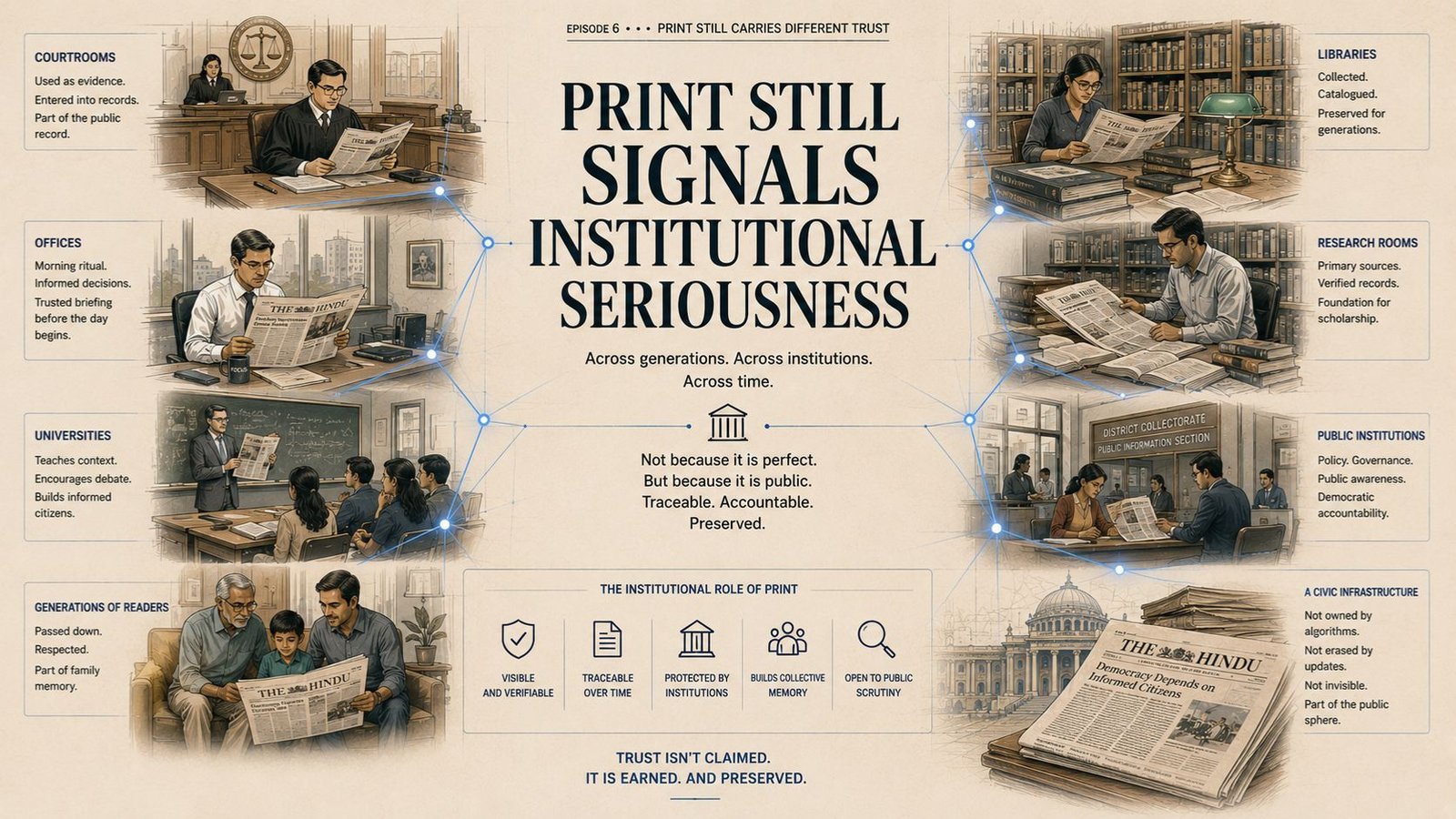
Physical media still carries symbolic institutional legitimacy.
Printed journalism often continues appearing inside: - courts - offices - libraries - archives - public institutions - professional environments
Not because paper itself is magical. But because physical publication still psychologically communicates: commitment, review, and permanence.
The symbolism continues shaping public trust.
Trust feels different in print.
Print still carries psychological weight because it represents slower institutional commitment inside accelerated information systems.
The paper itself matters less than what it symbolically communicates: deliberation, accountability, and permanence.