THE LAST
MILE
OF
TRUST
Every morning before sunrise, an invisible coordination system moved trusted information across entire cities. Most readers never saw the infrastructure behind it.
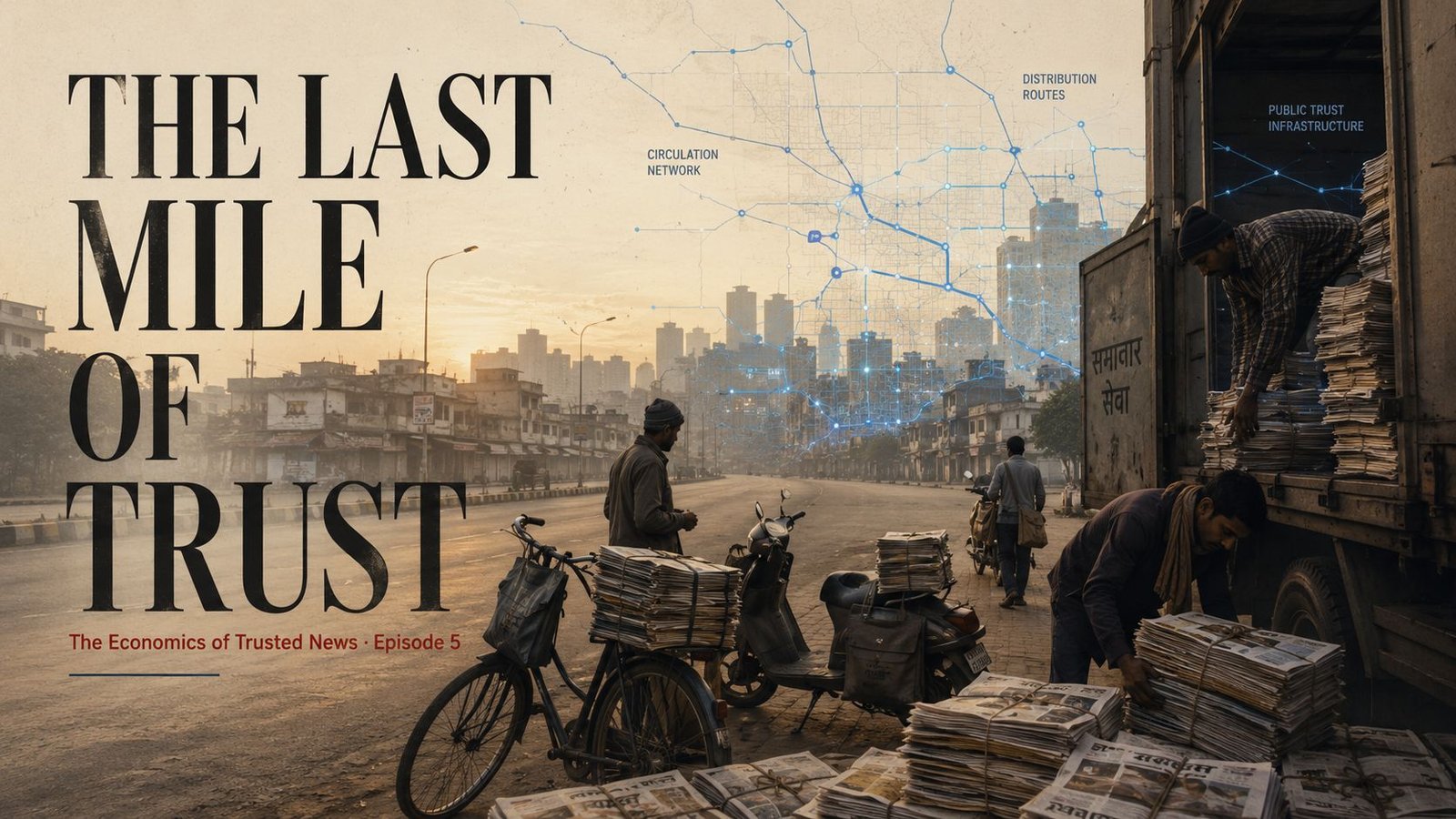
Journalism distribution began before public attention itself.
Long before notifications became constant, newspapers synchronized public attention through physical distribution.
Entire delivery systems operated quietly before most cities fully woke up.
Printing presses, sorting centers, transport routes, and delivery agents coordinated movement across entire urban ecosystems before sunrise.
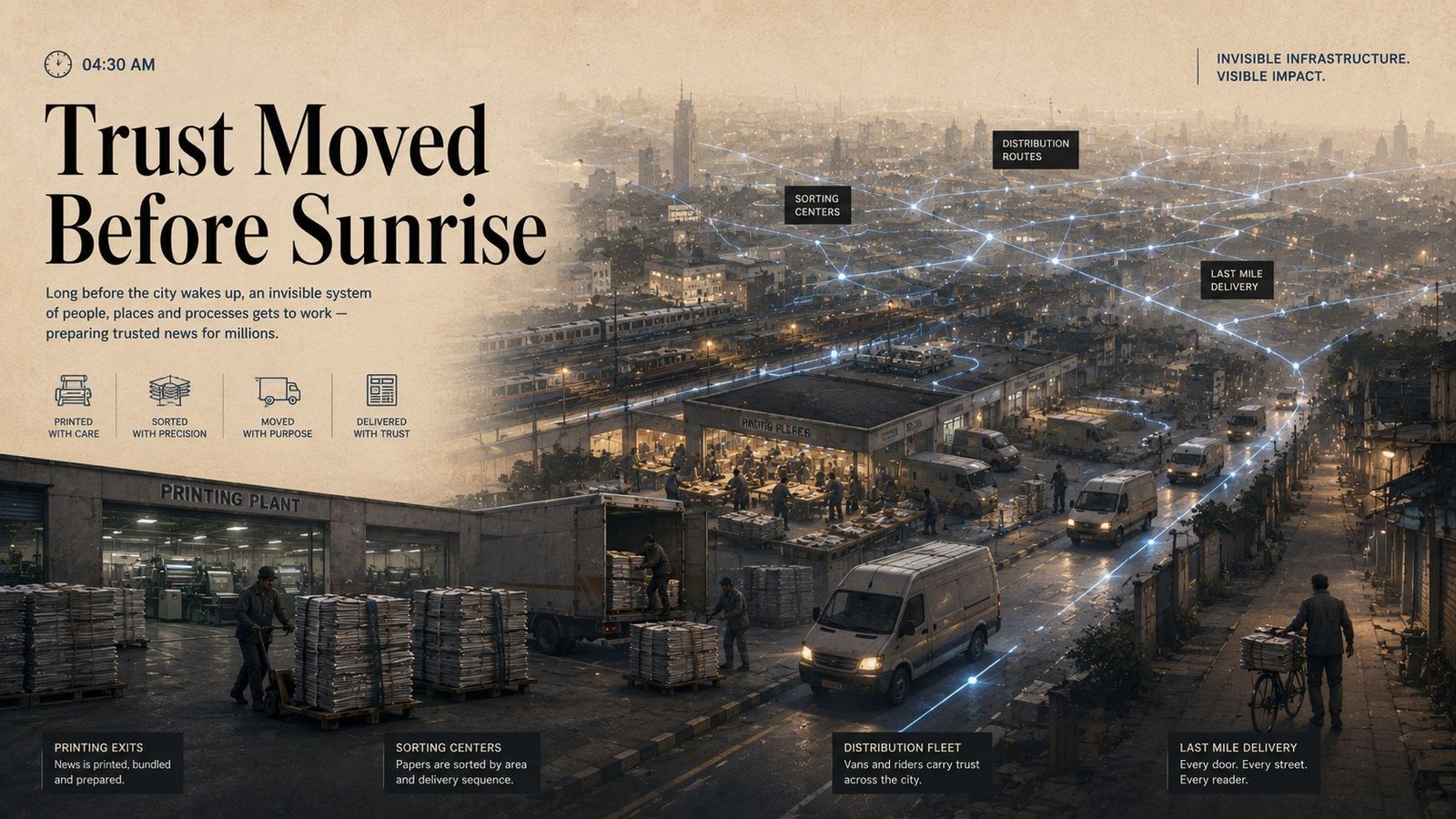
Trust once moved physically through cities before dawn.
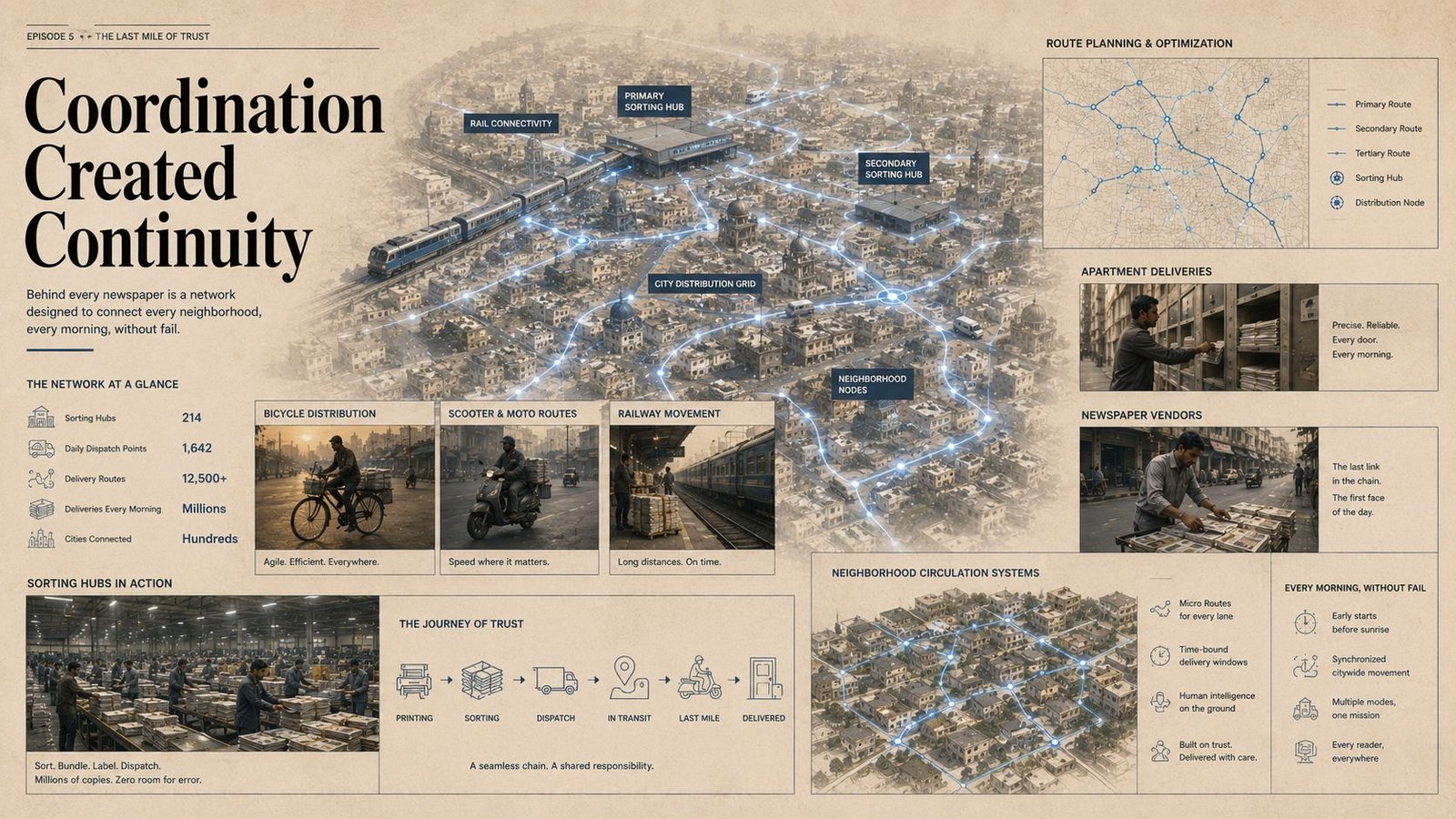
The newspaper ecosystem depended on extraordinary coordination.
Printing alone was never enough.
Journalism depended on: - routes - timing - logistics - fuel - labor - operational consistency
The final product reached millions of readers through synchronized city-scale movement systems.
The newspaper became part of everyday civic rhythm.
The newspaper was not only information.
Its physical arrival reinforced: - continuity - stability - familiarity - routine - institutional reliability
Entire generations experienced public information through synchronized daily reading habits.
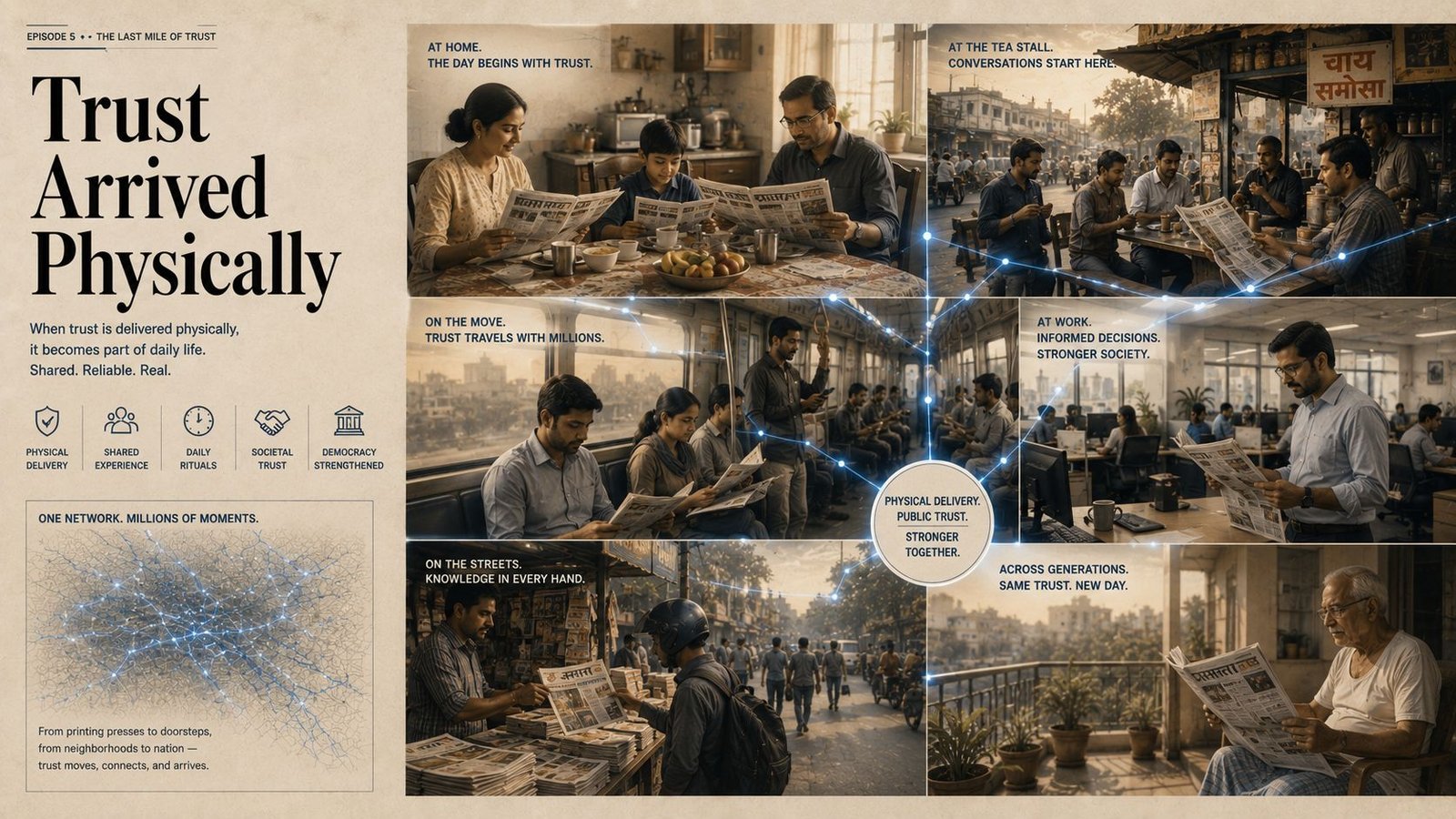
The last mile itself became part of journalism’s credibility architecture.
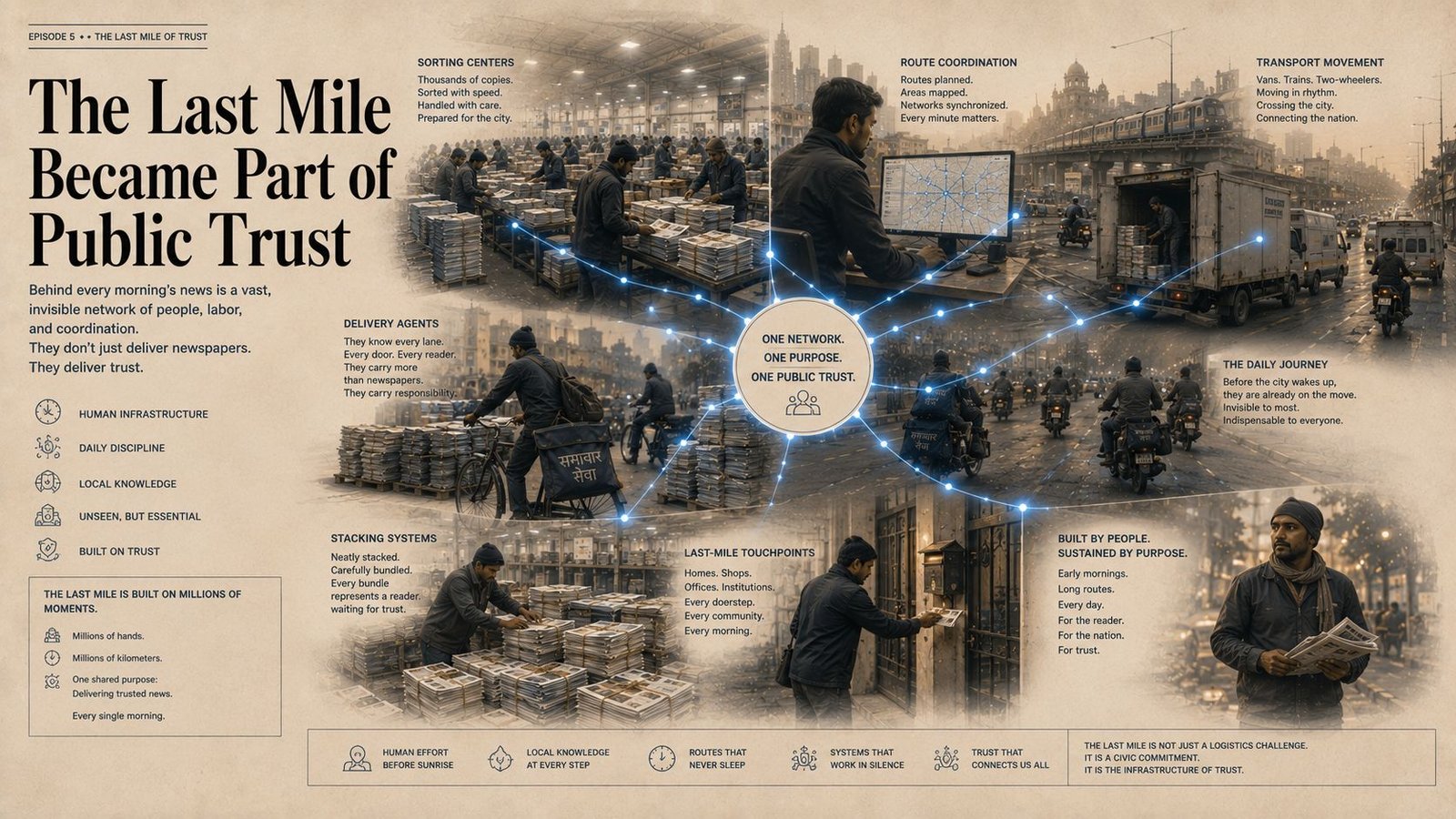
Delivery workers became invisible civic infrastructure.
Thousands of workers quietly sustained the final stage of journalism every single morning.
Distribution agents, street vendors, sorting staff, and transport coordinators became essential parts of the public information ecosystem.
Most readers only saw the final newspaper. Very few saw the systems delivering it.
Platform economics quietly weakened traditional delivery systems.
As app-based gig economies expanded, sustaining newspaper distribution networks became increasingly difficult.
Many delivery ecosystems struggled against: - rising operational costs - declining margins - labor shifts - platform competition - changing attention habits
The infrastructure behind physical news delivery began weakening quietly across cities.
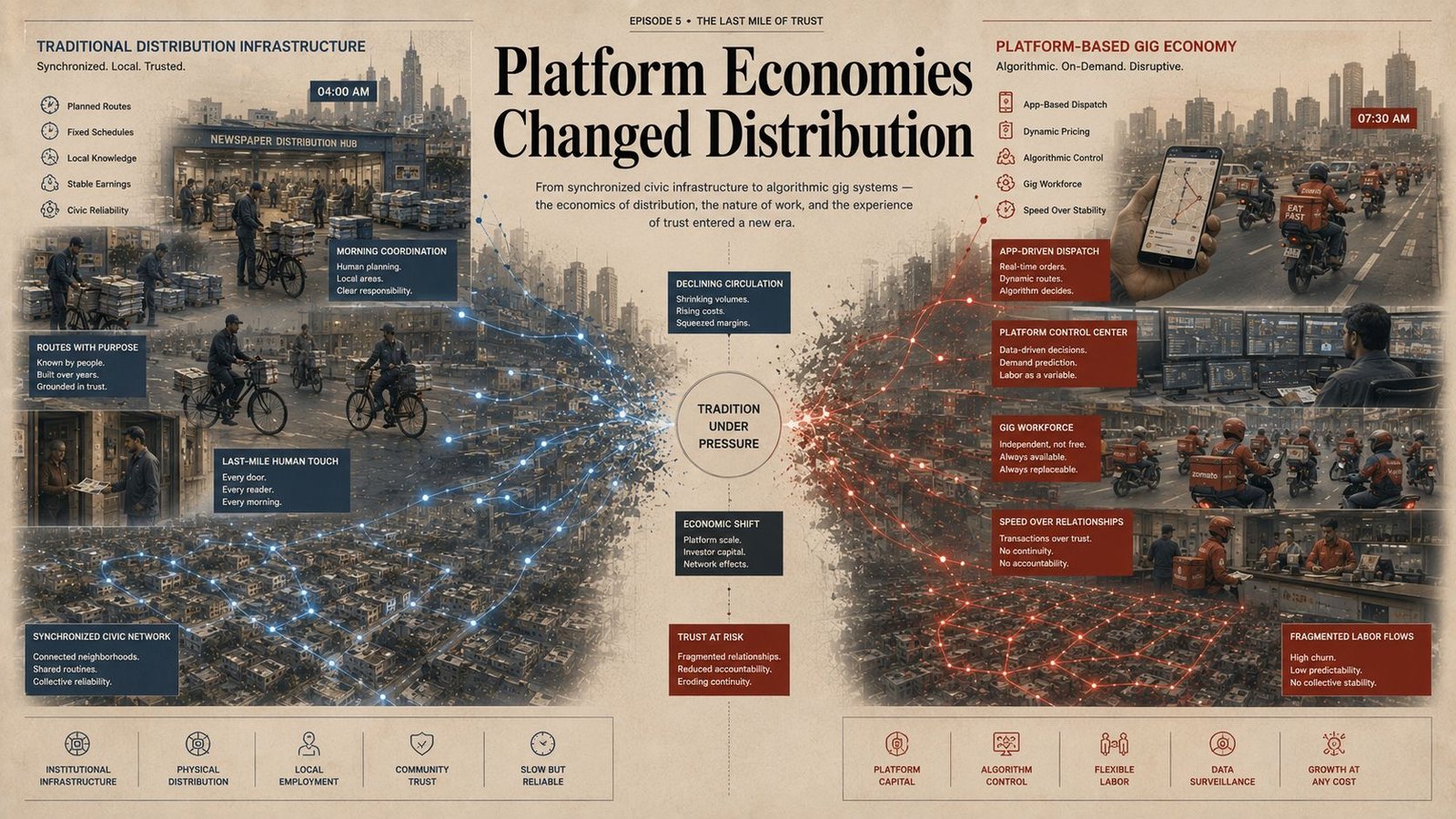
Society no longer begins the day together informationally.
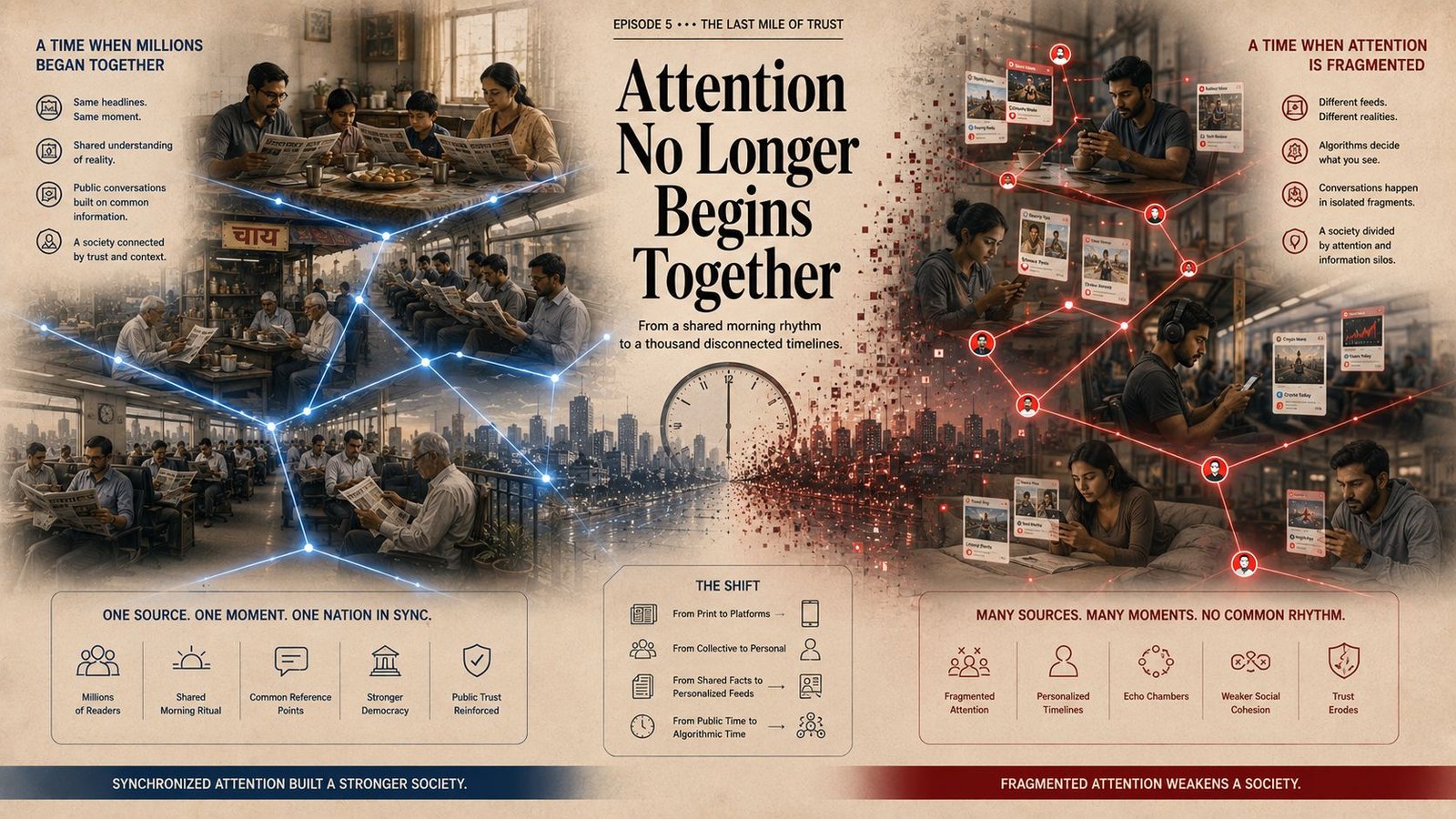
Mass newspapers once coordinated shared public rhythm.
Millions of readers once consumed information through relatively synchronized daily experiences.
Modern digital systems increasingly fragment attention into: - personalized feeds - algorithmic recommendations - isolated timelines - individualized information bubbles
Shared informational continuity became harder to sustain.
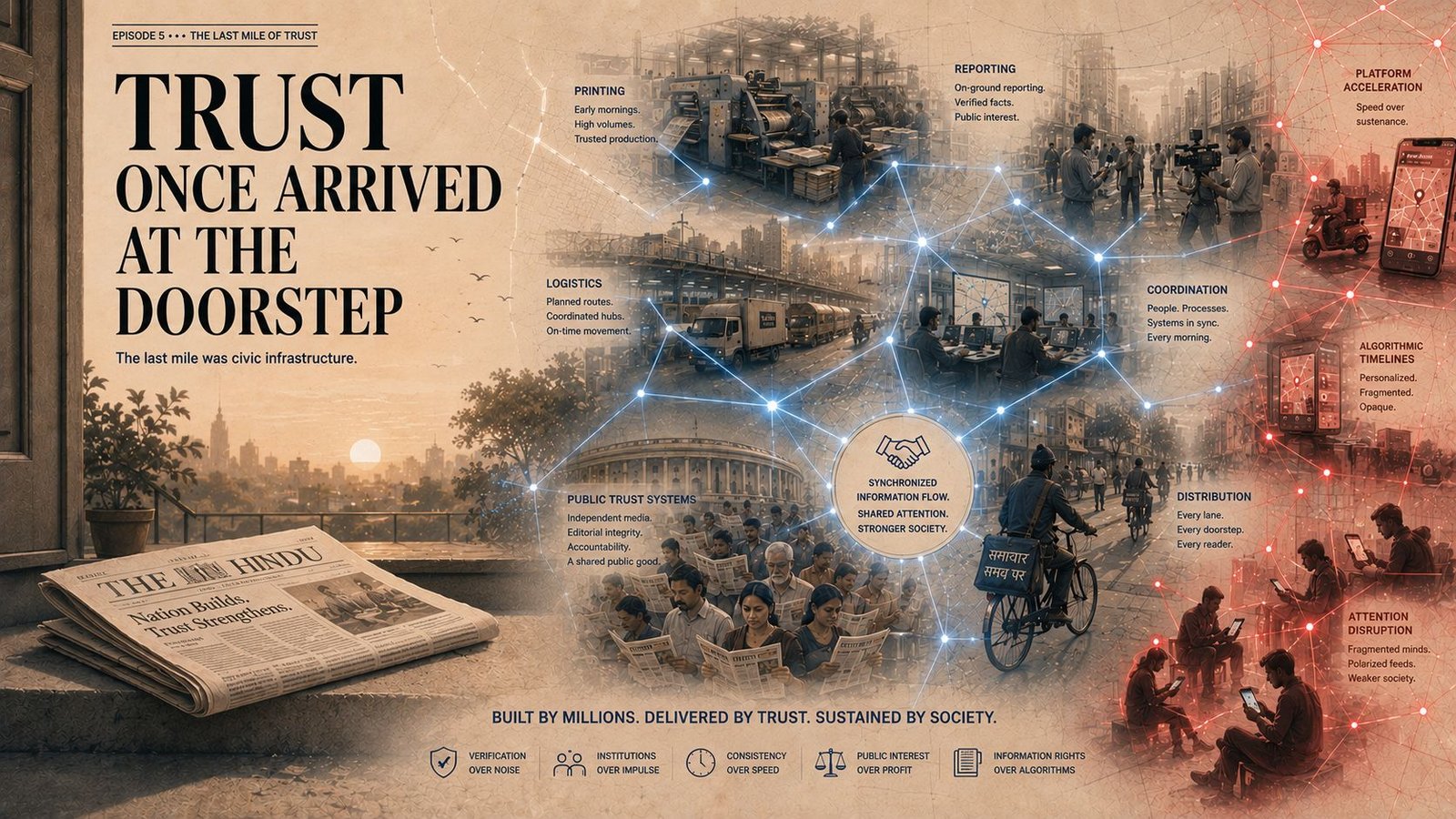
Trust once arrived at the doorstep.
The newspaper was never merely printed paper.
It was a physically coordinated trust system operating across society every single morning.
The last mile was not only logistics. It was civic continuity.