JOURNALISM
NOW
COMPETES
AGAINST FREE
The internet solved the problem of information scarcity. It created a new problem instead: informational overload without coordinated interpretation.
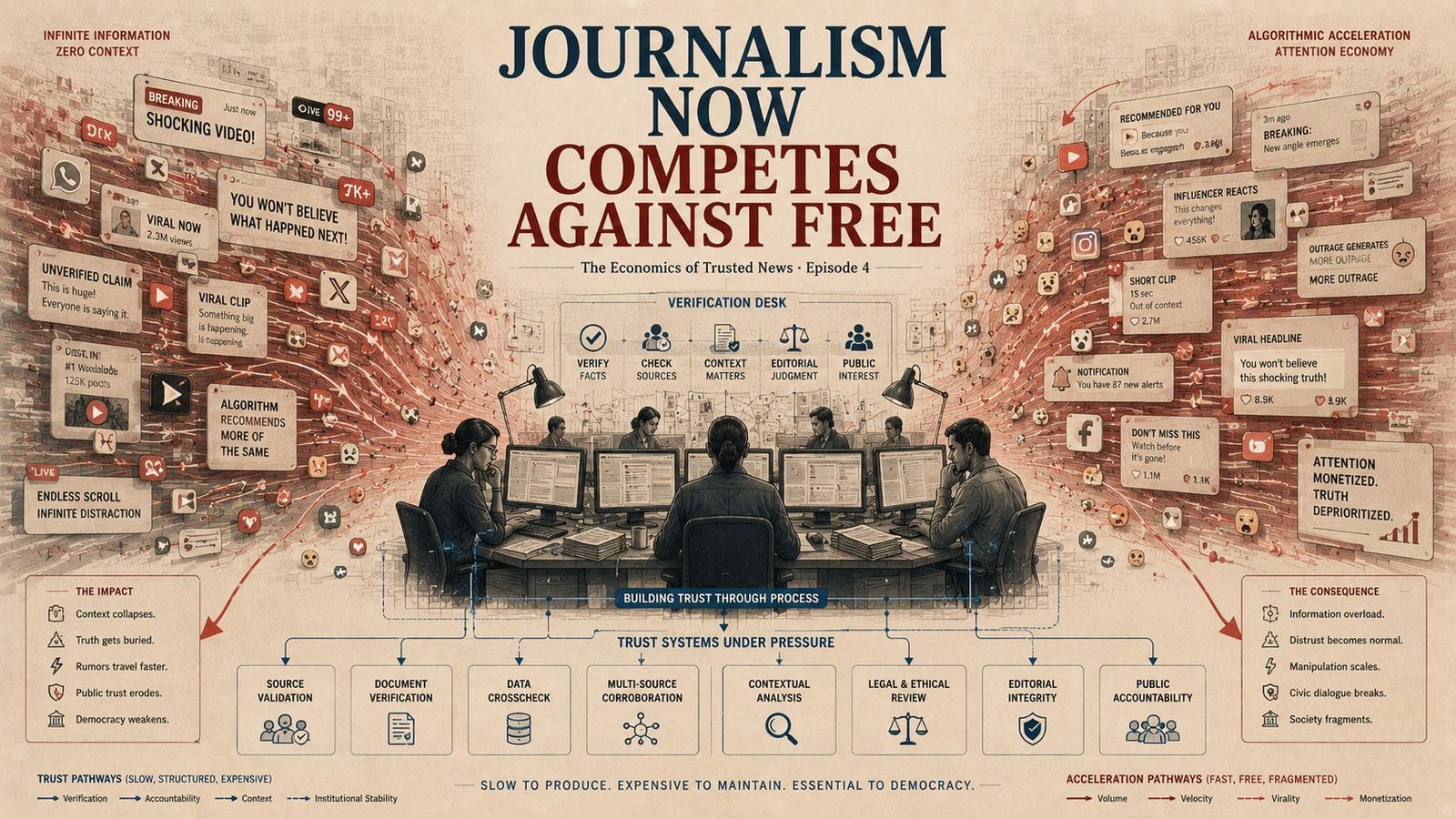
Society now exists inside permanent information flow.
Information continuously moves across: - feeds - notifications - clips - platforms - recommendation systems - viral loops
The public no longer consumes information once a day. It now exists inside a permanent stream of updates, reactions, and acceleration.
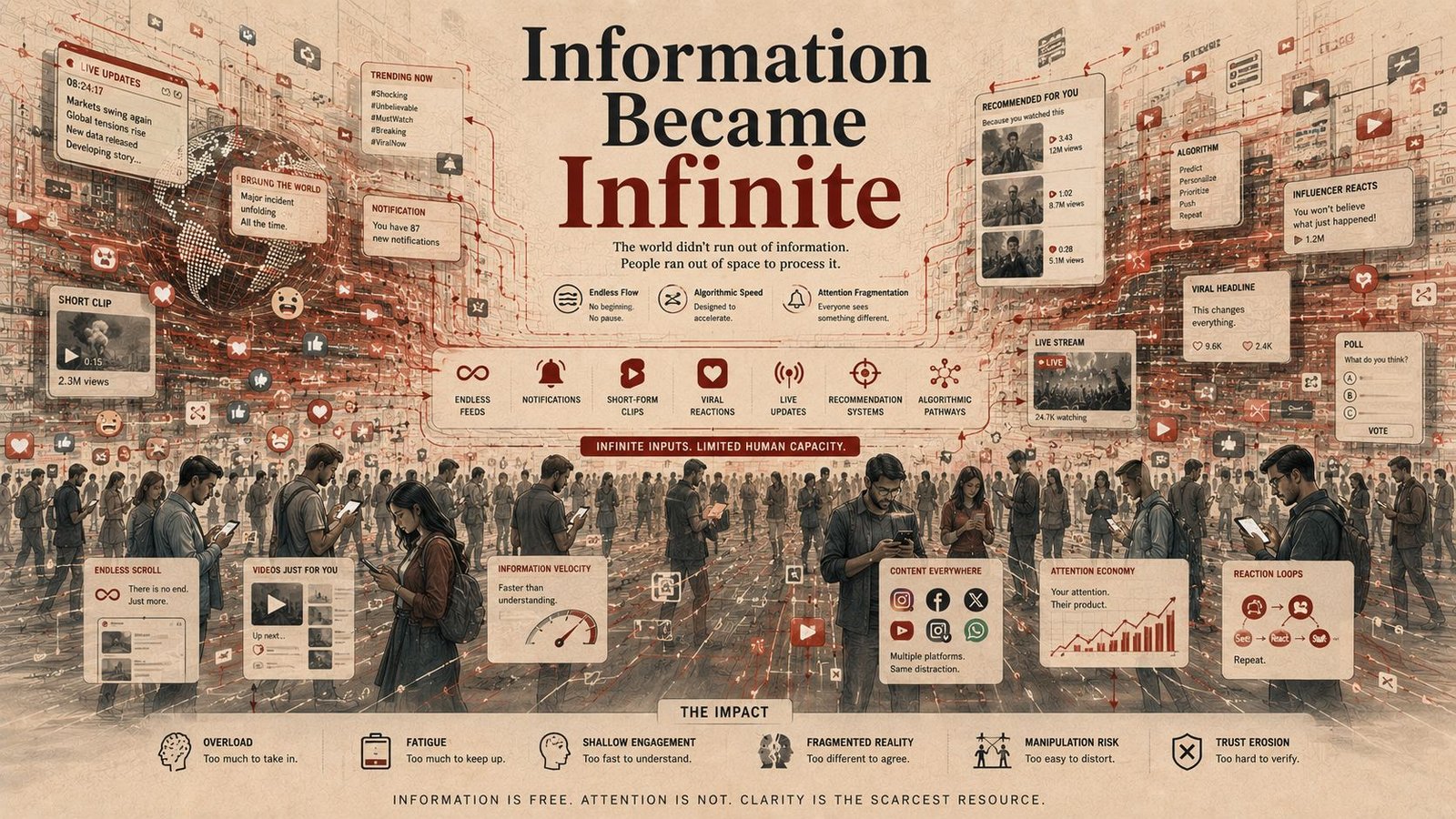
Unlimited information did not automatically create shared understanding.
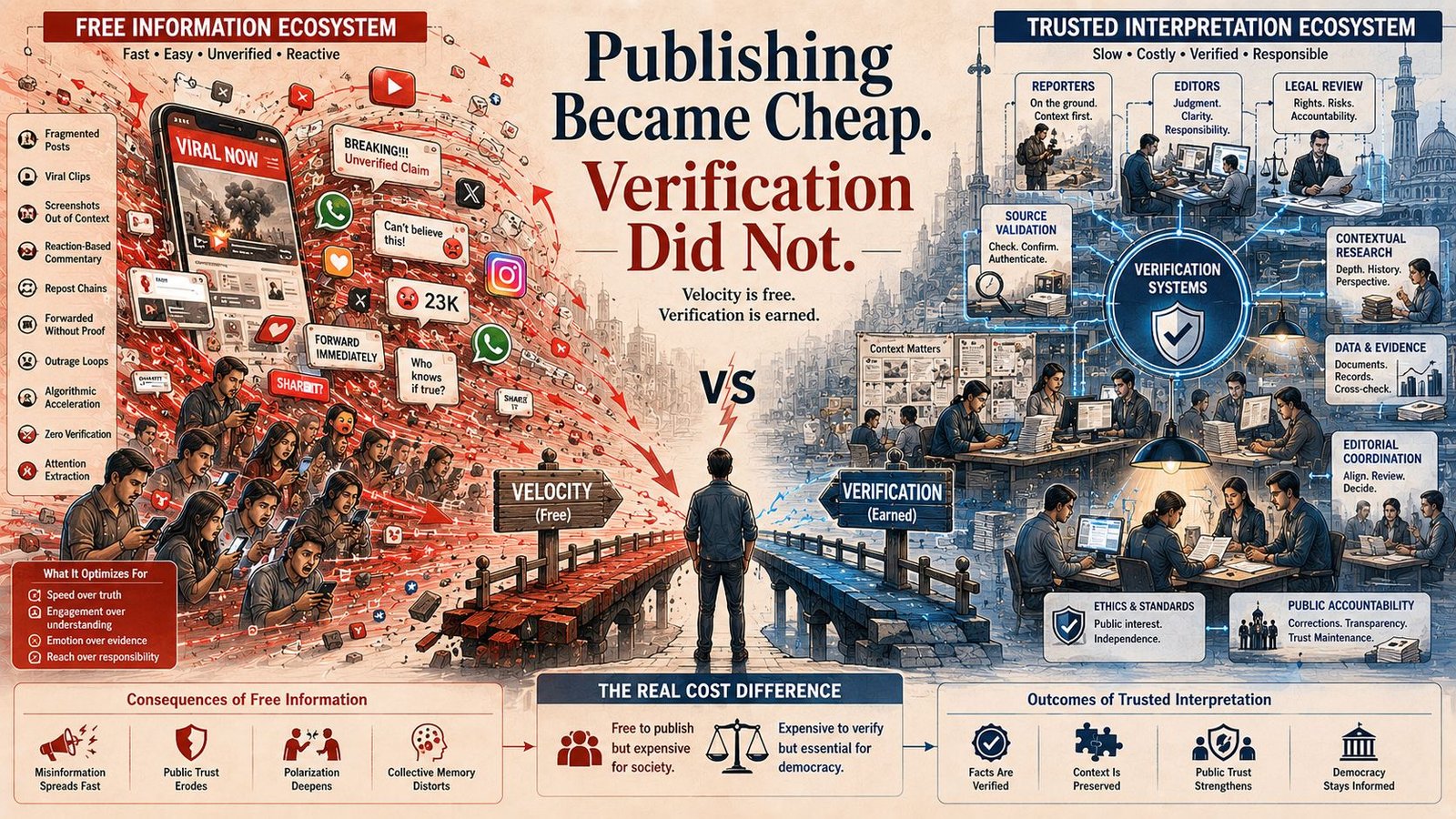
Publishing became inexpensive. Verification did not.
The internet dramatically reduced the cost of distributing information.
But trusted journalism still requires: - verification - editorial review - contextualization - legal accountability - institutional continuity
Free information is not automatically trusted interpretation.
Platforms increasingly optimize for reaction velocity.
Modern digital systems amplify: - outrage - engagement - emotional certainty - behavioral response - reaction loops
Nuance often travels slower than emotionally optimized content.
Attention itself became algorithmically accelerated.
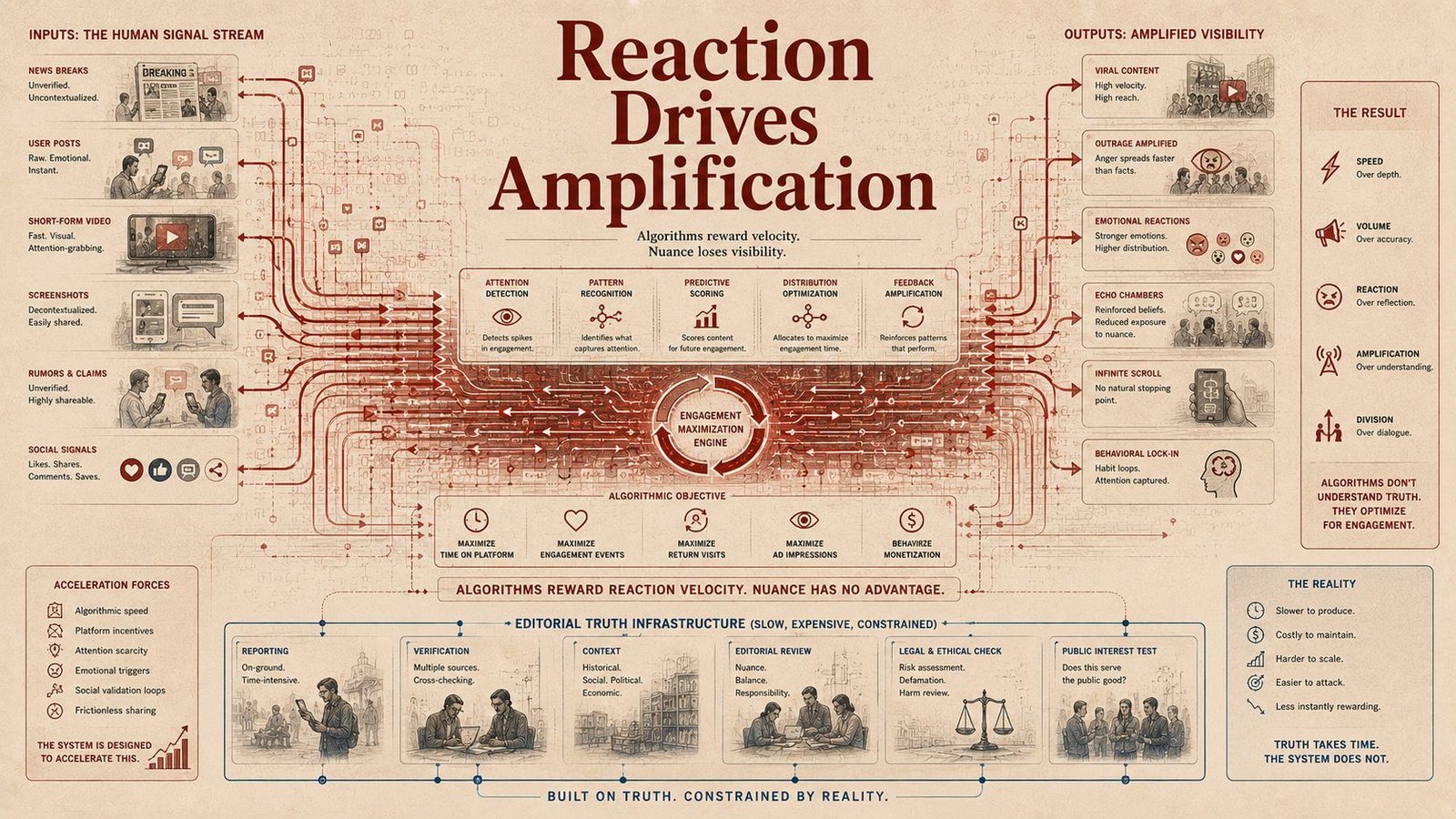
Speed increasingly shapes public interpretation before verification stabilizes context.
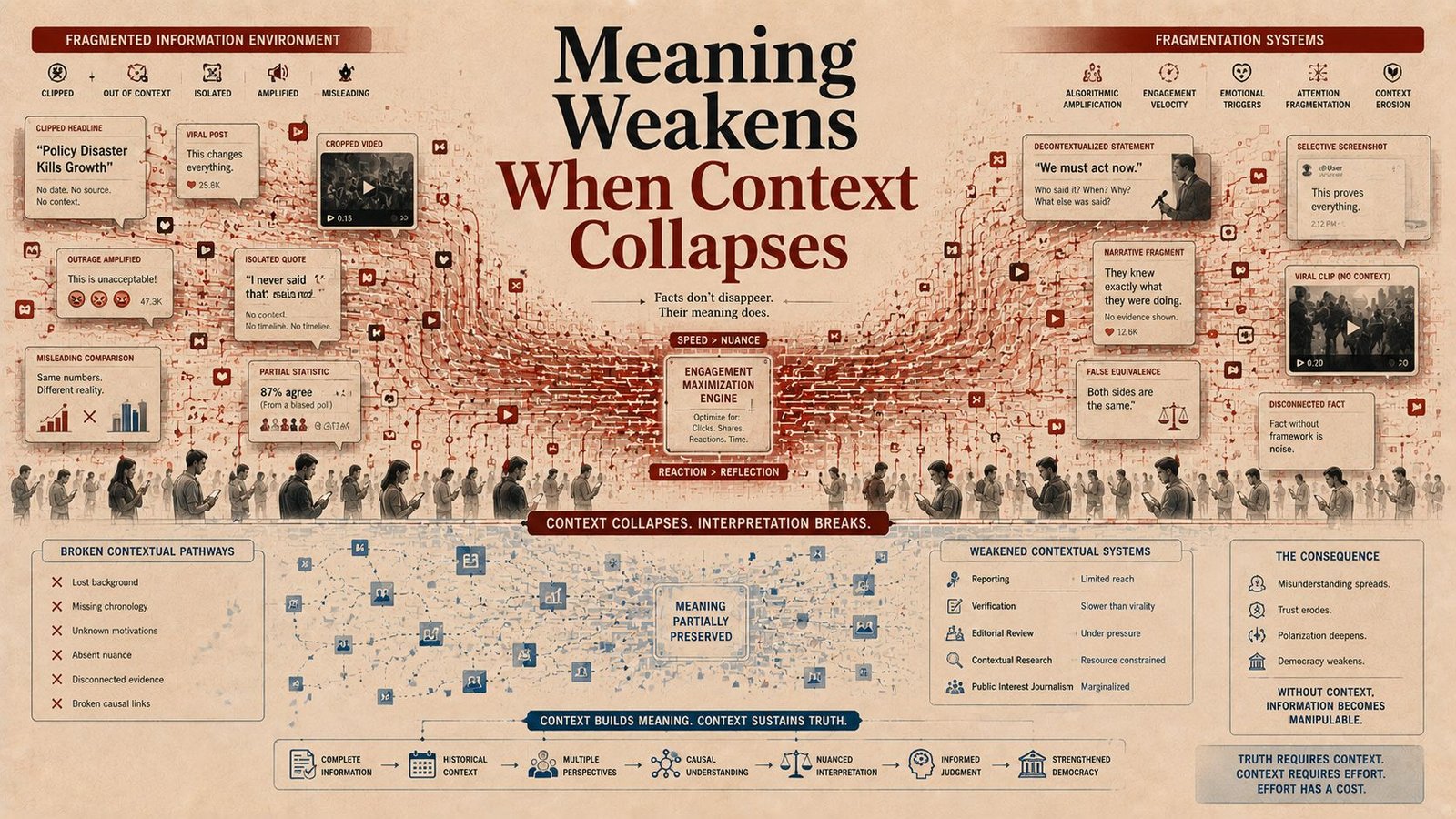
Facts separated from context can still mislead.
Modern information increasingly arrives as: - clips - fragments - screenshots - isolated quotes - viral reactions - partial narratives
Meaning becomes unstable when information loses surrounding context.
Interpretation weakens as fragmentation accelerates.
Society no longer experiences information synchronously.
Mass newspapers once coordinated public attention across millions of readers simultaneously.
Modern feeds increasingly isolate citizens into personalized streams shaped by algorithms, interests, reactions, and behavioral prediction systems.
Shared informational experiences become harder to sustain.
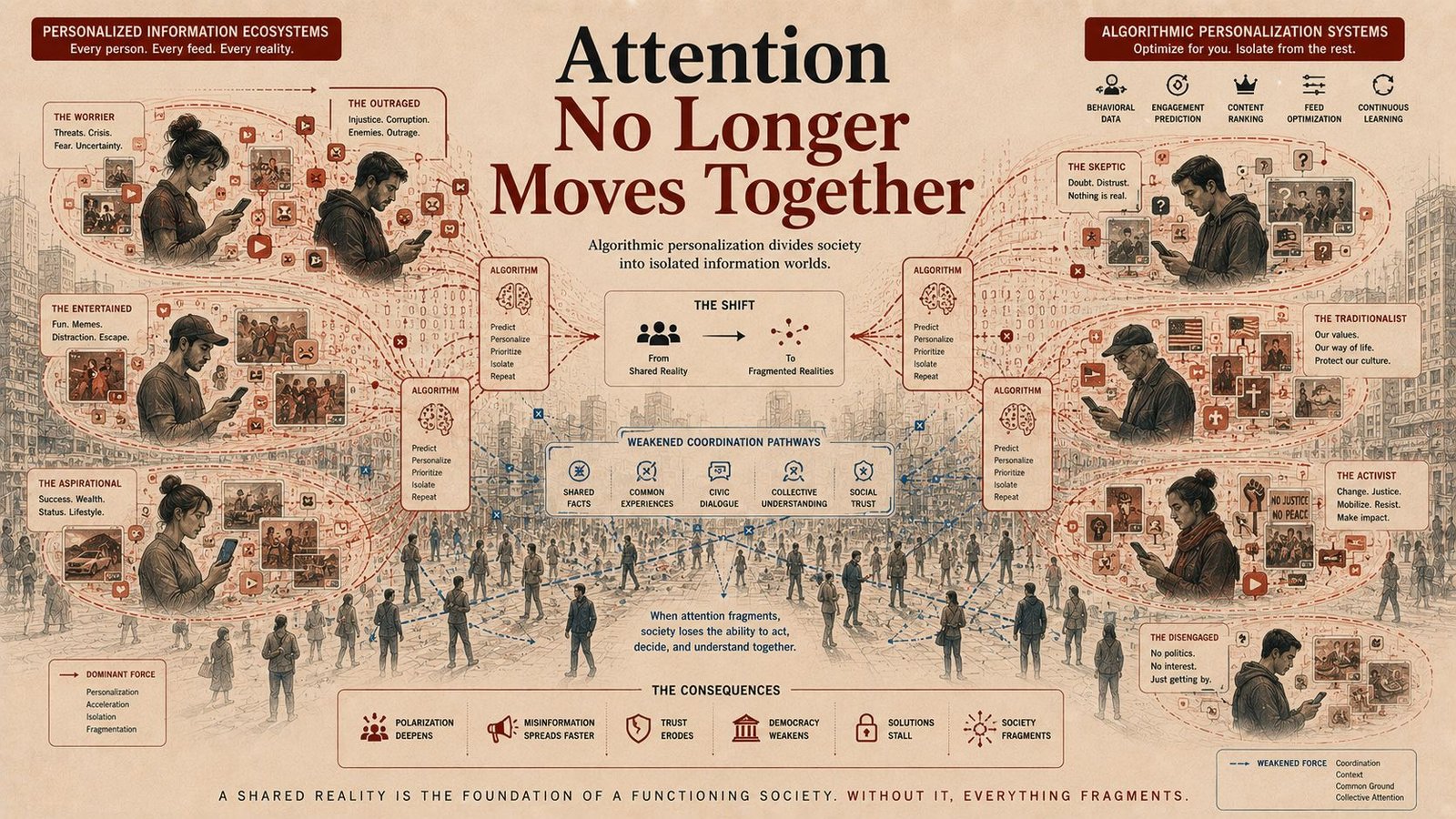
Public reaction now often arrives before collective understanding.
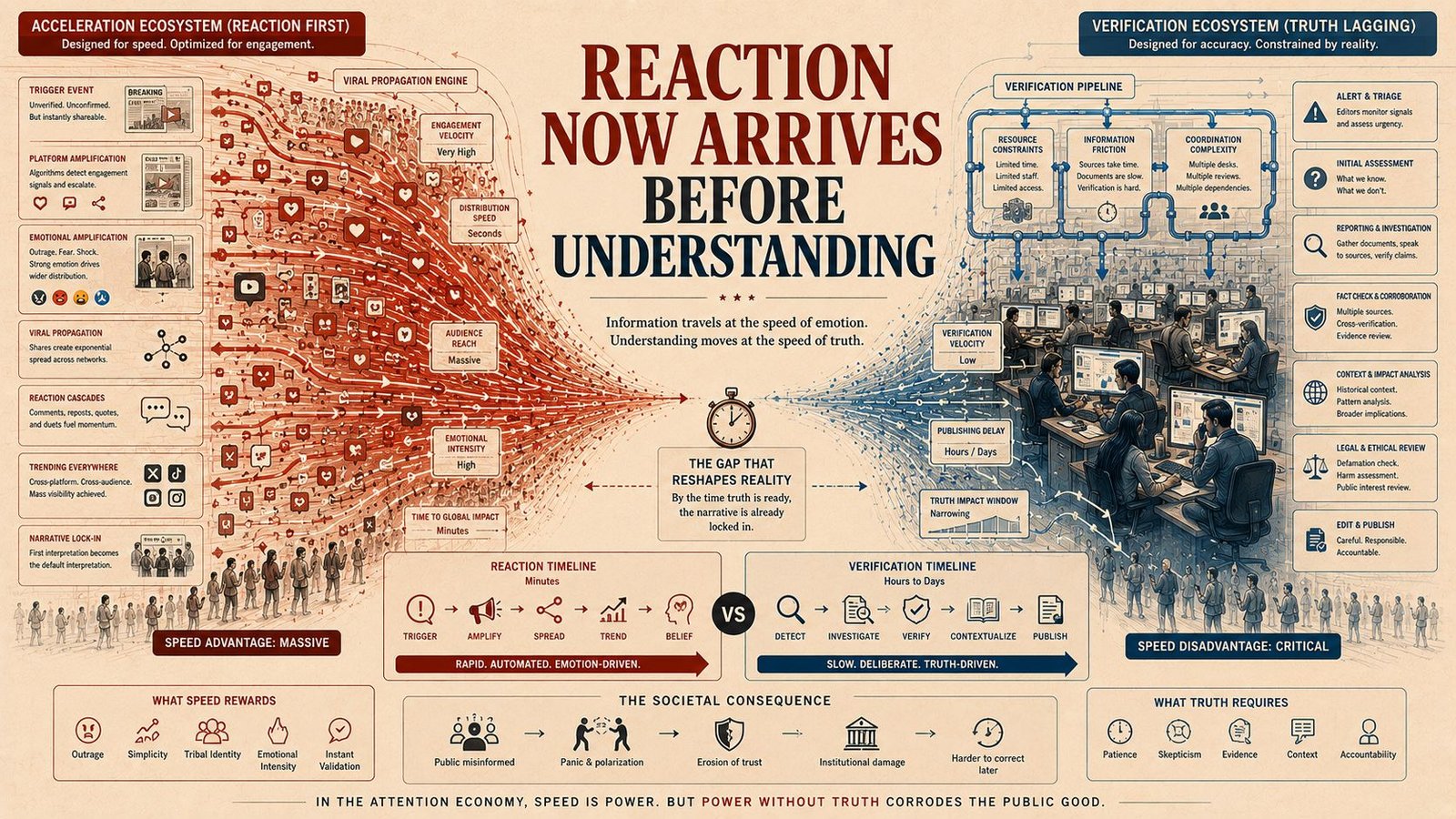
Verification systems now operate inside accelerated information environments.
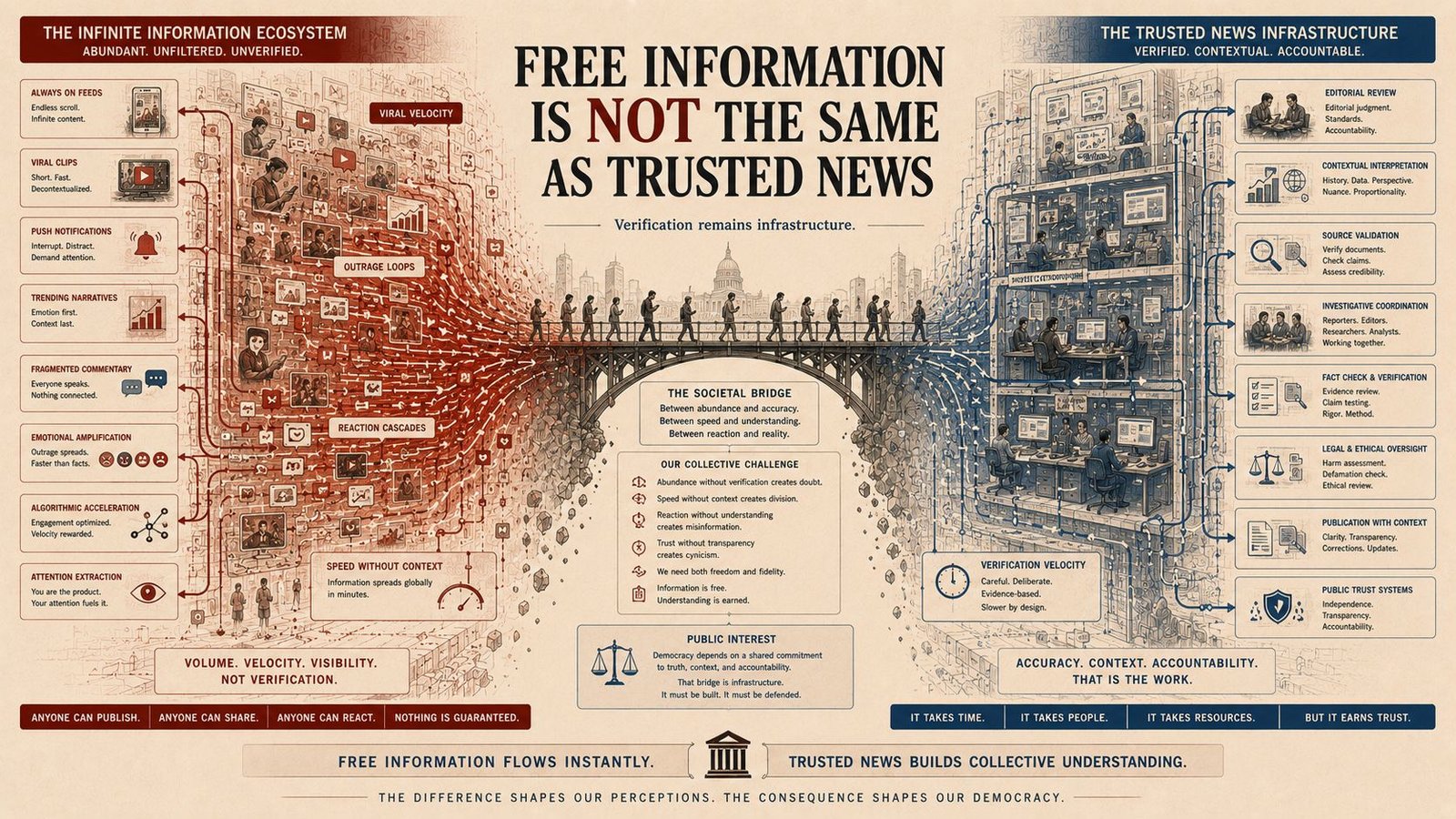
Journalism increasingly competes against: - infinite free content - viral amplification - platform incentives - reaction economics - attention acceleration
The challenge is no longer merely publishing information. The challenge is sustaining trusted interpretation under permanent informational pressure.
Free information is not the same as trusted news.
The internet democratized publishing. But journalism was never only about publishing information.
It was about sustaining verification, context, coordination, and collective interpretation under informational pressure.