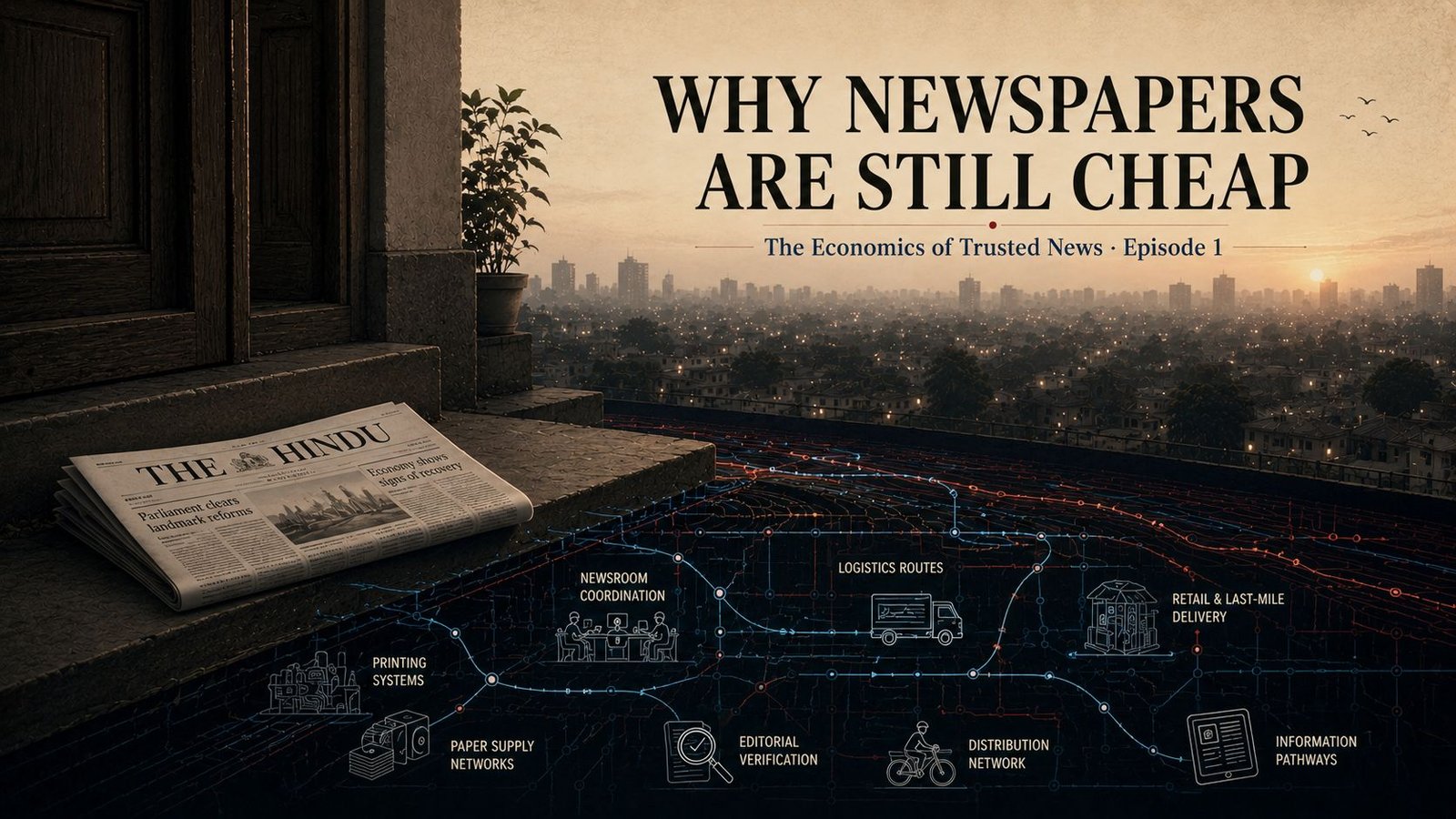
WHY
NEWSPAPERS
ARE STILL
CHEAP
Every morning, millions of newspapers quietly arrive at doorsteps across India. Most people only see the printed paper. Very few see the invisible systems sustaining it.
A ₹5 newspaper feels ordinary.
That is precisely why its economics become invisible.
The printed newspaper appears small, inexpensive, and familiar. But beneath that morning routine exists a large operational ecosystem involving reporting, verification, printing, logistics, and distribution at national scale.
The cover price rarely reflects the actual infrastructure behind the system.
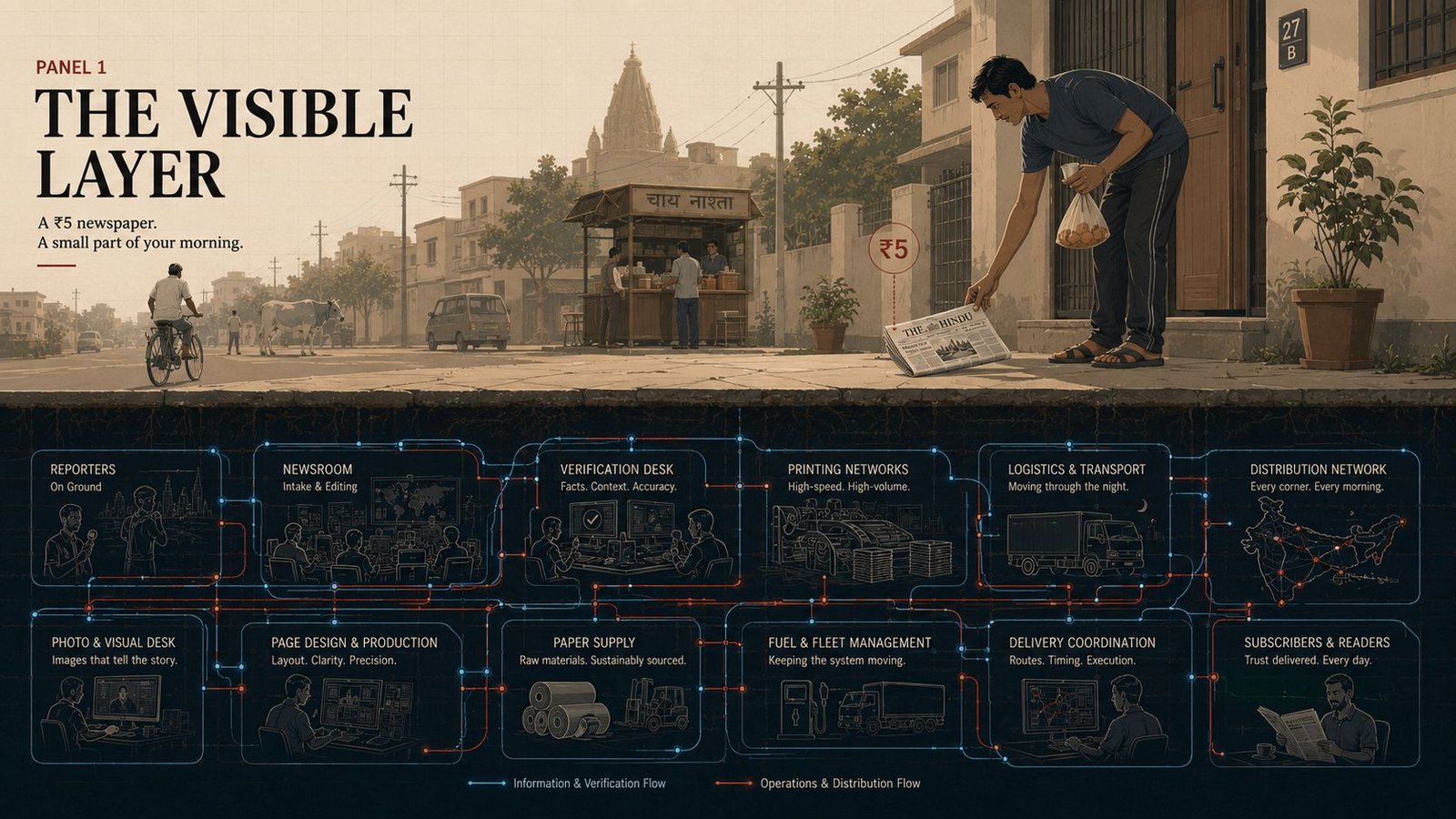
The visible paper is often the smallest part of the system.
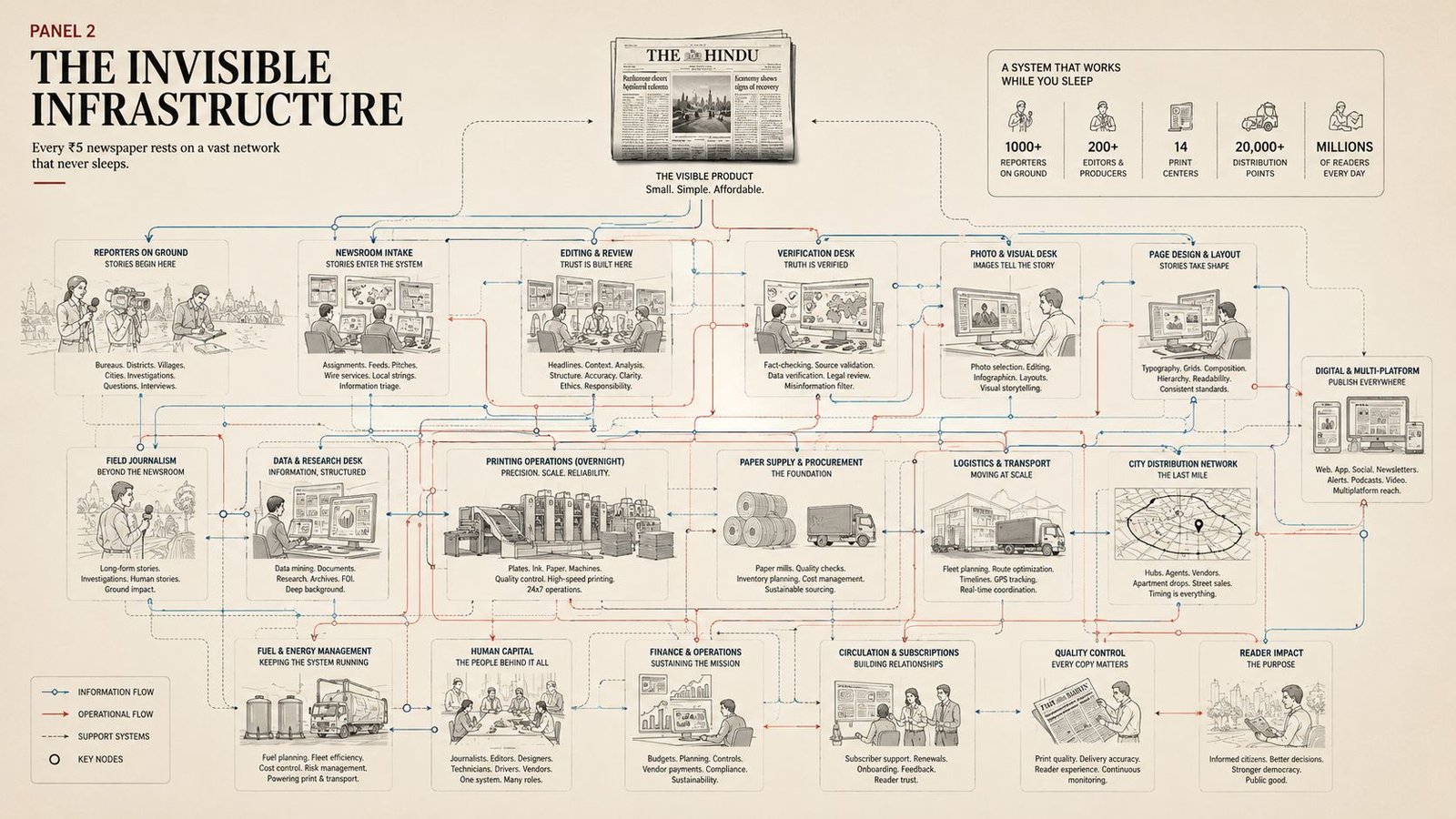
Thousands of coordinated systems operate behind a single headline.
The newspaper was never priced like a normal product.
For decades, Indian newspapers expanded circulation by keeping cover prices extremely low.
The objective was not maximizing revenue from each copy. The objective was building audience scale, daily habit, advertiser confidence, and long-term institutional reach.
The newspaper became a distribution network for public attention.
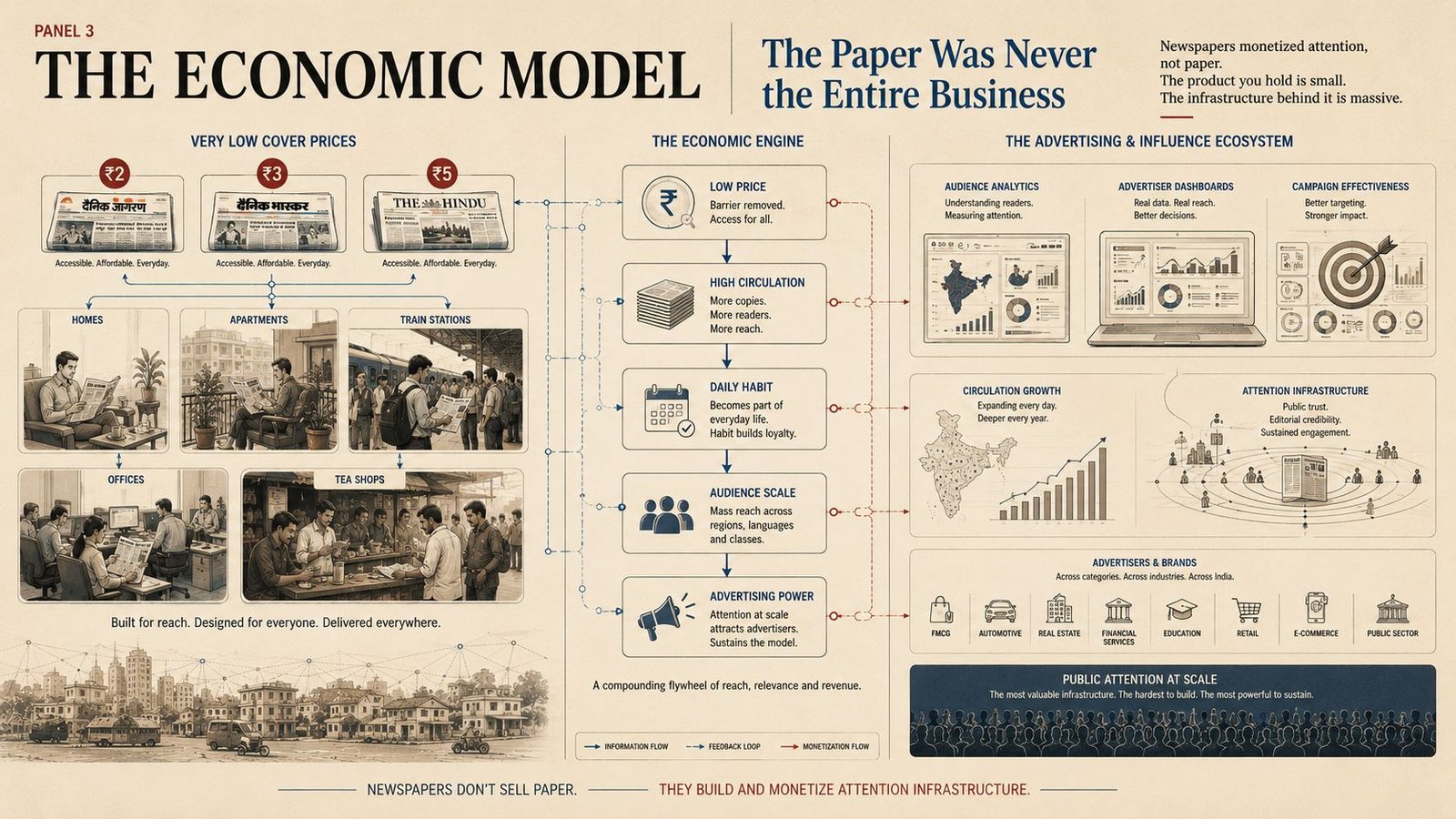
Journalism was subsidized by attention long before the internet industrialized it.
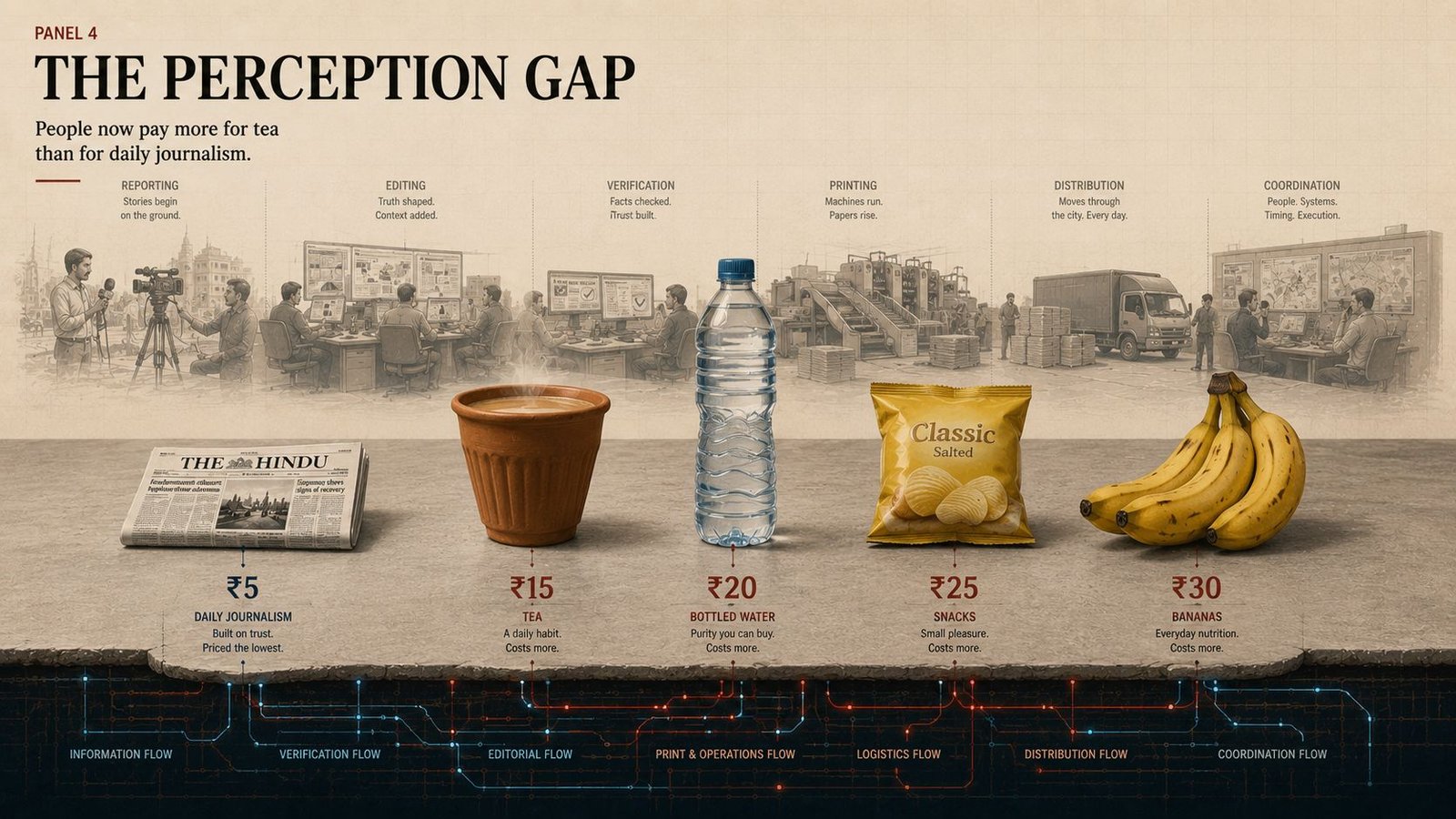
People now pay more for tea than for daily journalism.
That comparison reveals something psychologically important.
Societies became accustomed to newspapers costing: ₹2. ₹3. ₹5.
Over time, readers learned to value journalism through the visible cover price rather than through the scale of the systems producing it.
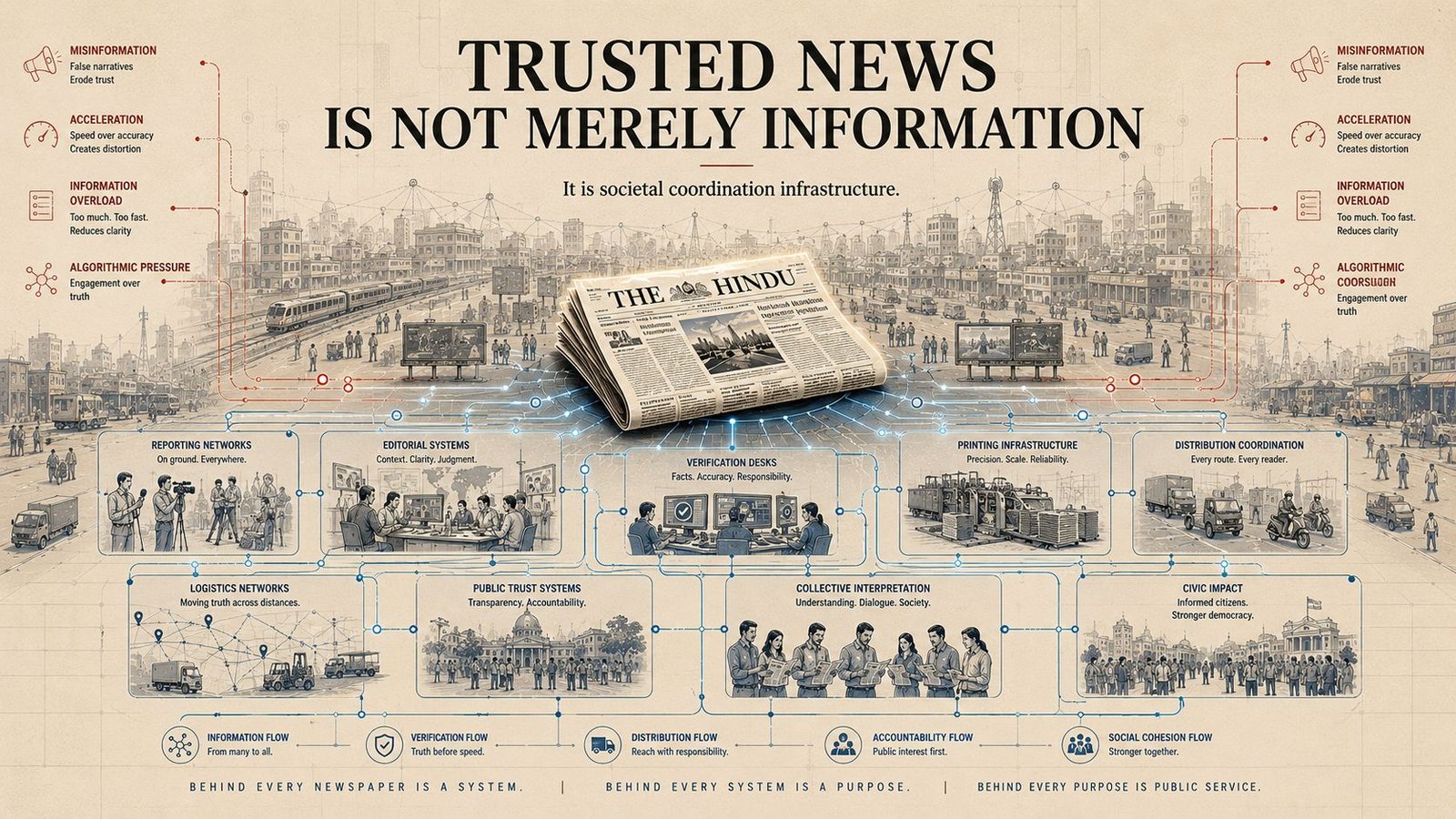
Trusted news is not merely information.
It is reporting infrastructure. Verification architecture. Distribution coordination. Institutional continuity. Collective interpretation.
And as digital systems accelerate information faster than understanding, societies may eventually rediscover the real economic value of trusted journalism.