THE BUSINESS
WAS NEVER
REALLY
PAPER
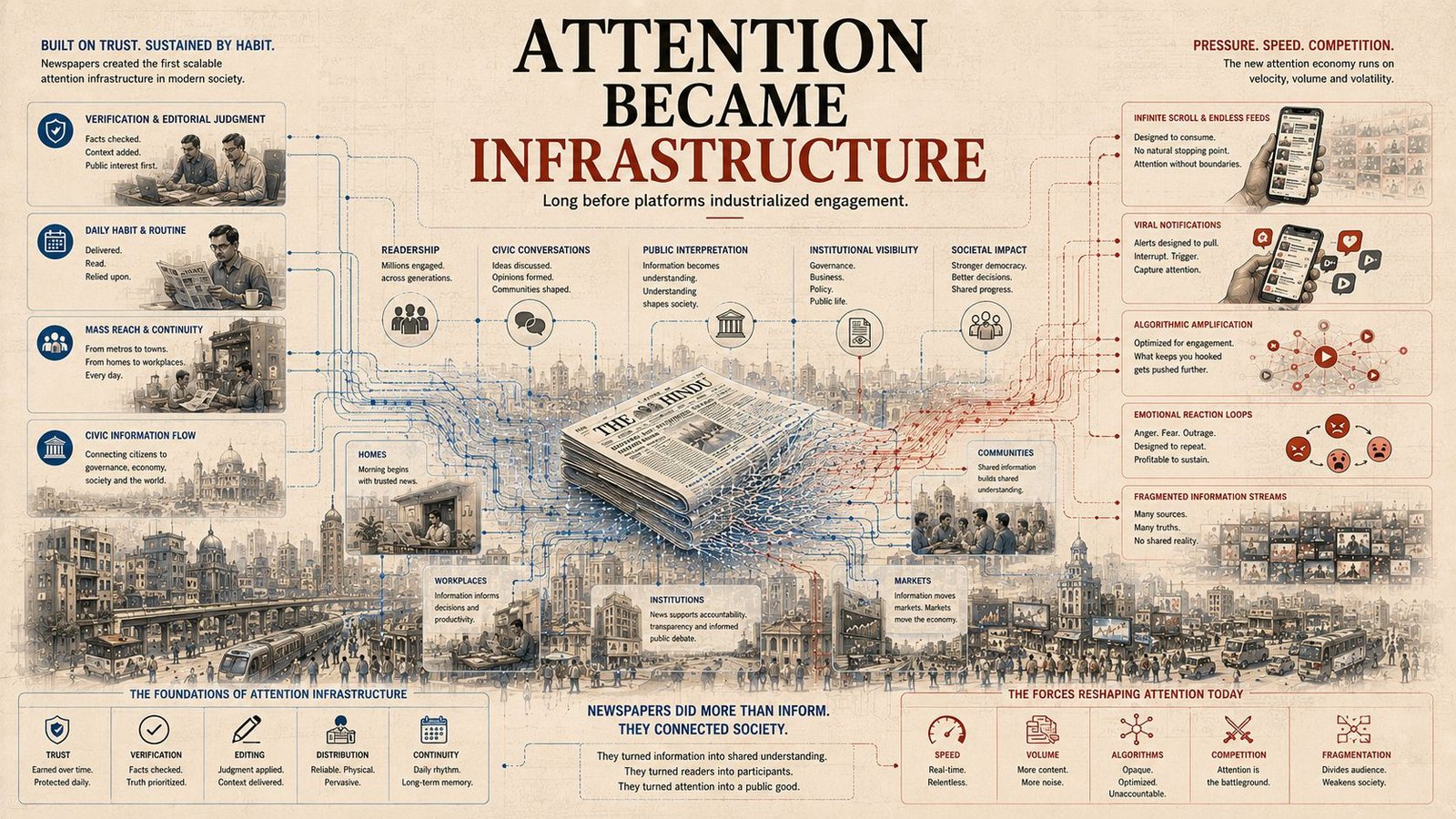
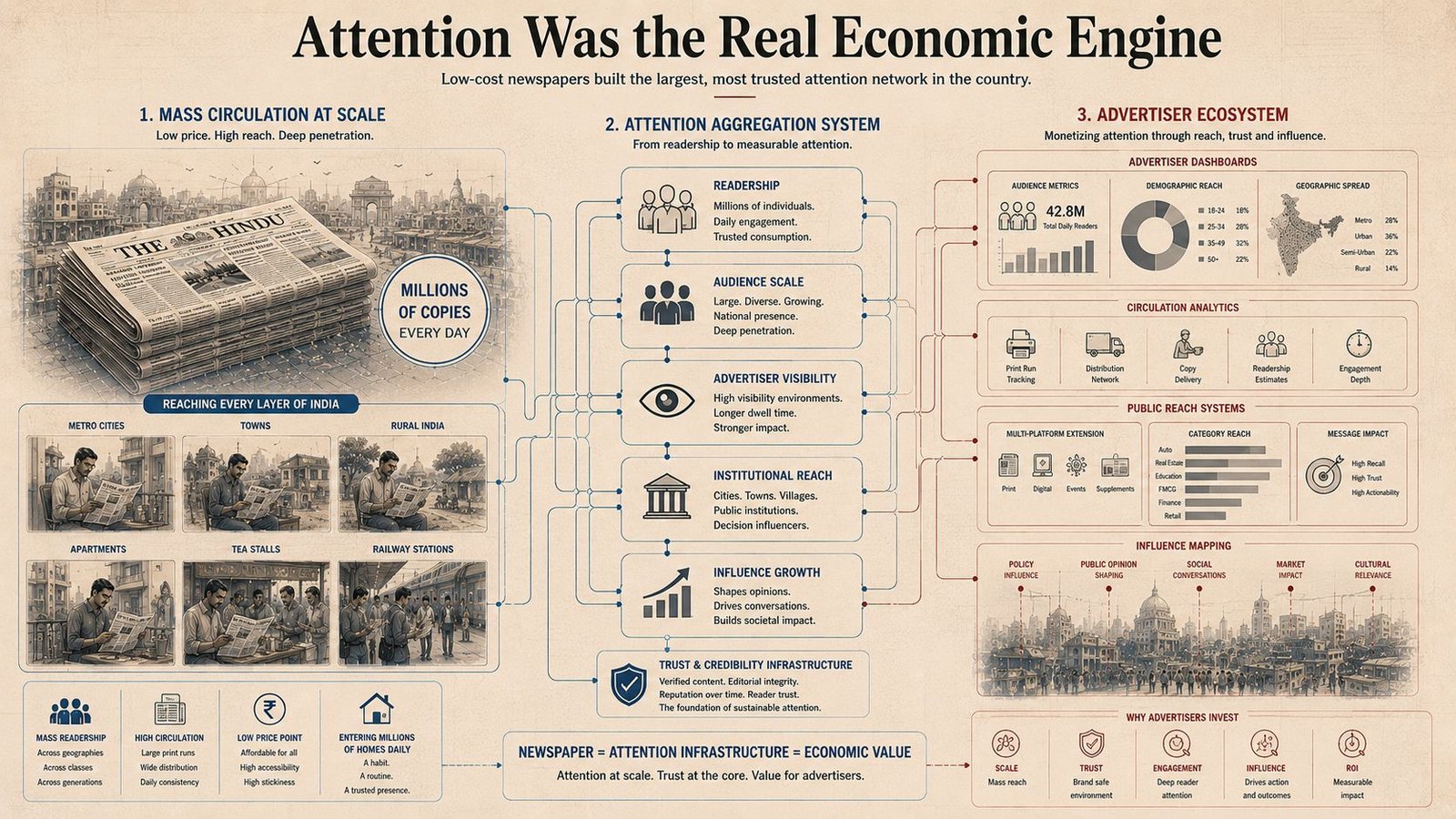
Long before social media industrialized attention, newspapers had already built one of the largest audience aggregation systems in modern society. The printed paper was only the delivery mechanism.
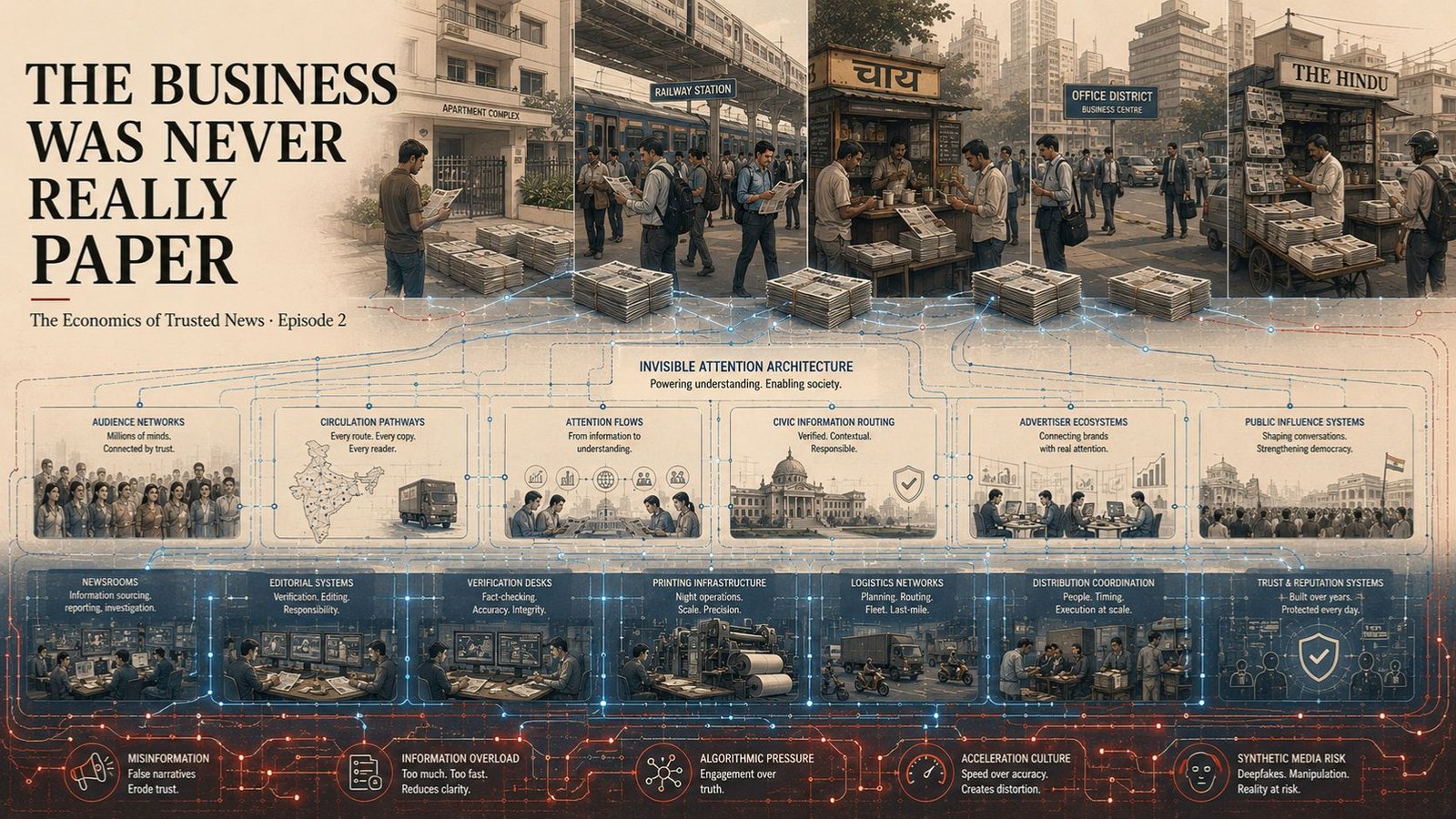
Millions of households began their mornings the same way.
A newspaper arriving at the doorstep was never merely a transaction.
It created continuity. Habit. Attention. Daily entry into public reality.
Over decades, newspapers became embedded into the rhythm of civic life.
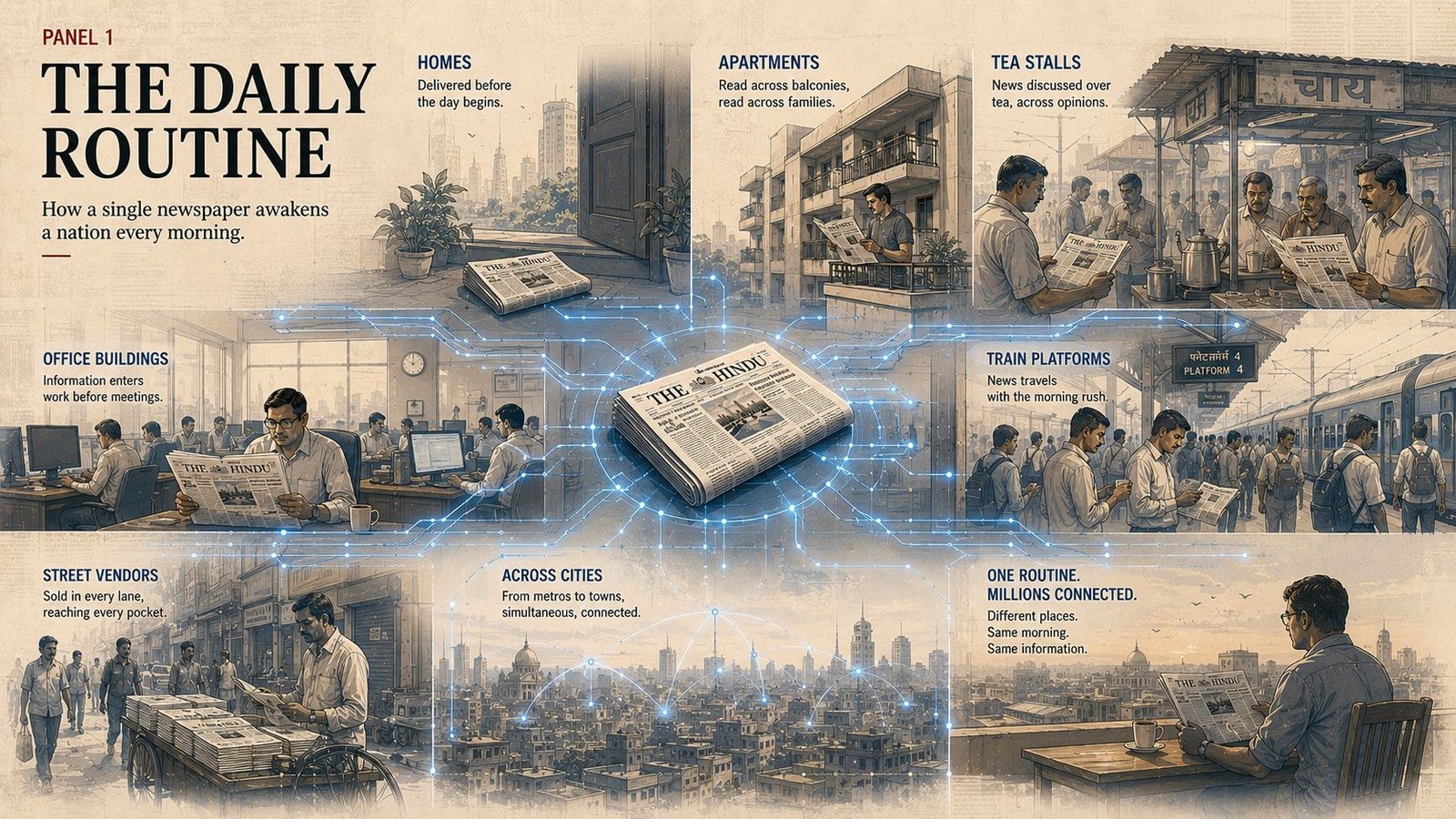
The newspaper was not selling paper. It was organizing attention.
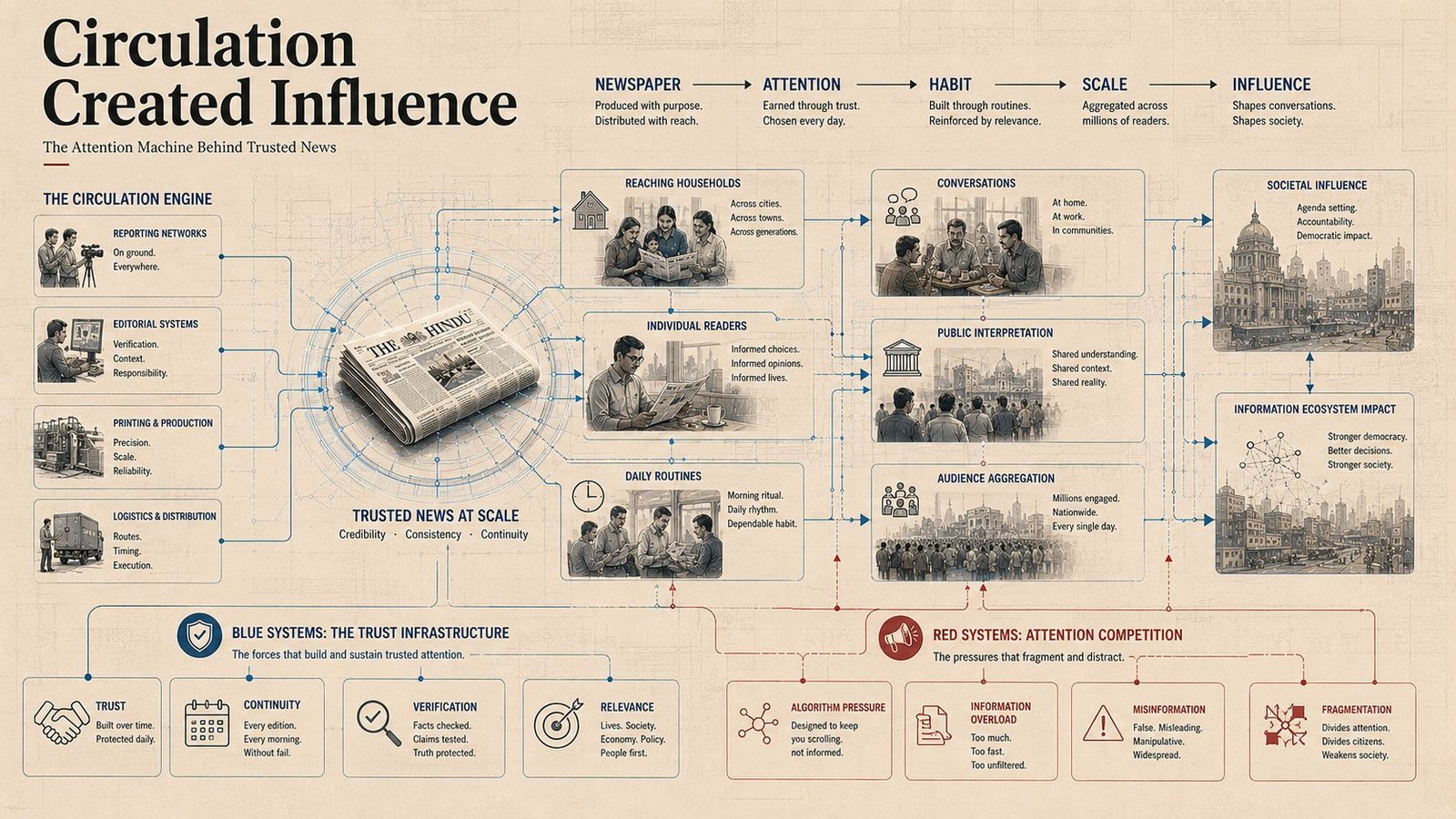
Circulation created influence long before algorithms existed.
Large readership numbers increased: - advertiser confidence - public visibility - institutional relevance - market positioning - political influence
The newspaper itself became infrastructure for daily audience aggregation.
The real economic engine existed behind the headline.
Newspapers could remain inexpensive because advertisers funded access to large, trusted audiences.
The economic model depended on scale. More readers increased advertiser demand. More advertiser demand sustained the system.
This was an attention economy decades before digital platforms accelerated it globally.
Social media did not invent the attention economy. It industrialized it.
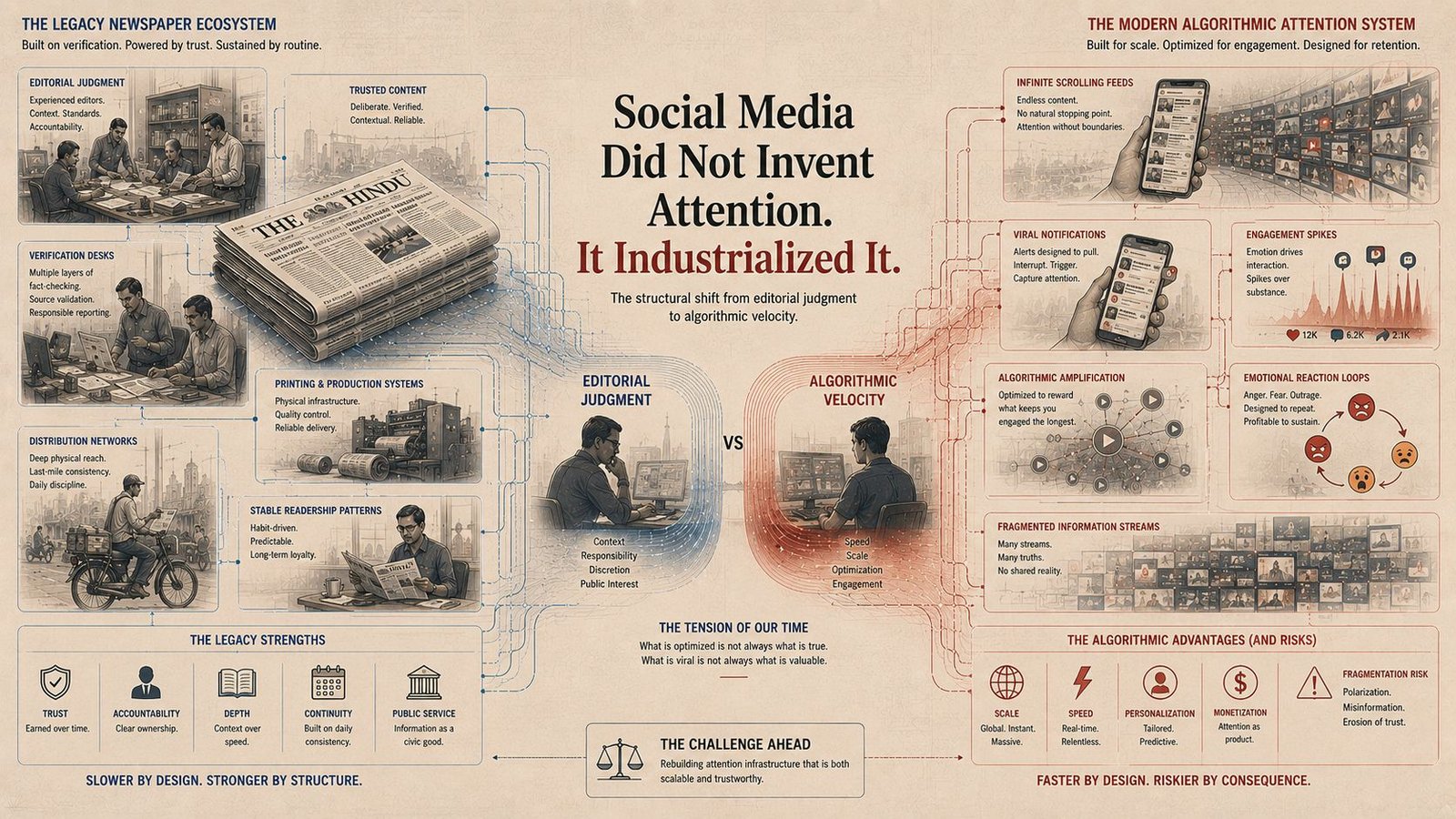
Digital platforms changed the economics of public attention.
Legacy media monetized trust, continuity, and institutional credibility.
Modern platforms optimize: - engagement velocity - behavioral response - infinite scrolling - emotional amplification - algorithmic visibility
The competition was no longer between newspapers. It became a competition between editorial judgment and accelerated attention systems.
Attention became the most valuable infrastructure in modern media.
Newspapers understood this long before platforms transformed it into a global behavioral economy.
The printed paper was only the visible layer of a much larger system built around trust, habit, reach, and collective attention.