THE REAL COST
WAS NEVER
THE COVER
PRICE
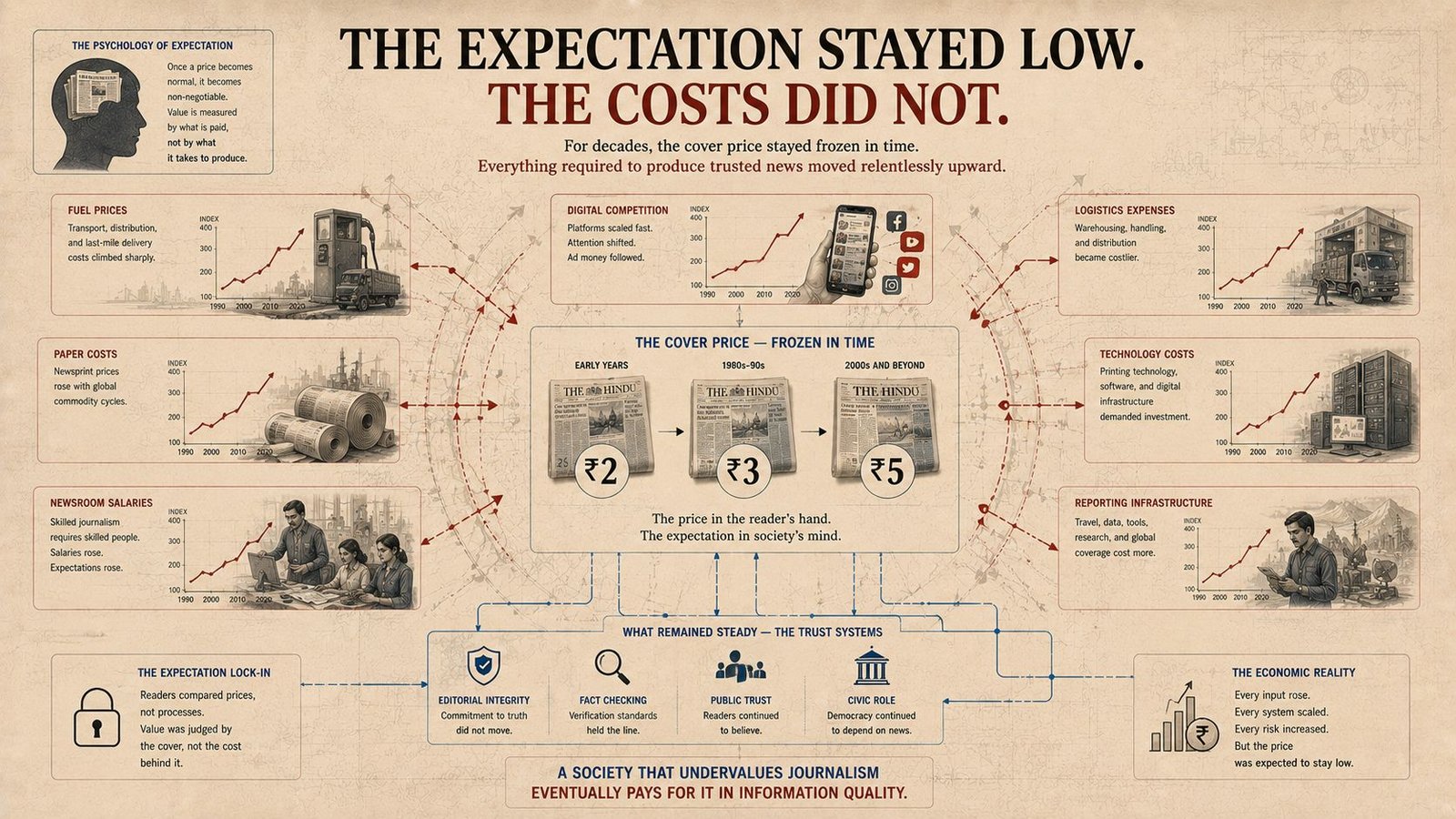
For decades, serious journalism became one of the most affordable products in Indian society. That affordability expanded access. But it also shaped expectations permanently.
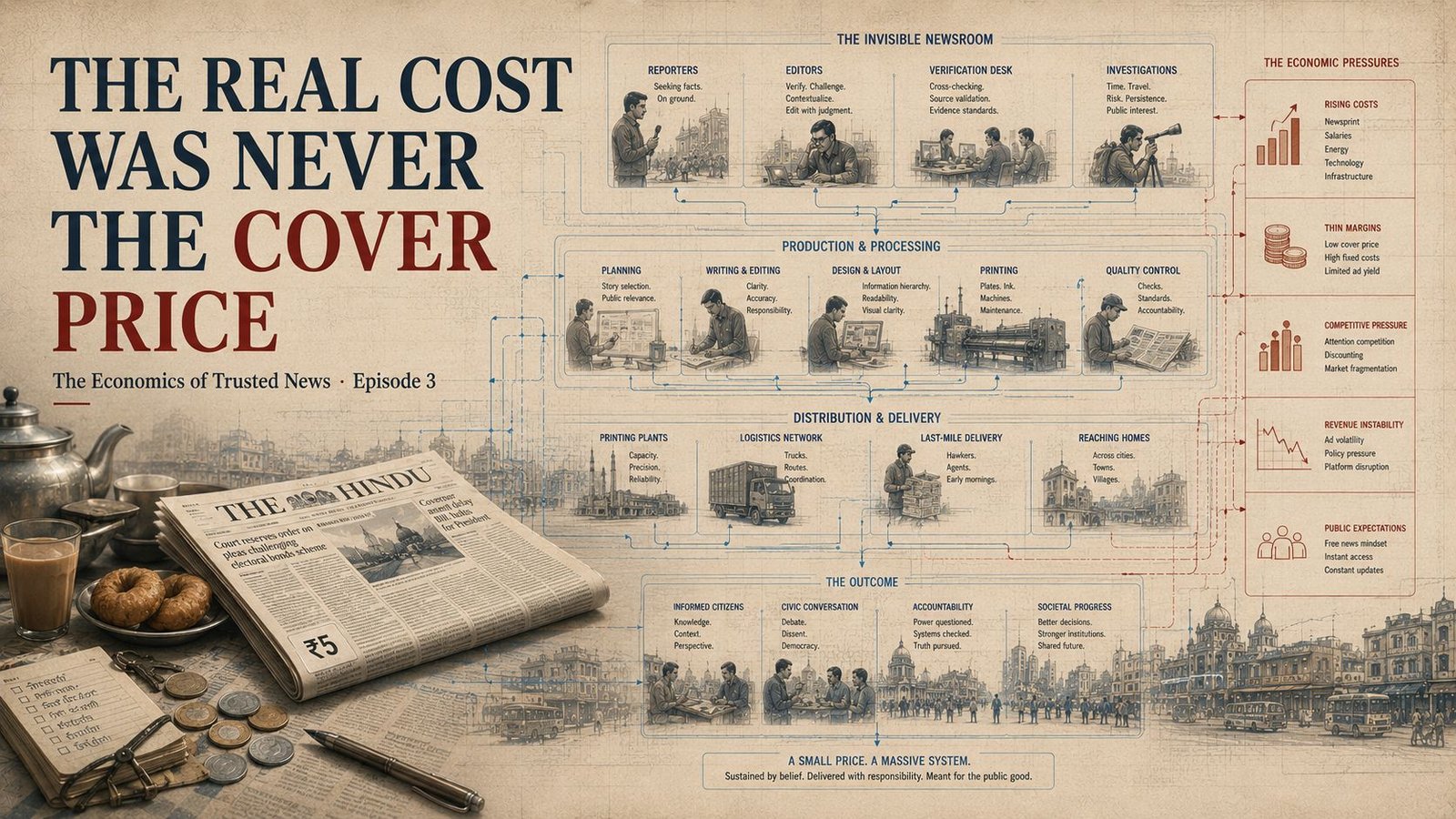
₹2. ₹3. ₹5. became part of daily life.
Low newspaper pricing helped create one of the largest reading cultures in the world.
Millions of households integrated newspapers into their everyday routines. The newspaper became: habit, continuity, and civic rhythm.
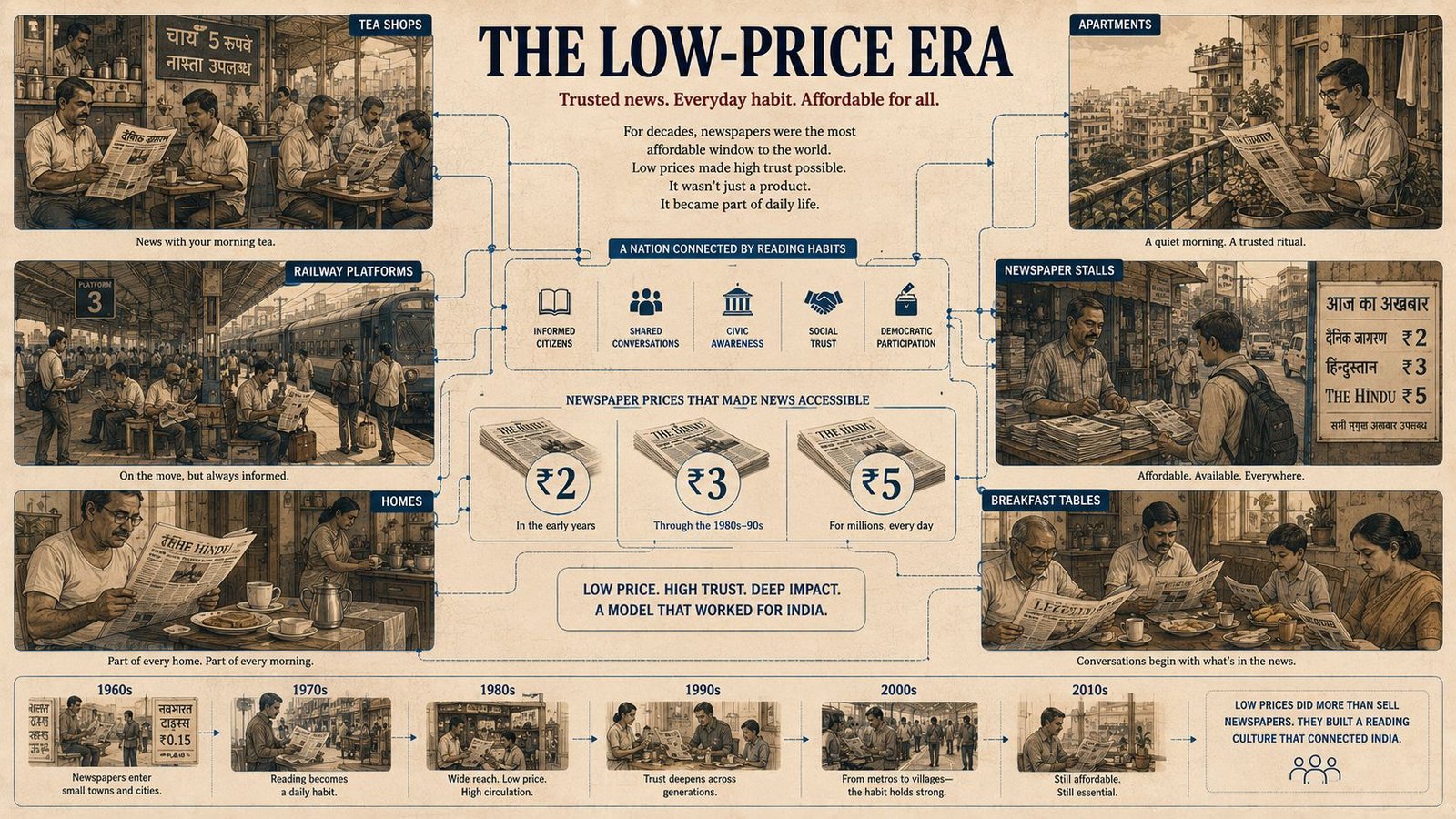
Affordable access expanded reading culture across generations.
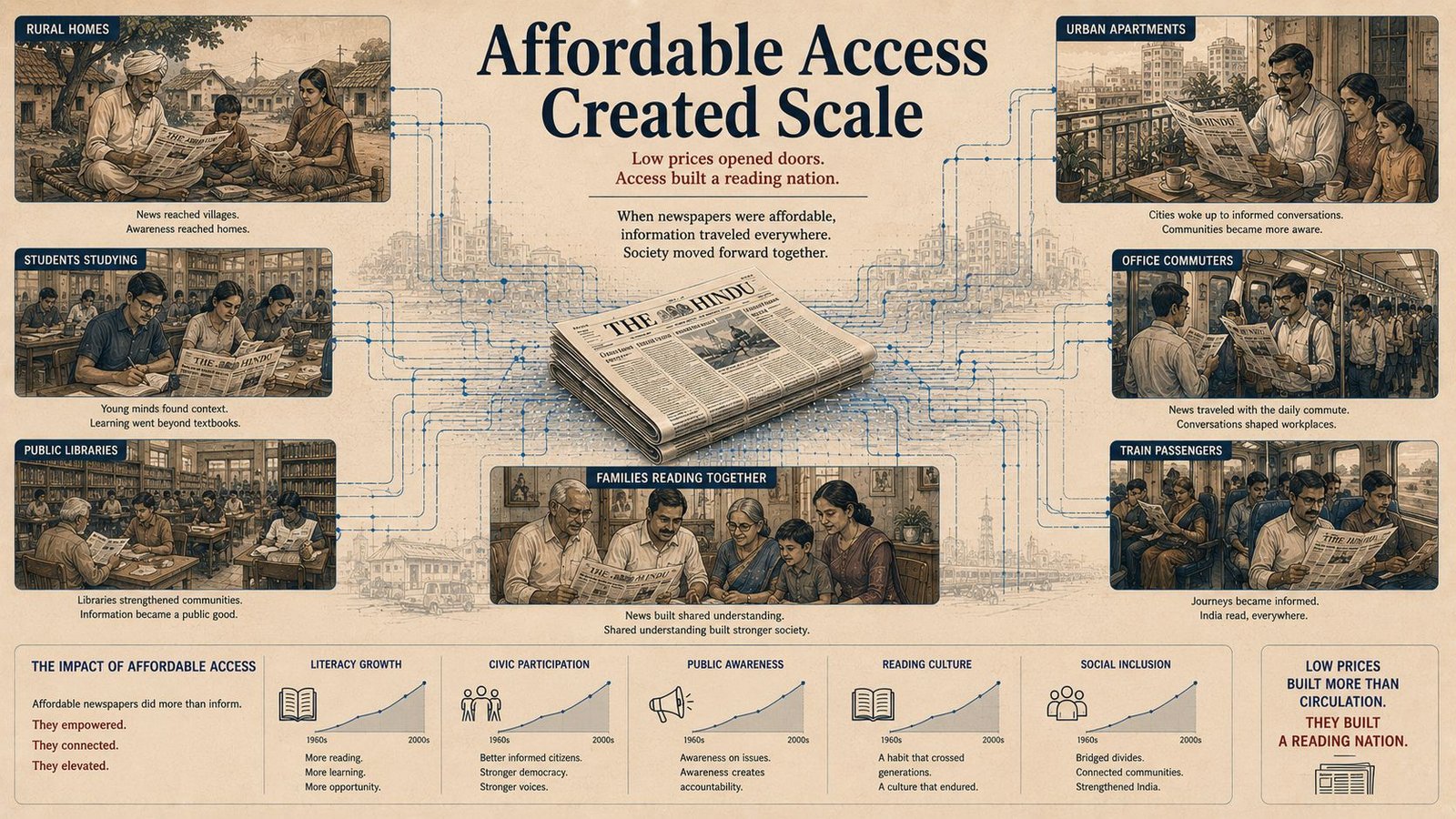
Cheap newspapers democratized information access.
Affordable pricing dramatically expanded: - literacy - civic awareness - exam preparation - public participation - information continuity
The newspaper became one of the most widely distributed knowledge systems in society.
The low price became psychologically associated with the value of journalism itself.
The visible price froze while the systems behind journalism kept expanding.
Over time, readers subconsciously learned to associate journalism with extremely low prices.
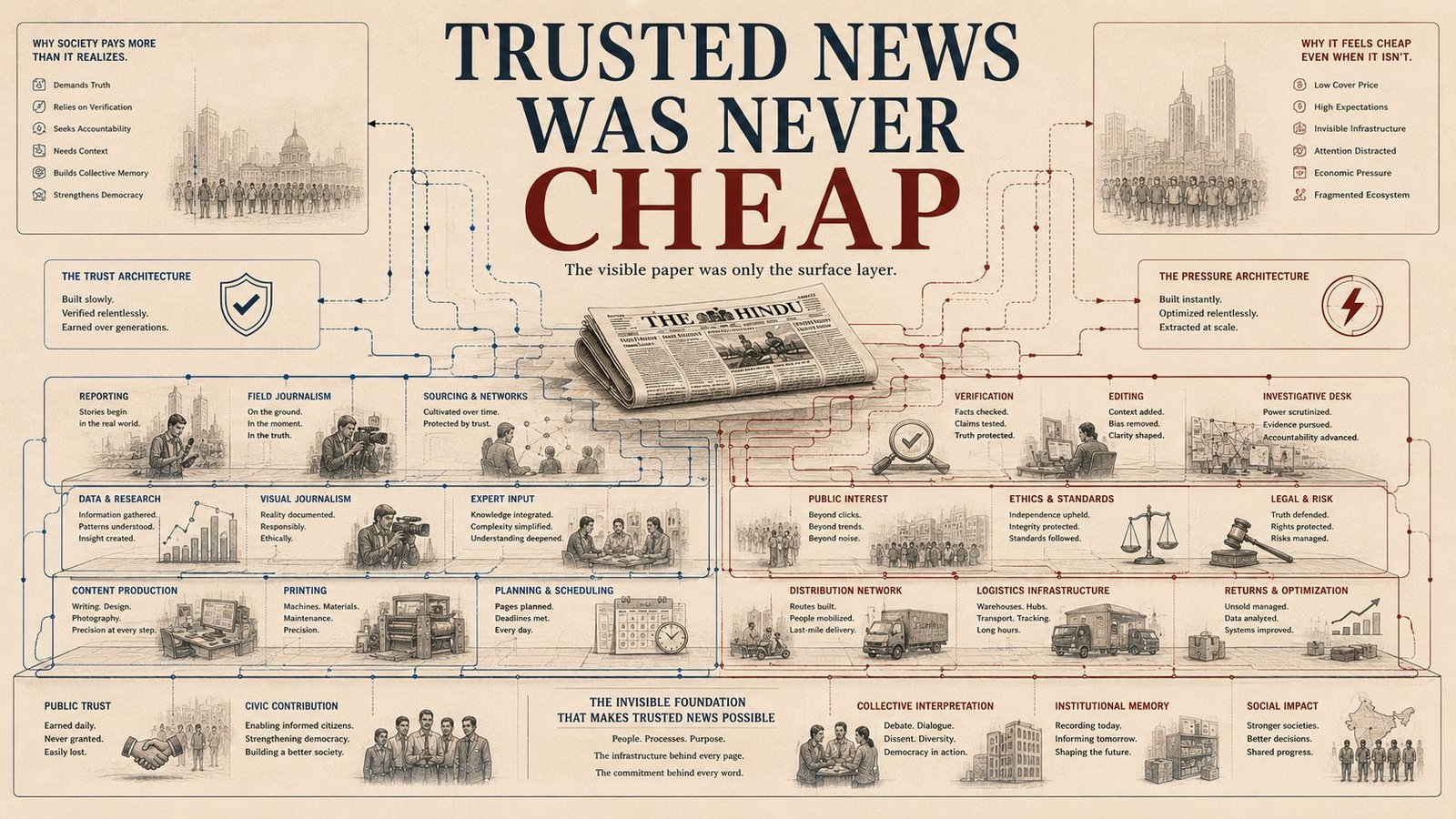
The visible cover price became disconnected from the scale of infrastructure required to sustain reporting, editing, verification, printing, and distribution.
The newspaper looked inexpensive. The systems behind it never were.
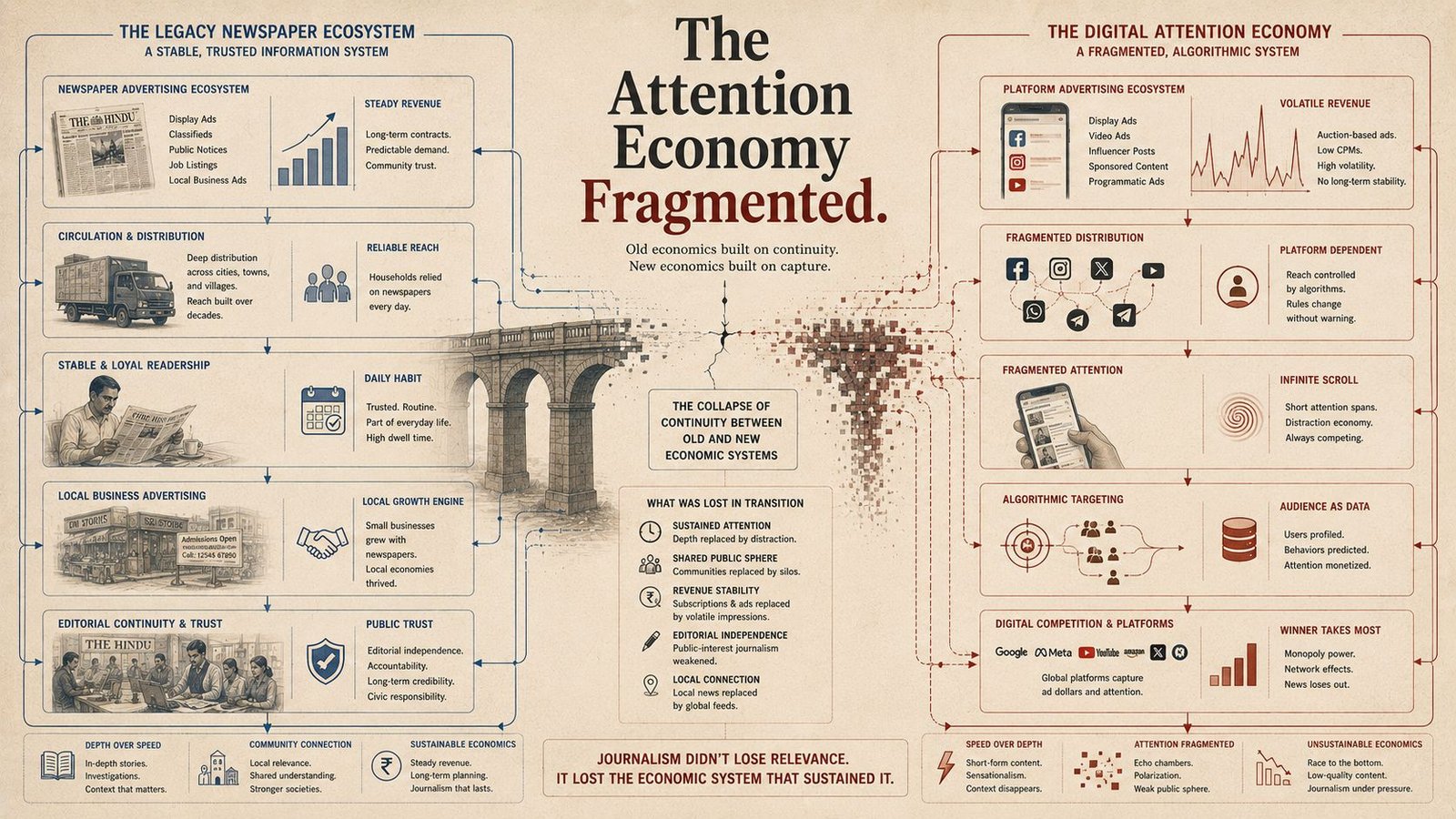
The economic systems subsidizing journalism began weakening.
Digital platforms transformed global advertising economics.
The attention systems that once sustained newspapers became fragmented across: - platforms - feeds - apps - infinite scrolling environments - algorithmic advertising systems
The pressure quietly accumulated across the entire industry.
Societies continued demanding trusted journalism without fully pricing the systems required to sustain it.
People now pay more for convenience than for daily journalism.
Societies still expect: - deep reporting - rapid updates - investigative journalism - accountability - verification - editorial judgment
But the visible cover price continued shaping how journalism itself was economically perceived.
The expectation remained low. The infrastructure costs did not.
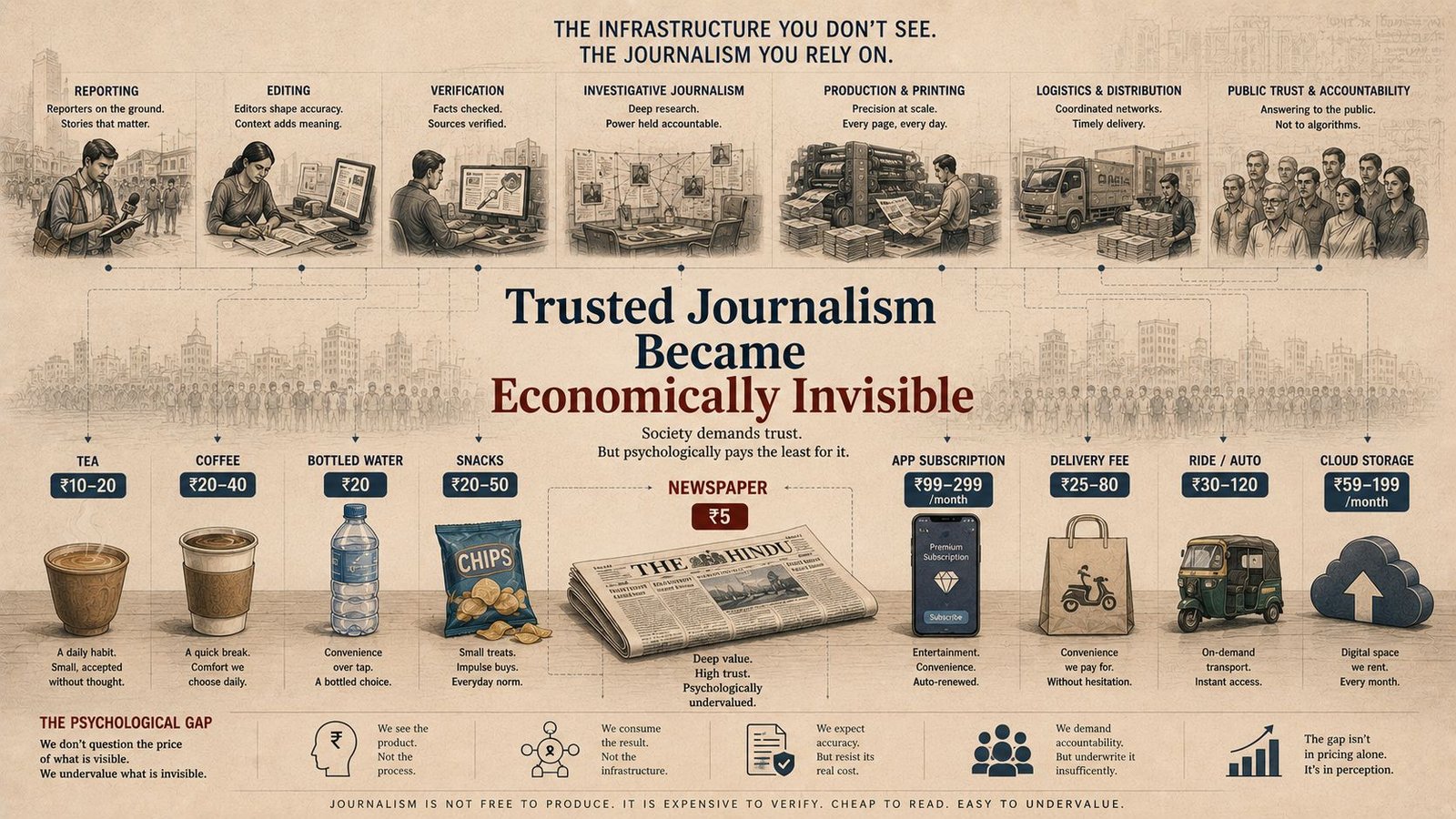
Trusted news was never cheap.
The low cover price made journalism widely accessible. But it also made the invisible systems behind journalism economically invisible.
The printed paper appeared inexpensive. The infrastructure behind public trust never was.