PHASE I
The Hidden Economics
Episodes 1–4 explore newspaper pricing, advertising, audience economics, and the rise of free information.
How does society coordinate trust when information becomes infinite?
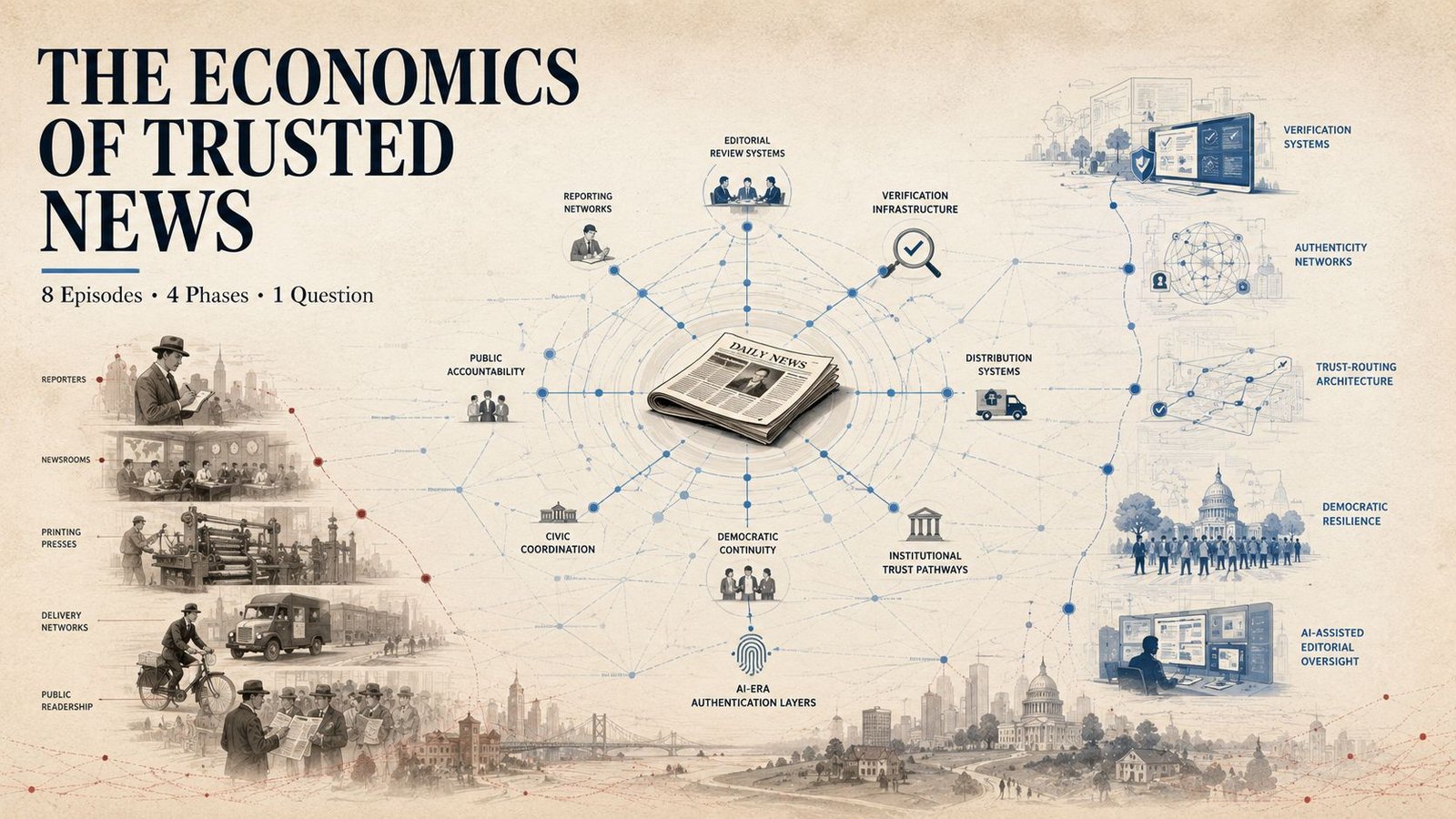
What began as a question about why newspapers remain inexpensive slowly unfolded into something far larger: a hidden architecture of verification, coordination, public trust, democratic continuity, and civilization-scale information systems.
This series explores how journalism evolved from printed newspapers into one of society's most invisible yet essential coordination infrastructures.
This series began with a deceptively simple question:
Why are newspapers in India still priced so low?
Across eight interconnected episodes, that question expands into a deeper exploration of attention economics, verification systems, institutional trust, democratic coordination, and the future of public understanding in the age of artificial intelligence.
What starts as a story about newspaper pricing ultimately becomes a story about how societies coordinate reality together.
The series unfolds through four connected layers, gradually revealing the invisible infrastructure behind trusted news.
Episodes 1–4 explore newspaper pricing, advertising, audience economics, and the rise of free information.
Episodes 5–6 examine delivery systems, permanence, accountability, and why print still signals trust.
Episode 7 reveals journalism as invisible civic infrastructure helping society think together.
Episode 8 explores trust, authenticity, and verification in an AI-driven information ecosystem.
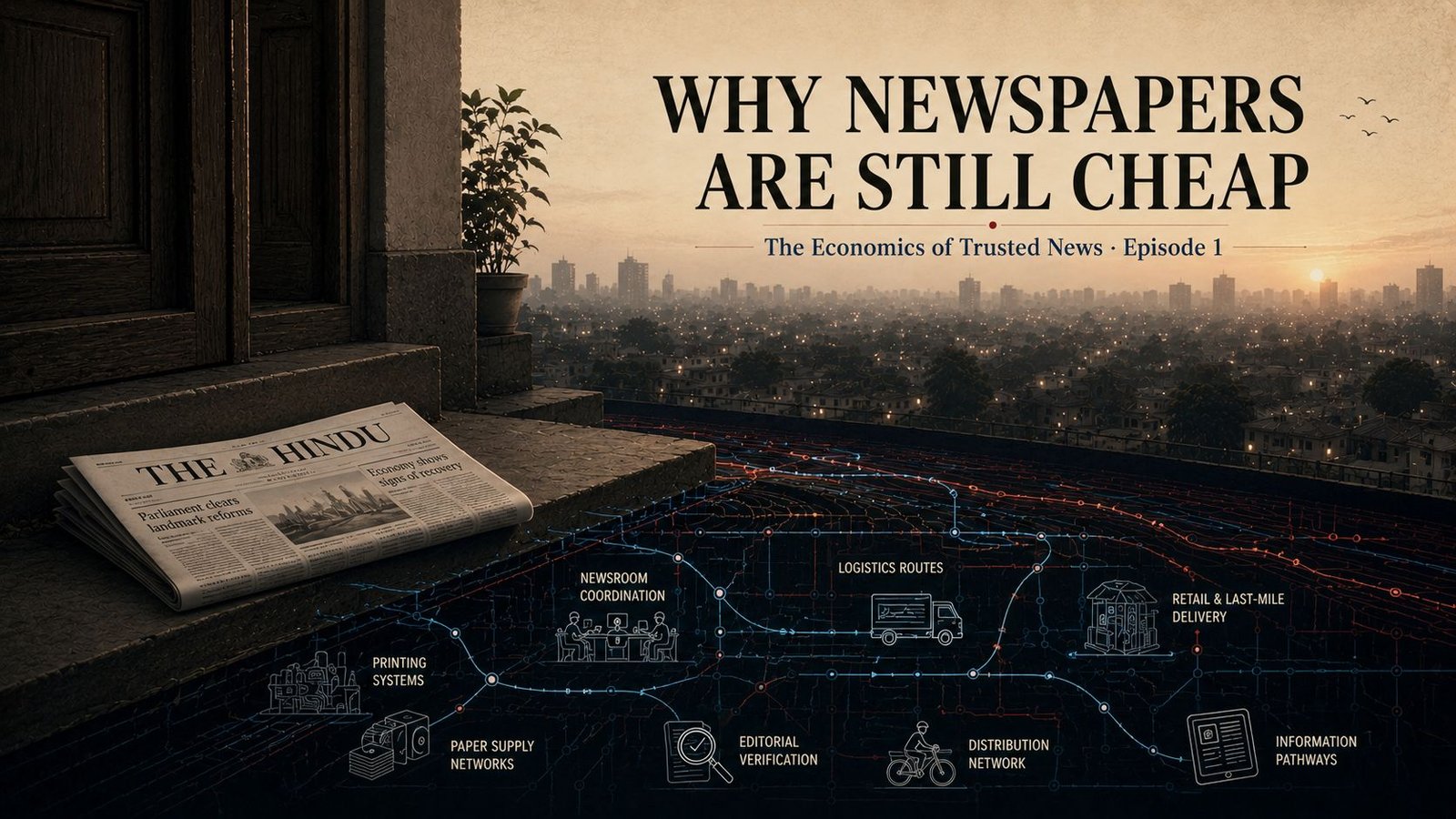
How newspapers quietly became one of the largest attention, advertising, and civic-access systems in modern society.
How the visible cover price hides a much larger invisible operational ecosystem.
Read Episode →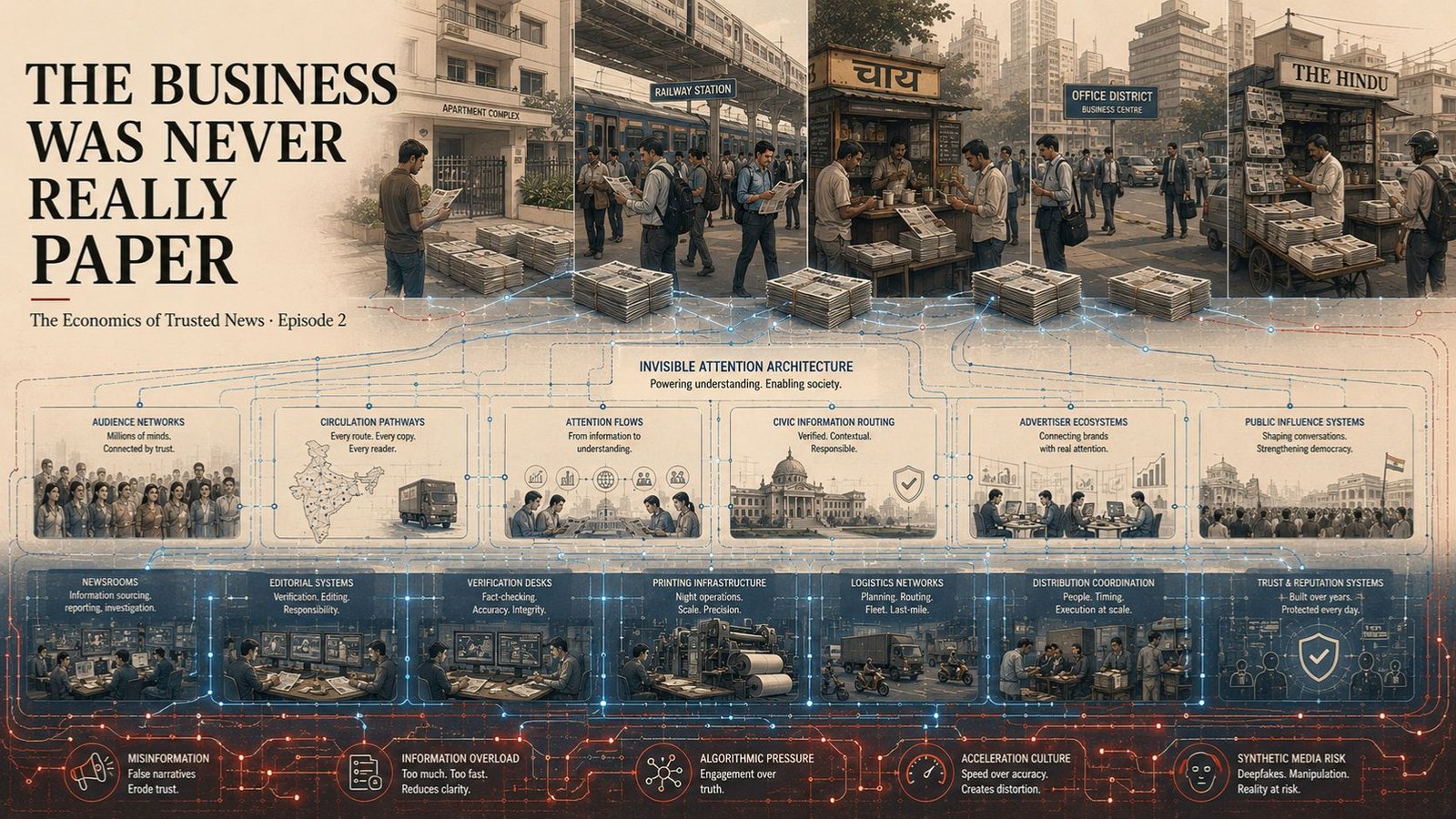
Why attention and advertising became the real economic engine behind modern media.
Read Episode →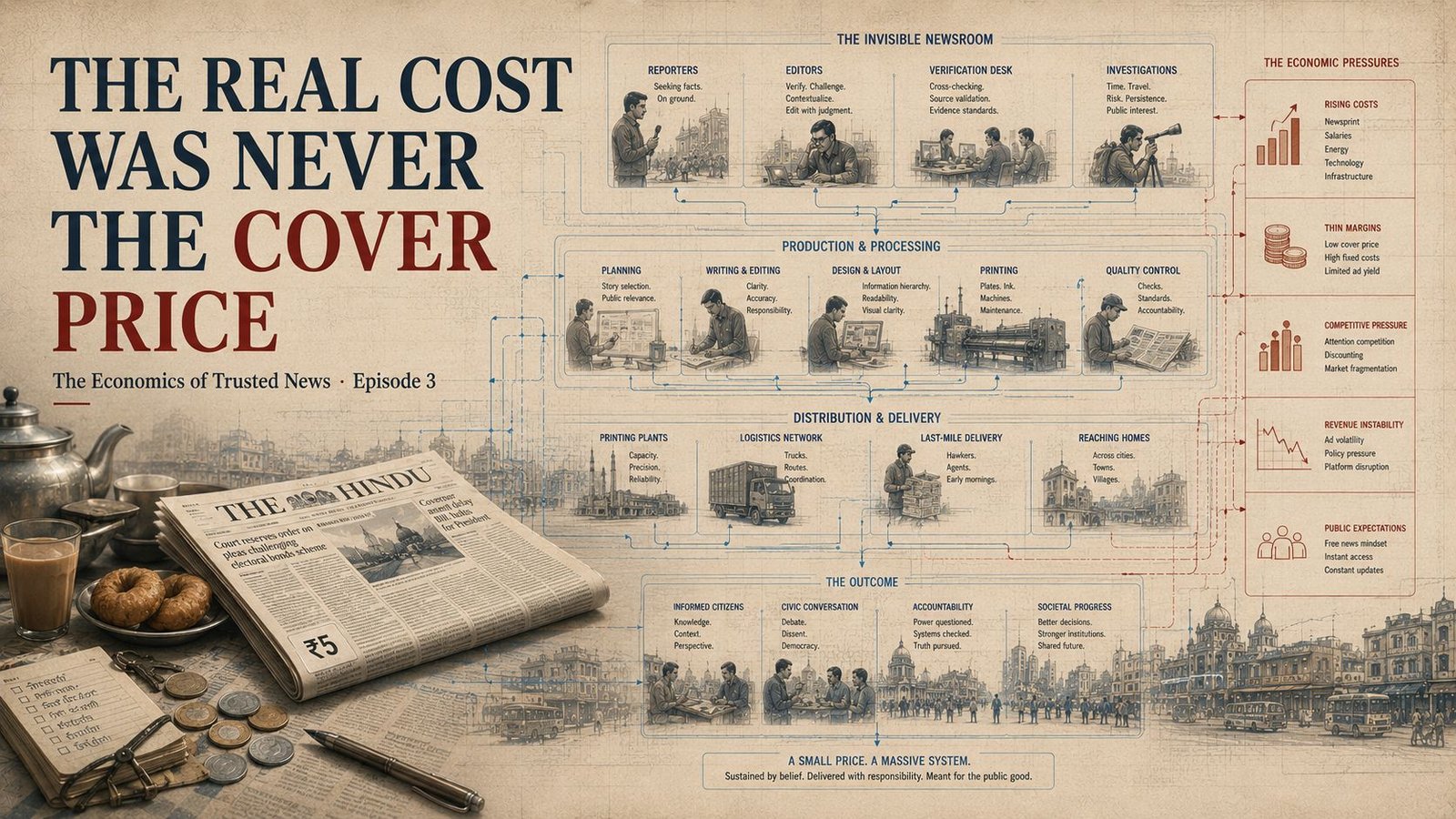
How decades of pricing shaped public expectations around journalism.
Read Episode →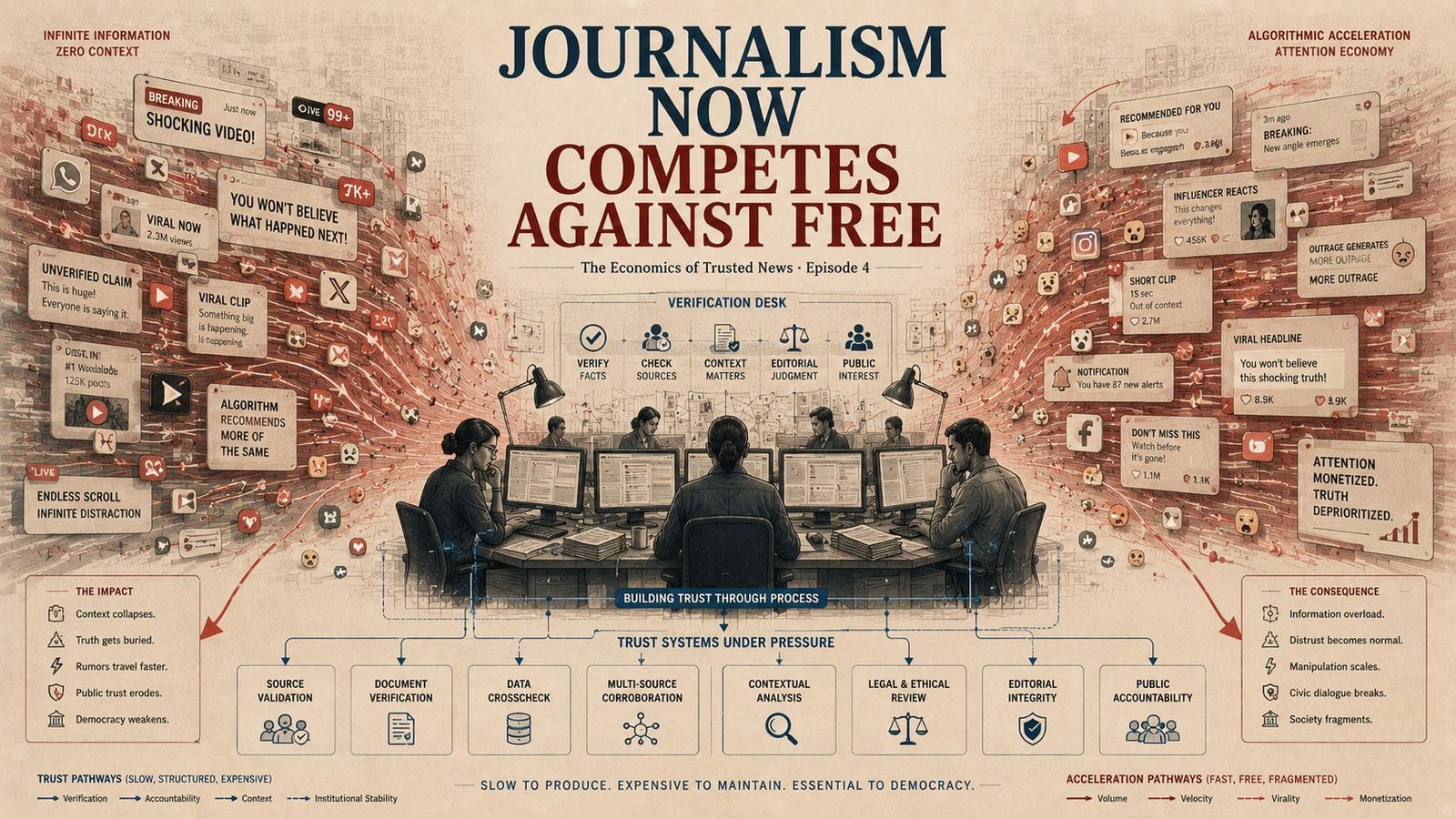
Why trusted journalism now operates inside an economy dominated by free information.
Read Episode →How delivery systems, permanence, accountability, and editorial friction shaped public trust.
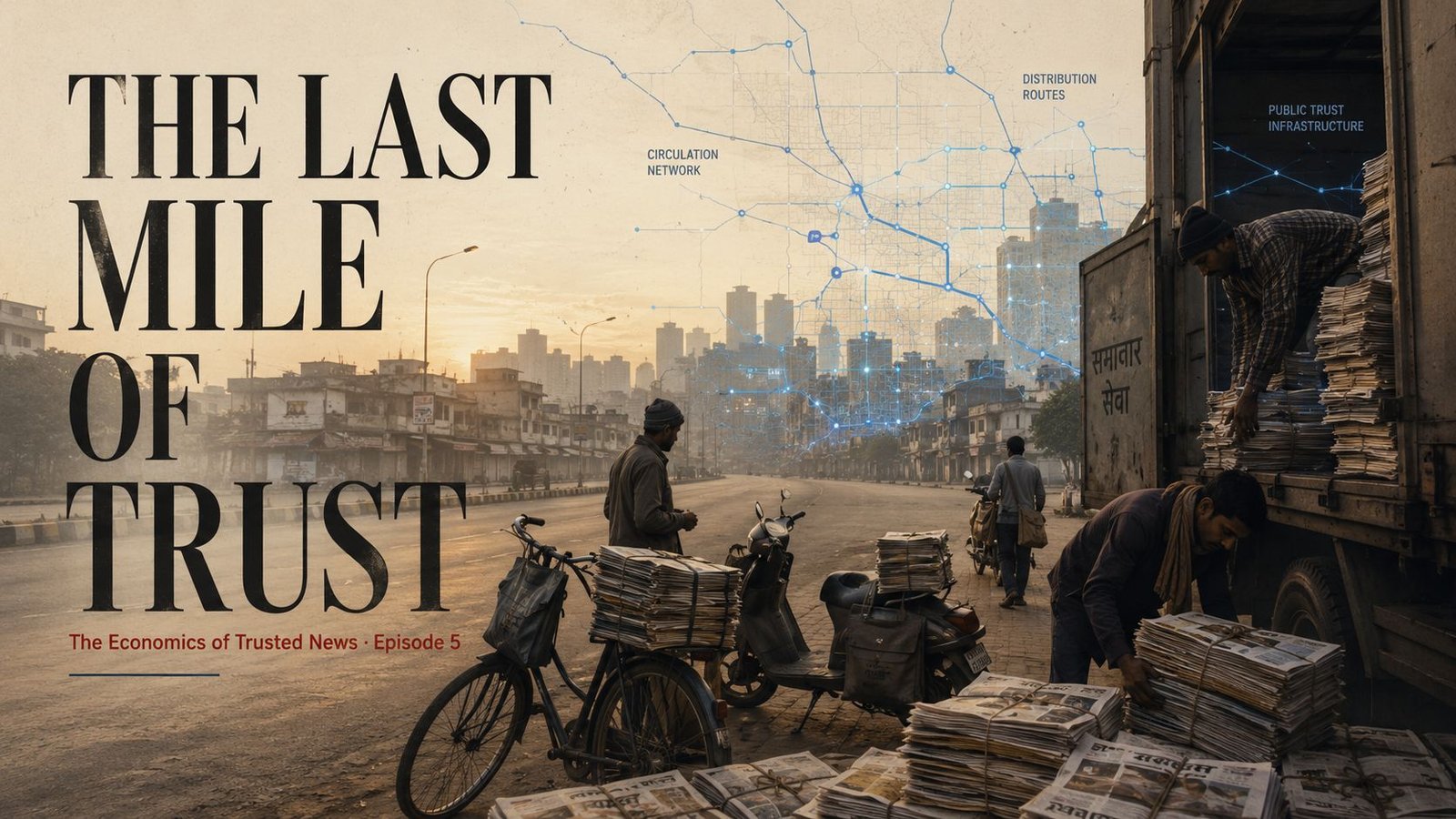
How newspaper delivery became part of journalism's invisible civic infrastructure.
Read Episode →
Why physical media continues to signal permanence, accountability, and seriousness.
Read Episode →How journalism evolved from newspapers into civilization-scale coordination and verification infrastructure.
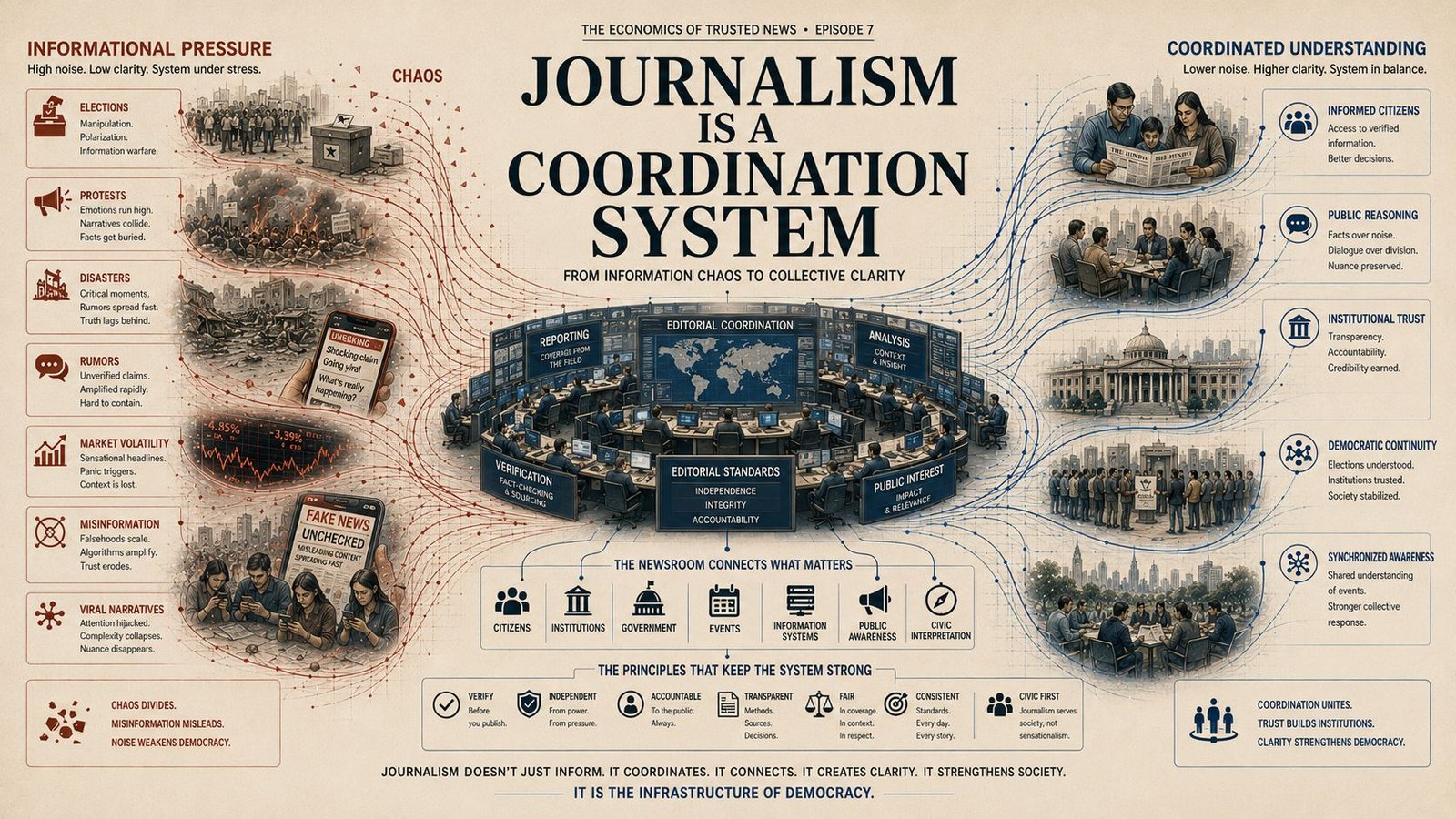
How journalism historically functioned as infrastructure helping society think together.
Read Episode →
Why verification infrastructure may become more valuable than information itself.
Read Episode →The newspaper was only the visible interface.
Behind it existed a much larger infrastructure of reporting, verification, editorial judgment, accountability, distribution, and coordinated public understanding.
Across generations, these systems helped societies interpret events, synchronize awareness, and sustain democratic continuity under informational pressure.
In the AI era, information may become abundant. Trust may become scarce.
Trusted news was never merely about paper. It was society attempting to coordinate reality together.
In an era increasingly defined by synthetic media, AI-generated narratives, fragmented attention systems, and algorithmic acceleration, the strategic challenge may no longer be producing information.
It may be preserving credibility itself.
Explore DataComics →