Author name: Prady K

Visual Storyteller • Data Professional • Creator of DataComics & DataGuy • Exploring AI, Data, and the Invisible Systems Shaping Modern Life

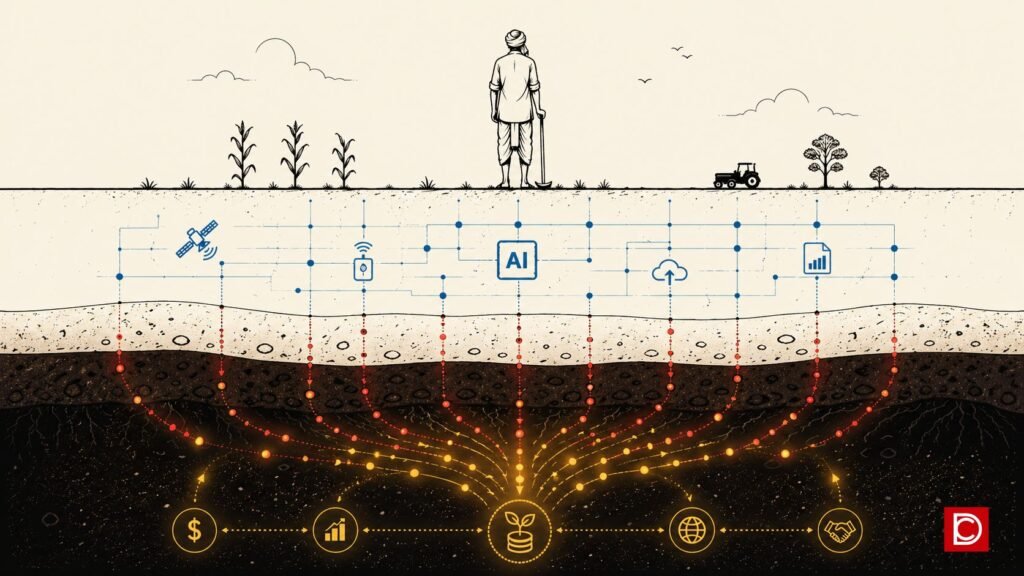
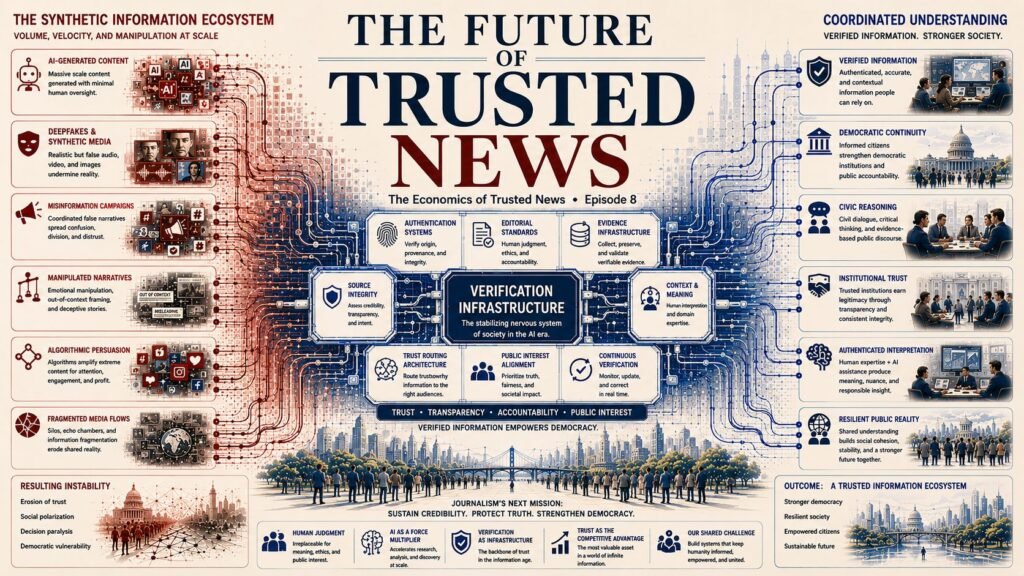
A large-scale institutional visualization showing verification infrastructure stabilizing AI-generated misinformation, deepfakes, synthetic media, and fragmented information flows while supporting democratic coordination and trusted public understanding.
Media Economics

The Future of Trusted News

The next crisis may not be information scarcity. It may be the collapse of certainty about what is real. Episode 8 explores synthetic media, verification systems, trust infrastructure, and the future of journalism in the AI information era.
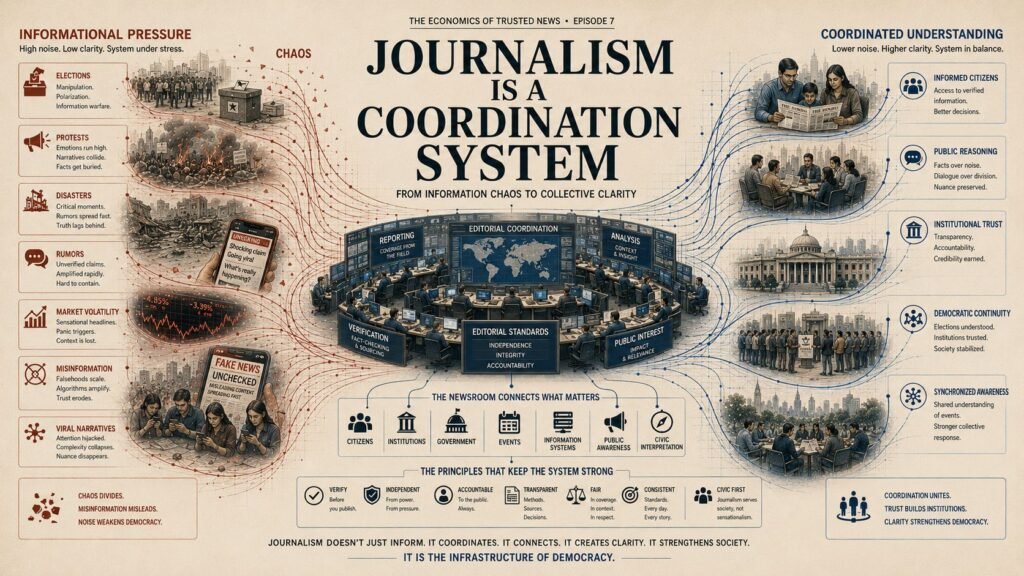

A large institutional newsroom functioning as the central coordination system of society, connecting citizens, governments, public awareness, and civic interpretation while balancing informational chaos and collective understanding.
Media Economics

Journalism Is a Coordination System

Modern societies generate enormous informational pressure every day. Episode 7 explores how journalism historically functioned as a coordination system that stabilized interpretation, supported shared understanding, and helped societies think together.

A printed copy of The Hindu newspaper resting on a wooden editorial desk surrounded by reading glasses, archival notes, and newsroom documents while subtle blue institutional trust pathways glow softly in the background.
Media Economics

Print Still Carries Different Trust

Not all information feels psychologically equal. Episode 6 explores why print still signals permanence, editorial discipline, institutional accountability, and public trust differently from fast-moving digital information systems.

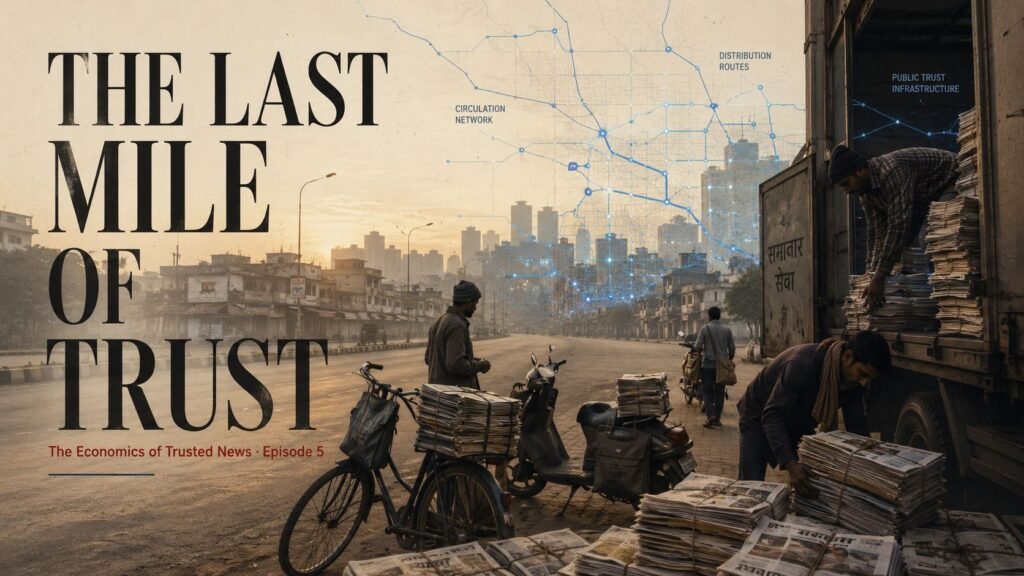
Early morning newspaper delivery workers unloading bundles of newspapers before sunrise across an Indian city while invisible civic distribution networks glow beneath the streets, symbolizing journalism’s last-mile trust infrastructure.
Media Economics

The Last Mile of Trust

Before sunrise each morning, invisible delivery systems moved trusted information across entire cities. Episode 5 explores how newspaper logistics, doorstep delivery, and synchronized reading habits became part of journalism’s civic infrastructure.

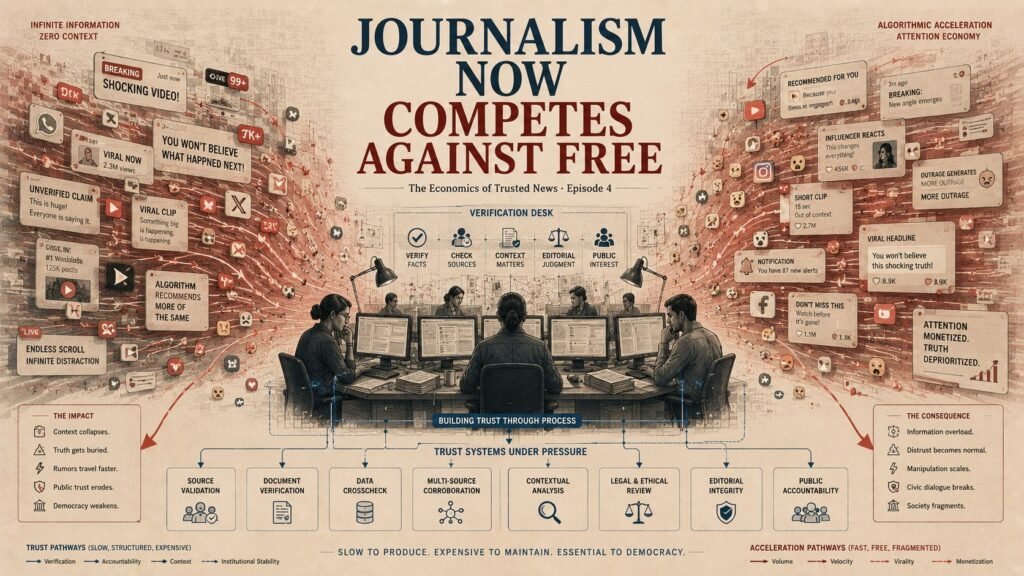
A cinematic institutional editorial illustration showing journalists at a newsroom verification desk overwhelmed by infinite digital information streams including notifications, viral clips, social feeds, fragmented headlines, recommendation systems, and algorithmic acceleration pathways.
Media Economics

Journalism Now Competes Against Free

The internet solved information scarcity but created a new challenge: informational overload without coordinated interpretation. Episode 4 explores how journalism now competes against infinite free content, algorithmic acceleration, fragmented attention, and reaction-driven information systems.

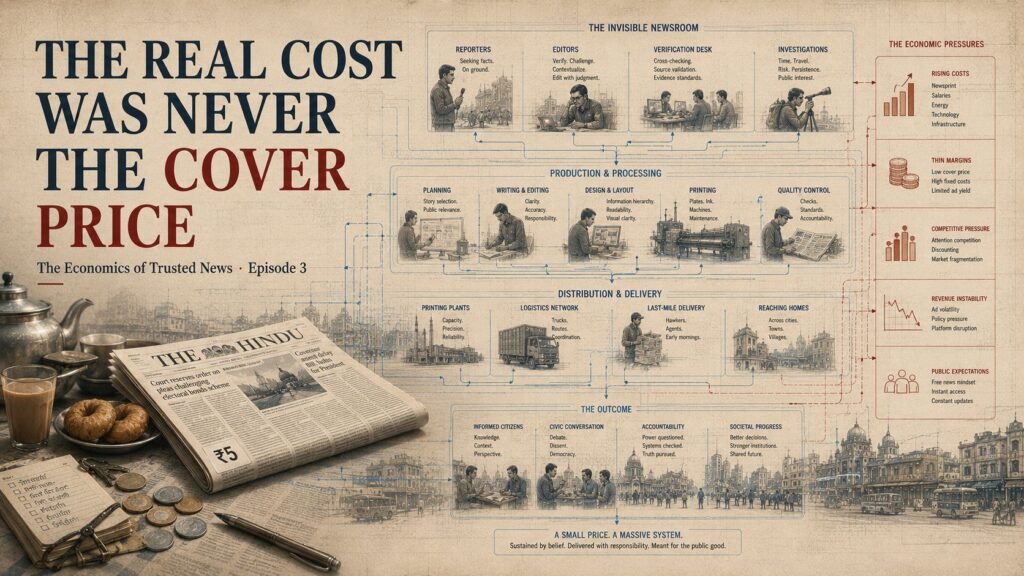
A cinematic editorial illustration showing a ₹5 copy of The Hindu newspaper beside tea, breakfast snacks, coins, and household objects while invisible newsroom infrastructure systems including reporters, editors, printing operations, logistics, and verification pipelines emerge in the background.
Media Economics

The Real Cost Was Never the Cover Price

For decades, trusted journalism became one of the most affordable products in society. Episode 3 explores how low newspaper pricing expanded access, shaped public expectations, and gradually disconnected the visible price of news from the true cost of sustaining journalism.

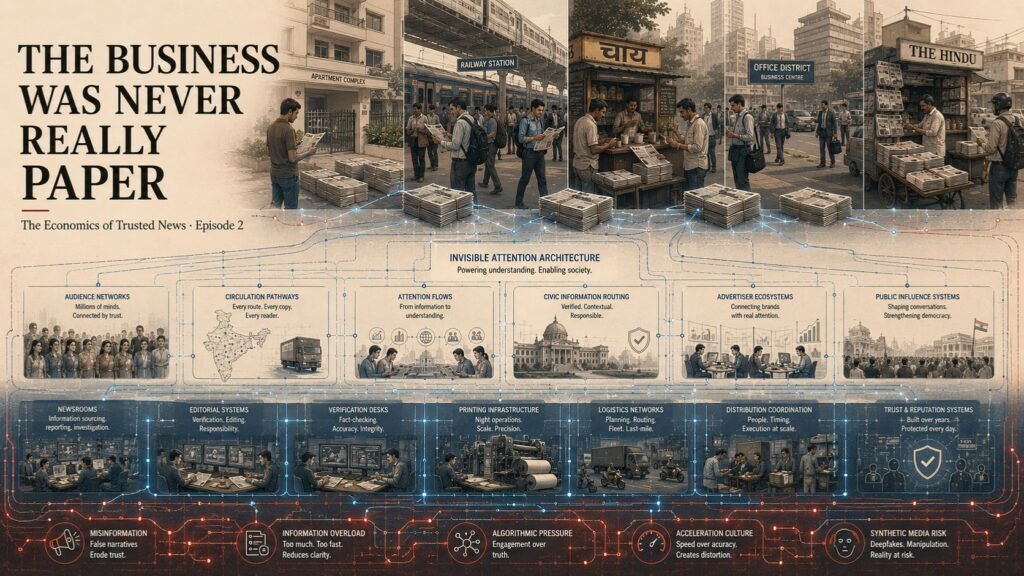
A cinematic editorial illustration showing newspapers flowing through Indian apartments, railway stations, tea shops, office districts, and roadside vendors while invisible attention infrastructure systems connect audience networks, circulation pathways, advertiser ecosystems, and civic information routing.
Media Economics

The Business Was Never Really Paper

Long before social media platforms dominated engagement, newspapers had already built one of the largest audience aggregation systems in modern society. Episode 2 explores how circulation, habit, advertising, and trust created the foundations of the attention economy.

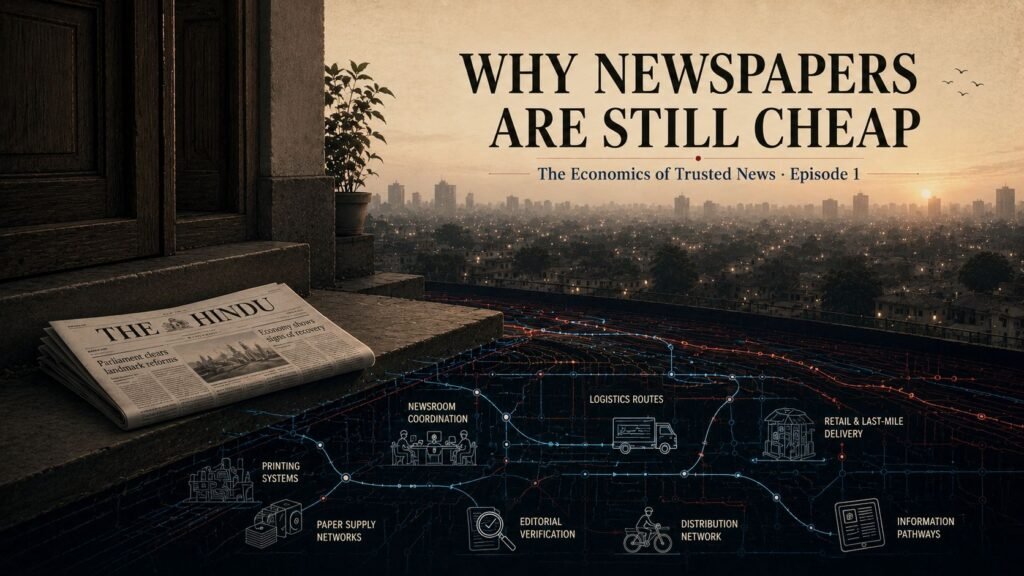
A cinematic editorial illustration showing a copy of The Hindu newspaper placed at a residential doorstep before sunrise, with invisible infrastructure systems beneath the city representing newsroom coordination, printing, logistics, verification, and information distribution networks.
Media Economics

Why Newspapers Are Still Cheap

A ₹5 newspaper feels ordinary. But beneath that familiar morning routine exists a massive infrastructure of reporting, verification, printing, logistics, and public trust. Episode 1 explores the hidden economics behind trusted news.

Scroll to Top