Media Economics
Start here: Explore how trusted information systems are built, sustained, monetized, and psychologically valued across modern society.
👉
The Economics of Trusted News: A cinematic visual series on media economics
Media Economics explores the invisible systems powering journalism, attention, trust, advertising, verification, and public interpretation.
News often appears cheap, instant, and endlessly available. But beneath every trusted information system exists a massive infrastructure of reporting, verification, coordination, distribution, and institutional credibility.
This category examines how media systems shape public understanding, attention flows, democratic continuity, and the economics of trust in the digital age.
Media Economics
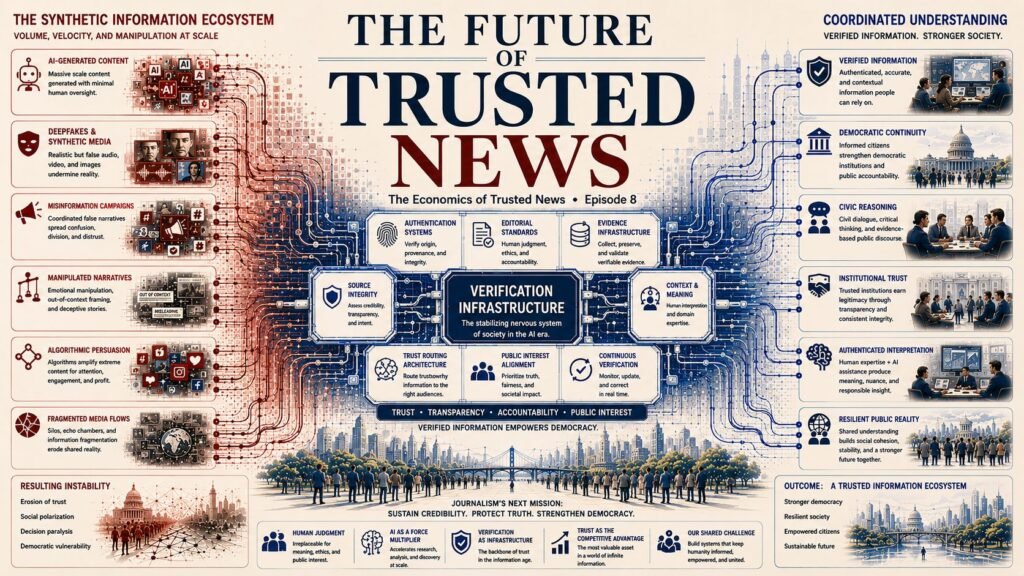
The next crisis may not be information scarcity. It may be the collapse of certainty about what is real. Episode 8 explores synthetic media, verification systems, trust infrastructure, and the future of journalism in the AI information era.
Media Economics
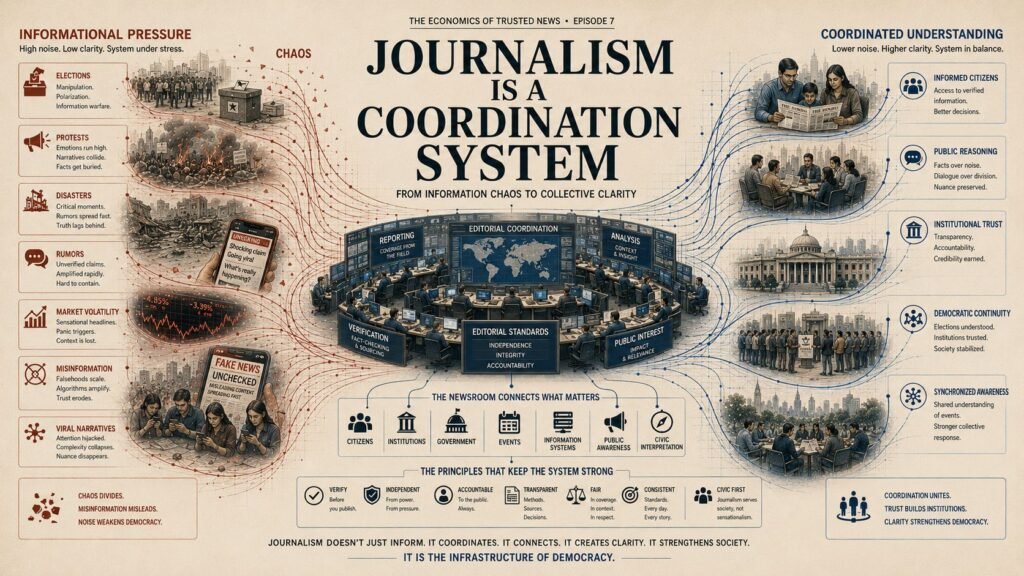
Modern societies generate enormous informational pressure every day. Episode 7 explores how journalism historically functioned as a coordination system that stabilized interpretation, supported shared understanding, and helped societies think together.
Media Economics
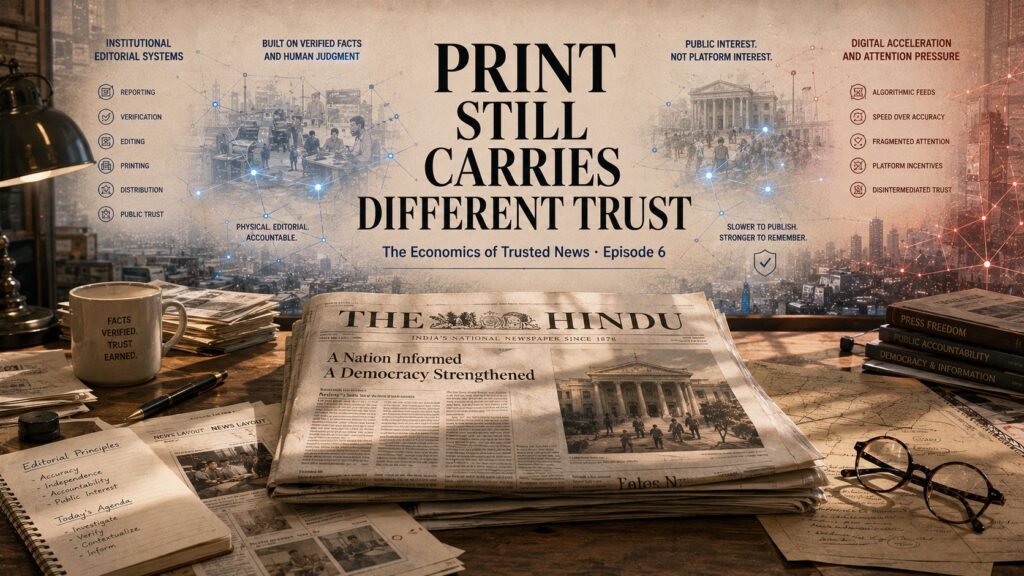
Not all information feels psychologically equal. Episode 6 explores why print still signals permanence, editorial discipline, institutional accountability, and public trust differently from fast-moving digital information systems.
Media Economics
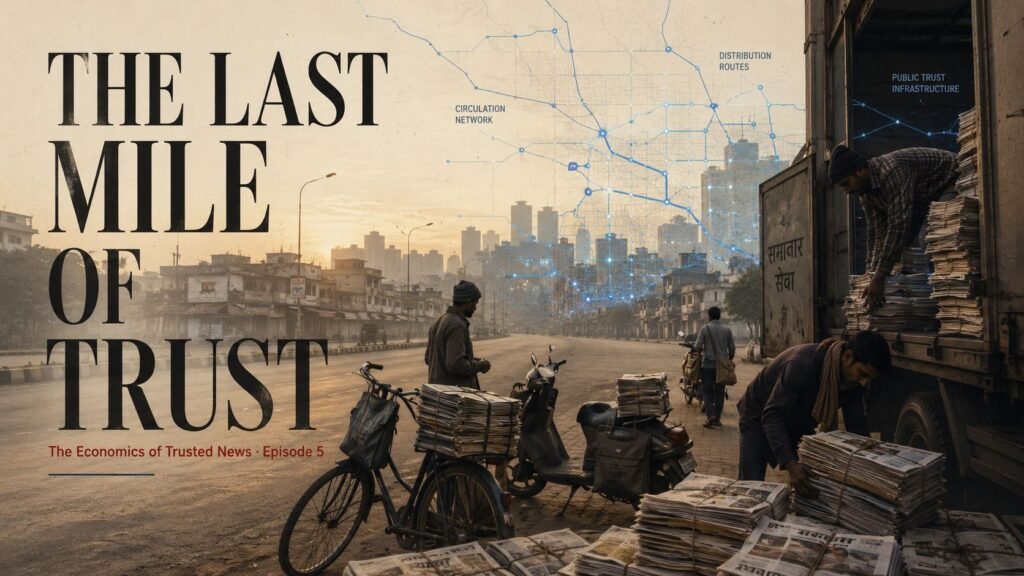
Before sunrise each morning, invisible delivery systems moved trusted information across entire cities. Episode 5 explores how newspaper logistics, doorstep delivery, and synchronized reading habits became part of journalism’s civic infrastructure.
Media Economics
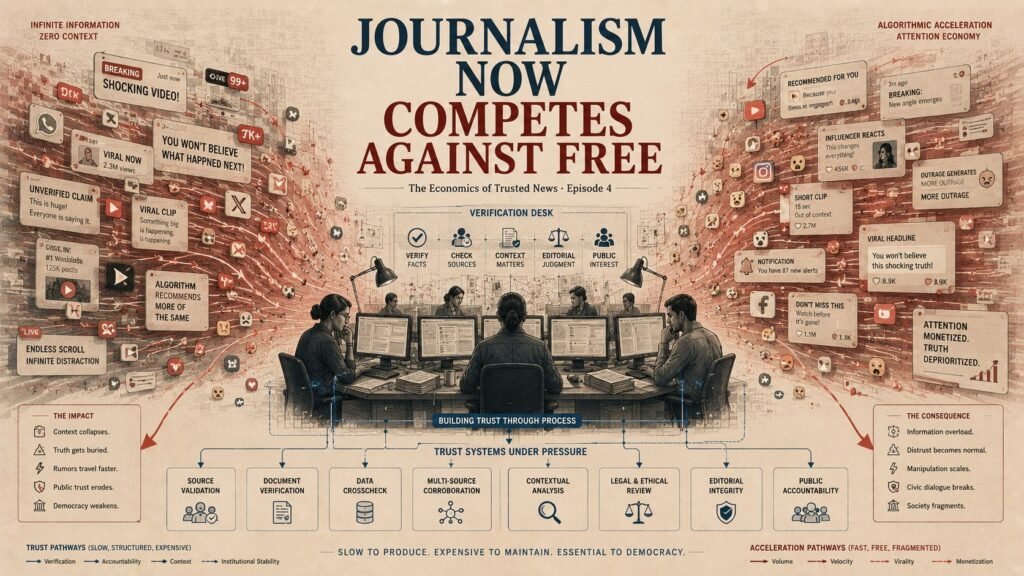
The internet solved information scarcity but created a new challenge: informational overload without coordinated interpretation. Episode 4 explores how journalism now competes against infinite free content, algorithmic acceleration, fragmented attention, and reaction-driven information systems.
Media Economics
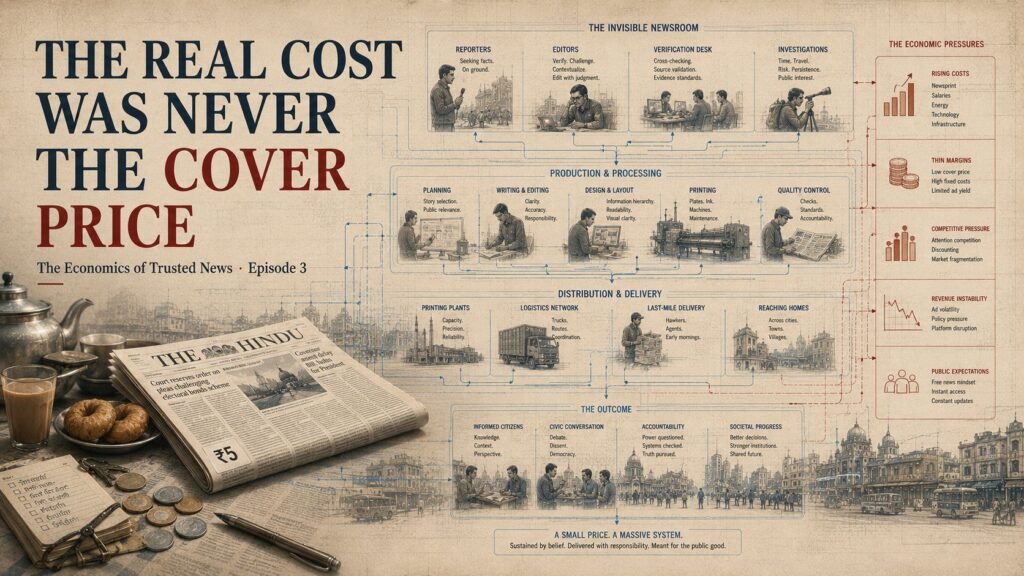
For decades, trusted journalism became one of the most affordable products in society. Episode 3 explores how low newspaper pricing expanded access, shaped public expectations, and gradually disconnected the visible price of news from the true cost of sustaining journalism.
Media Economics
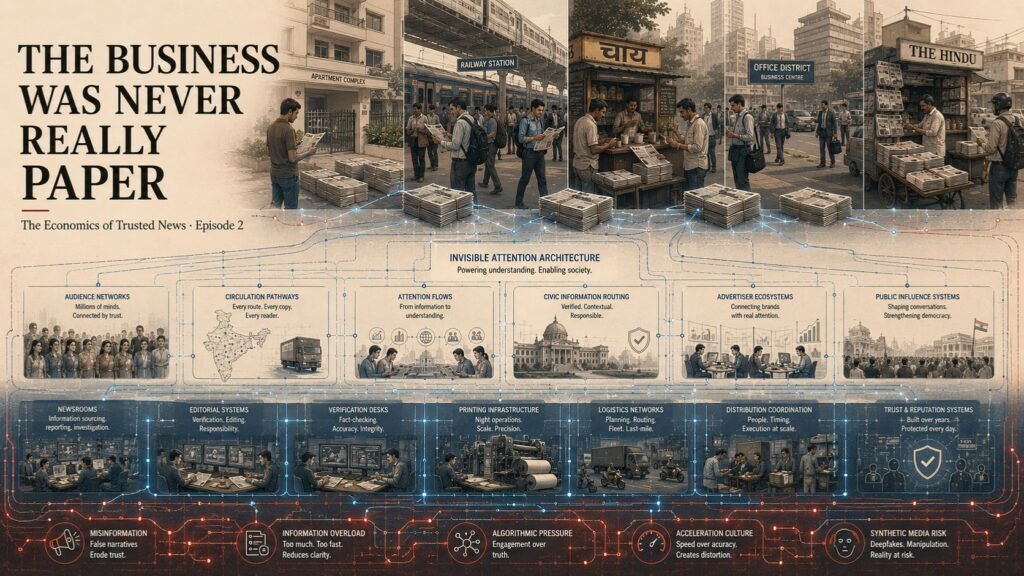
Long before social media platforms dominated engagement, newspapers had already built one of the largest audience aggregation systems in modern society. Episode 2 explores how circulation, habit, advertising, and trust created the foundations of the attention economy.
Media Economics
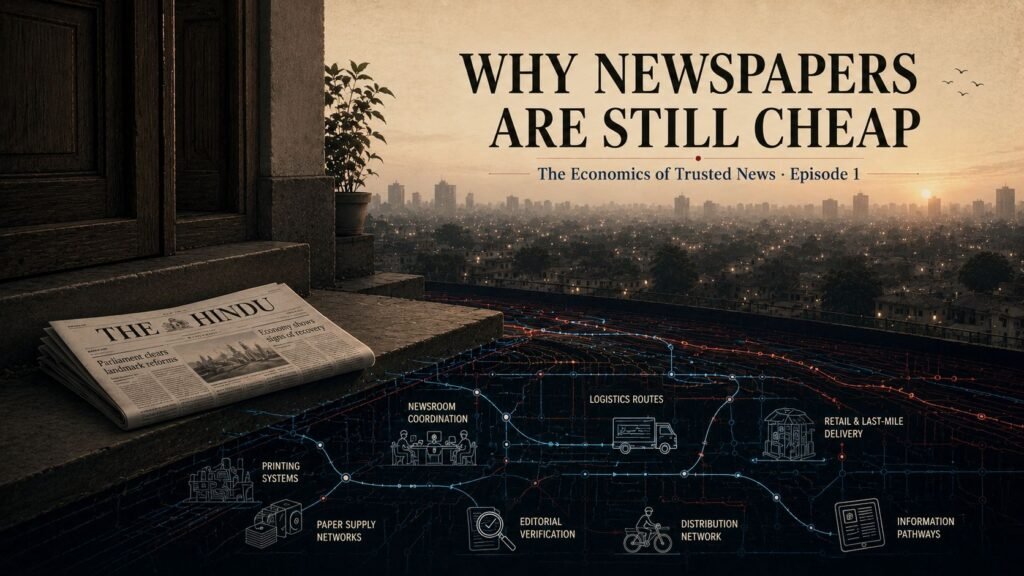
A ₹5 newspaper feels ordinary. But beneath that familiar morning routine exists a massive infrastructure of reporting, verification, printing, logistics, and public trust. Episode 1 explores the hidden economics behind trusted news.